3PL Sustainability: 7 Key Practices of Eco-Friendly Logistics
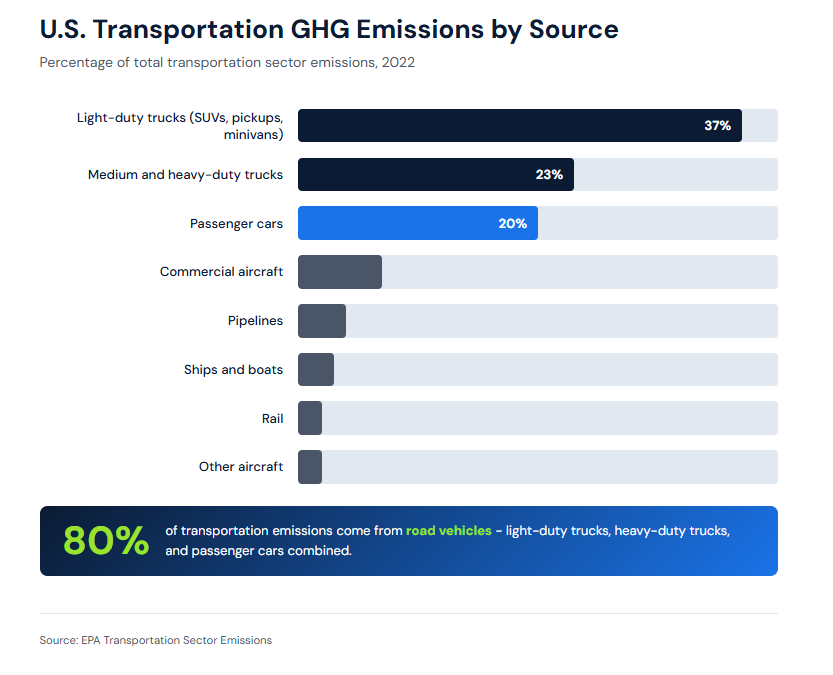
Transportation accounts for 28% of U.S. greenhouse gas emissions, and your 3PL is either part of the problem or part of the solution.
Forward-thinking logistics providers are cutting emissions while reducing costs through fleet electrification, energy-efficient warehouses, and smarter routing. These practices lower operating expenses, simplify carbon reporting across your supply chain (including partner emissions), and build a supply chain your customers can trust.
Here's how sustainable 3PL practices work and what to look for in a partner.
What Is 3PL Sustainability?
3PL sustainability refers to the environmental practices and initiatives that third-party logistics providers implement to reduce their ecological footprint. This includes reducing transportation-related carbon emissions, minimizing waste in warehousing, using renewable energy, and adopting eco-friendly packaging materials.
Sustainable 3PLs measure their environmental impact through carbon footprint tracking, energy consumption monitoring, and waste reduction metrics. They set measurable targets and report progress to clients who need this data for their own environmental, social, and governance (ESG) reporting requirements.
Why Does 3PL Sustainability Matter?
Sustainability in logistics has moved from optional to essential, reshaping how businesses evaluate 3PL partnerships and their benefits. Here are the key reasons businesses must prioritize eco-friendly 3PL partnerships:
- Regulatory compliance. According to the EPA, government emissions standards are tightening. Heavy-duty GHG regulations will reduce emissions by 1 billion metric tons over the program's vehicle lifetimes.
- Cost reduction. Energy-efficient warehouses and route optimization directly translate into lower operational costs for both 3PLs and their clients.
- Customer expectations. Businesses increasingly require suppliers to demonstrate environmental responsibility in their procurement decisions.
- Supply chain resilience. Sustainable practices often correlate with operational efficiency, reducing vulnerability to fuel price volatility and complex supply chain challenges.
- Scope 3 emissions accountability. For many companies, supply chain emissions can account for up to 90% of their total carbon footprint, according to the World Economic Forum.
- Competitive differentiation. Demonstrable sustainability credentials help 3PLs win contracts with environmentally-conscious brands.
7 Key Sustainable Practices in 3PL
#1. Fleet Electrification and Alternative Fuels
Electric and hybrid vehicles are replacing diesel trucks across logistics operations. Electric delivery vans produce zero tailpipe emissions during operation, making them ideal for urban last-mile delivery where air quality regulations are strictest.
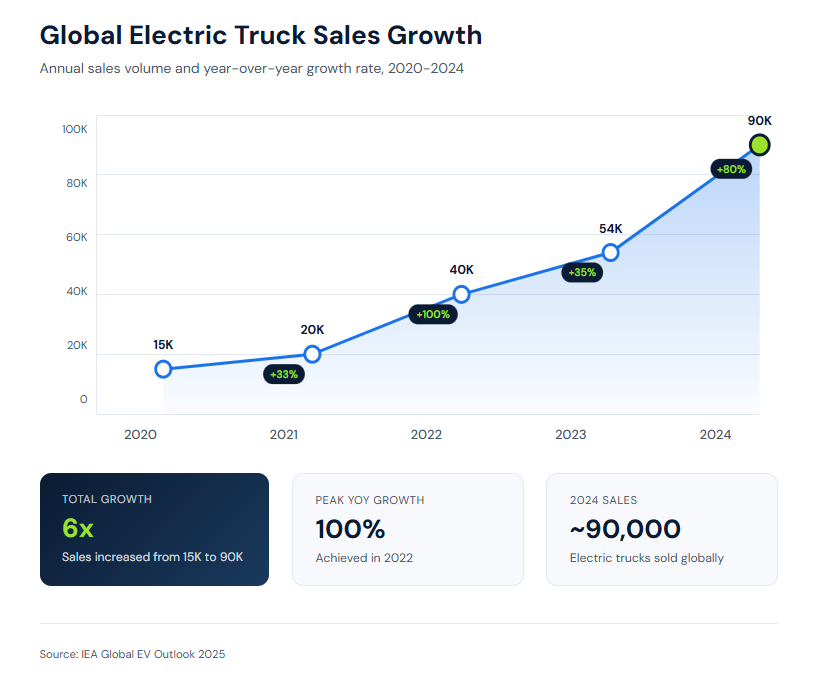
Major logistics companies are investing heavily in electric fleets. Electric truck sales grew by nearly 80% globally in 2024, reaching close to 2% of total truck sales, according to the IEA Global EV 2025 Outlook. Growth is fastest in urban delivery applications, where shorter routes and predictable schedules align well with current battery range capabilities.
Beyond full electrification, 3PLs are adopting alternative fuels, including compressed natural gas (CNG), biodiesel, and hydrogen fuel cells for longer-haul applications. Route optimization software used by professional transportation management services further reduces fuel consumption by minimizing unnecessary mileage and idling time.
When implementing fleet electrification, 3PLs should consider several factors:
- Start with urban delivery routes where charging infrastructure exists
- Calculate the total cost of ownership rather than just the purchase price
- Factor in maintenance savings; electric vehicles have fewer moving parts
- Evaluate charging infrastructure requirements at distribution centers
#2. Energy-Efficient Warehousing
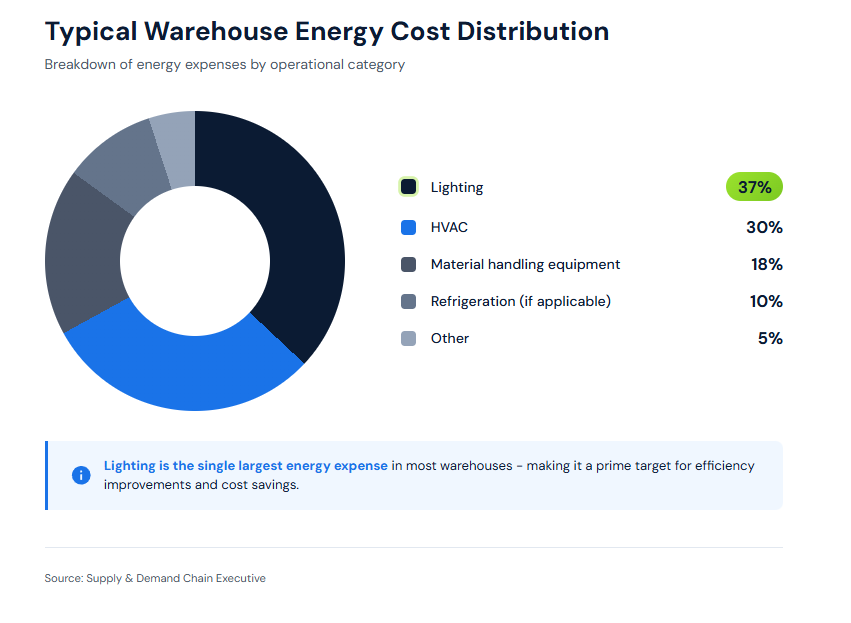
Warehousing operations consume significant energy for lighting, climate control, and material handling equipment. Sustainable 3PLs are retrofitting facilities with energy-efficient systems that reduce consumption while maintaining operational performance.
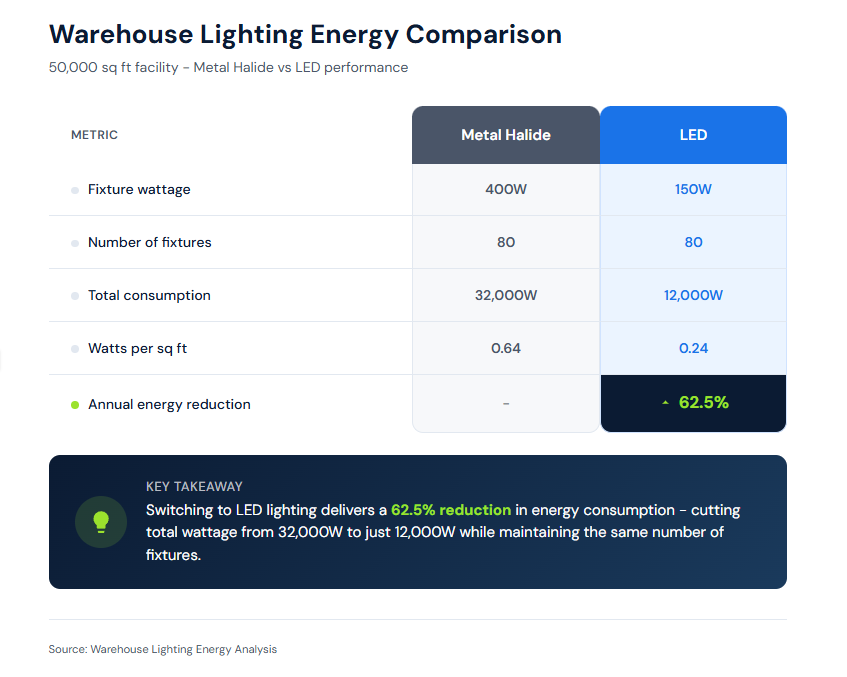
LED lighting retrofits deliver substantial returns. Replacing traditional metal halide fixtures with LED high bays can reduce lighting energy consumption by 50-75% while improving illumination quality. A warehouse replacing 400W metal halide fixtures with 150W LED alternatives reduces consumption from 0.64 watts per square foot to 0.24 watts per square foot.
Climate control represents another major opportunity. High-volume, low-speed (HVLS) fans improve airflow efficiency, allowing facilities to raise thermostat settings by 4-5°F while maintaining worker comfort. Smart building management systems automatically adjust heating, cooling, and lighting based on occupancy and time of day.
The most effective warehouse efficiency measures include:
- LED lighting with motion sensors and daylight harvesting
- HVLS fans for improved air circulation
- Programmable HVAC systems with demand control ventilation
- Insulated loading dock doors and seals
- Cool or reflective roofing materials
#3. Renewable Energy Integration
Solar panel installations on warehouse rooftops are among the most visible sustainability investments in logistics. Large, flat warehouse roofs are ideal for photovoltaic systems, and self-generated power reduces both emissions and electricity costs.
According to the Promise Energy 2025 report, warehouses typically spend between $180,000 and $300,000 annually on electricity for a 200,000-square-foot facility, representing 8-12% of operating costs. Solar installations can offset 20-40% of this consumption, with battery storage systems providing additional savings by reducing demand charges during peak periods.
Beyond rooftop solar, 3PLs are pursuing power purchase agreements (PPAs) for renewable energy from off-site wind and solar farms. These arrangements allow facilities without suitable roof conditions to still achieve renewable energy targets.
3PLs have several renewable energy options available:
- Rooftop solar photovoltaic systems
- Carport solar installations in parking areas
- Battery energy storage systems for demand charge management
- Green power purchase agreements
- On-site wind generation where conditions permit
#4. Sustainable Packaging and Materials Handling
Packaging waste represents a significant environmental challenge in logistics. Sustainable 3PLs work with clients to minimize packaging materials, select recyclable or biodegradable options, and implement reusable container programs.
Right-sizing packaging, often handled through contract packaging services, reduces both material usage and shipping costs by eliminating wasted space. Dimensional weight pricing from carriers means oversized boxes cost more to ship, aligning costs with sustainability goals.
Reusable packaging systems are gaining traction for B2B distribution shipments, where containers can be returned and refilled. These closed-loop systems require initial investment, but eliminate ongoing packaging waste and costs.
Effective sustainable packaging strategies include:
- Right-size box selection based on product dimensions
- Recyclable void fill materials instead of plastic
- Reusable totes and containers for B2B shipments
- Biodegradable packing materials
- Minimal or eliminated secondary packaging where products allow
#5. Route Optimization and Load Consolidation
Software-driven route optimization reduces fuel consumption by identifying the most efficient paths between pickup and delivery points, a core function of modern logistics service providers. Advanced algorithms consider traffic patterns, delivery windows, vehicle capacity, and driver hours to minimize miles traveled.
Load consolidation maximizes trailer utilization, reducing the number of trips required to move freight. Less-than-truckload (LTL) consolidation programs combine shipments from multiple shippers into full trailer loads, improving efficiency for all participants.
Intermodal transportation, combining truck, rail, and ship, uses the efficiency advantages of each mode. Rail moves freight approximately three to four times more efficiently than trucks on a ton-mile basis, making it attractive for longer distances, where transit time permits.
3PLs can pursue several optimization approaches:
- Dynamic routing software that adapts to real-time conditions
- Multi-stop route planning to reduce empty miles
- Cross-docking and other fulfillment process improvements to minimize warehouse storage and handling
- Intermodal programs for long-haul freight
- Collaborative shipping networks with other companies
#6. Waste Reduction and Circular Logistics
Sustainable 3PLs minimize landfill waste through recycling programs, material recovery, and circular logistics services. Reverse logistics capabilities allow products to be returned, refurbished, and resold rather than discarded.
Warehouse waste streams include cardboard, stretch wrap, pallets, and damaged products. Comprehensive recycling programs capture these materials, while partnerships with recyclers and the implementation of inventory waste reduction strategies convert waste into revenue rather than disposal costs.
Circular logistics extends product lifecycles by enabling repair, refurbishment, and remarketing of returned items. Electronics, apparel, and consumer goods benefit particularly from these programs, which recover value from products that would otherwise become waste.
Common waste reduction initiatives include:
- Single-stream recycling programs for cardboard and plastics
- Pallet repair and recycling partnerships
- Product refurbishment and remarketing services
- Composting programs for organic waste
- Zero-waste-to-landfill facility certifications
#7. Carbon Footprint Tracking and Reporting
Measurement is the foundation of environmental improvement. Sustainable 3PLs implement carbon accounting systems that track emissions across operations and provide clients with data needed for their own sustainability reporting.
Scope 1 emissions include direct emissions from owned vehicles and facilities. Scope 2 covers indirect emissions from purchased electricity. Scope 3 encompasses the broader value chain; for shippers working with 3PLs, transportation emissions typically fall into this category.
Standardized reporting frameworks enable comparison across providers and verification of sustainability claims. The Global Logistics Emissions Council (GLEC) Framework provides methodology for calculating and reporting logistics emissions across multiple transport modes.
A comprehensive carbon tracking system includes:
- Per-shipment emissions calculations
- Facility energy consumption monitoring
- Fleet fuel usage and efficiency tracking
- Client-accessible sustainability dashboards
- Third-party verification and reporting
Frequently Asked Questions
#1. How do sustainable 3PL practices affect shipping costs?
Sustainable practices often reduce costs rather than increase them. Fuel-efficient vehicles consume less diesel, LED lighting cuts electricity bills, and route optimization reduces miles driven. The initial investment in sustainable infrastructure typically pays back within 3-5 years through operational savings. Some green initiatives may carry premium pricing, but clients frequently offset this through their own cost reductions and brand value gains.
#2. What certifications indicate a 3PL's commitment to sustainability?
Look for ISO 14001 environmental management certification, EPA SmartWay partnership status, and LEED-certified warehouse facilities. Science-Based Targets initiative (SBTi) commitments set measurable emissions-reduction goals. Industry-specific certifications, such as Responsible Care for chemical logistics, provide additional assurance. Request sustainability reports and third-party audit results to verify claims.
#3. What is the difference between carbon-neutral and net-zero logistics?
Carbon neutrality means offsetting emissions through carbon credits or sequestration projects; the emissions still occur, but they are balanced out. Net zero requires actually eliminating emissions through operational changes, with offsets used only for residual emissions that cannot yet be reduced. Net zero represents a more ambitious commitment. Both approaches have value, but net-zero targets drive deeper operational transformation.
#4. How does last-mile delivery impact 3PL sustainability efforts?
Last-mile delivery accounts for a disproportionate share of logistics emissions due to frequent stops, urban congestion, and partially-loaded vehicles. Electric vans and cargo bikes are ideal solutions for this segment. Consolidation points and parcel lockers reduce failed delivery attempts. Optimized delivery windows decrease the number of trips required. Many 3PLs are prioritizing last-mile electrification because of its outsized environmental impact.
#5. How quickly can a 3PL transition to more sustainable operations?
Timeline varies based on current infrastructure and investment capacity. Quick wins, such as LED lighting retrofits and route-optimization software, can be implemented within months. Fleet electrification typically follows a multi-year transition as vehicles reach replacement age. Renewable energy installations require 12-18 months from planning to operation. Most 3PLs set 5-10 year targets for comprehensive sustainability transformation, with incremental improvements along the way.
Key Takeaways
- Transportation accounts for 28% of U.S. greenhouse gas emissions, with medium- and heavy-duty trucks responsible for 23% of transportation emissions, making 3PL sustainability a significant lever for environmental improvement.
- Fleet electrification is accelerating rapidly, with global electric truck sales growing 80% in 2024 and expected to continue climbing as battery technology improves.
- Energy-efficient warehousing through LED lighting, smart HVAC, and renewable energy can reduce facility operating costs by 20-40% while cutting emissions.
- Route optimization and load consolidation deliver immediate sustainability gains while reducing fuel costs – a clear alignment of environmental and financial objectives.
- Carbon tracking and reporting capabilities are now essential for 3PLs, as clients require Scope 3 emissions data for their own reporting and ESG commitments.
- Sustainable packaging and circular logistics services help clients reduce waste and recover value from returned products.
- The total cost of ownership for sustainable logistics infrastructure typically pays back within 3-5 years through operational savings.
20 Years of Kitting Excellence
Ready to Streamline Your Supply Chain?
Join industry leaders achieving 99%+ SLA performance with flexible kitting, fulfillment, and 3PL solutions.
Get in Touch