Embedded operations is a model where an external operator — like Productiv — takes over production execution inside your facility. Not staffing agency headcount. A full operating system:
- Management and supervision
- Process engineering
- Quality controls
- Outcome accountability
You keep your facility and equipment. The operator runs the work.
It sits between two familiar options: run everything internally with your own workforce, or move inventory to a 3PL's warehouse entirely. Embedded is neither. It is operator-as-a-service inside your four walls.
The term gets applied loosely. The defining feature of a genuine embedded model is accountability transfer — the operator owns the outcome, not just the labor supply.
Embedded Operations vs. Staffing Agencies
The difference between a staffing agency and an embedded operations partner is not cosmetic. It determines who owns the process, who manages performance, and who absorbs the cost of failure. The table below captures the key dimensions.
| Dimension | Staffing Agency | Embedded Operations Partner |
|---|---|---|
| Accountability | Client owns outcomes | Operator owns outcomes |
| Management Layer | Supplied by client | Supplied by operator |
| Process Ownership | Client designs and maintains processes | Operator engineers and owns processes |
| Pricing Model | Hourly bill rate per worker | Fixed unit cost or outcome-based fee |
| Outcome Measurement | Hours billed, not units produced | Units produced, SLA attainment, error rate |
| Performance Risk | Client absorbs all operational risk | Operator absorbs operational risk |
How Embedded Operations Works
A structured embedded operations deployment follows a repeatable process from contract to full operational ownership. At Productiv, that process runs in five phases:
1. Operational Assessment
Before any labor is deployed, Productiv audits the existing operation against a measurable baseline:
- Floor walk and workflow mapping
- Time study at each production step
- Bottleneck identification and labor deployment analysis
- Baseline metrics: throughput, error rate, and labor cost per unit
2. Deployment Design
With the baseline established, Productiv designs the embedded operation from scratch — documented and reviewed before go-live:
- Team structure: operators, leads, supervisors, on-site management
- Supervision ratios and work cell layout
- SLA targets and quality control checkpoints
3. Go-Live
Productiv teams go live with full management, QC systems, and real-time tracking from day one:
- Supervisors run the floor; management is on-site and accountable
- Data collection starts immediately: units/hour, error rate, SLA attainment
- Weeks one and two are intensive calibration; by week three, the operation runs to target
4. Continuous Improvement
Embedded operations is not a set-and-forget model. Productiv runs the operation as a living system:
- Weekly time studies and process inefficiency identification
- Work cell redesign as volume or SKU mix changes
- Efficiency metrics reported to client leadership on a defined cadence
5. Scope Expansion
Once the model proves out in one area, expansion is straightforward — the management infrastructure is already in place:
- A kitting line expands to include quality inspection
- Quality inspection expands to line feeding and repack
- Most embedded clients expand scope within six months of initial go-live
When Embedded Operations Makes Sense
Embedded operations is not the right model for every situation. It works best when four specific conditions are present:
- You have facility capacity but can’t staff or manage the operation effectively. The floor space exists, but you don’t have the management structure to put labor to work productively. An embedded operator brings that system with them. You are not building a management team; you are contracting one.
- Throughput is constrained by process design failures, not space. Many operations have enough floor space and enough workers but still cannot hit throughput targets. The constraint is how the work is engineered, not how much of it there is. Embedded operations fixes the process design, not just the headcount.
- Quality issues are causing downstream costs. Chargebacks from retail compliance failures. Returns driven by assembly errors. Customer complaints from wrong shipments. These are symptoms of the same problem: quality is not built into the process. An embedded operations partner builds quality controls into production itself rather than relying on end-of-line audits.
- You’re scaling faster than your internal management can absorb. Fast growth breaks operations when the management layer can’t keep up with order volume. Embedded operations gives you management capacity on demand — without building permanent headcount you may not need long-term.
Embedded Operations vs. Outsourced 3PL
The choice comes down to one question: keep production inside your facility, or move it?
A traditional 3PL moves inventory to the 3PL’s warehouse. No floor space requirements, no equipment investment, no facility overhead — but you also give up visibility and proximity to production.
Embedded operations keeps production in your facility and hands management to an external operator. You keep your facility investment and stay close to the work, without building the internal labor and management system yourself.
The decision usually comes down to facility ownership and product sensitivity. Companies with owned or long-leased facilities, regulated products, or production tied to manufacturing tend to prefer embedded. Companies that want to offload real estate and capital overhead entirely tend to prefer a 3PL warehouse relationship. Productiv operates both models.
Industries Where Embedded Operations Is Used
Embedded operations works best where labor intensity, process complexity, or regulatory requirements make internal management hard to scale. The most common industries:
- CPG manufacturing. Consumer packaged goods companies use embedded operators for contract packaging, repack, promotional kitting, and seasonal assembly — work that permanent headcount can’t absorb efficiently.
- Medical device assembly. Class I and Class II device assembly, lot tracking, and quality documentation demand a level of management rigor staffing agencies don’t deliver. Embedded operations partners bring the quality management systems regulated environments require.
- Regulated environments. FDA-registered facilities, DEA-licensed operations, and other regulated production environments need documented processes, trained supervisors, and traceability. Embedded operators are built to deliver all three.
- High-volume consumer goods. Seasonal spikes—holiday, promotional, back-to-school—create management problems temp staffing can’t solve alone. An embedded operator absorbs the volume swings without letting quality or throughput slip.
- Electronics assembly. PCB handling, device kitting, accessory assembly, and ESD-controlled environments need process discipline and close supervision — exactly what embedded operations is built to provide.
Key Performance Benchmarks
When evaluating an embedded operations partner, these are the performance benchmarks that distinguish a genuine operator from a managed staffing arrangement:
- Productiv manages embedded operations across client facilities ranging from 15 to 200+ deployed operators
- Go-live timeline: 30–45 days from contract to full operational deployment
- Typical throughput improvement: 15–30% in the first 90 days through process redesign alone
- Embedded clients typically expand scope within 6 months of initial go-live
- SLA attainment target: 99%+ on committed production outputs
These are not marketing claims. Productiv tracks these metrics on every deployment, reports them weekly, and is contractually accountable to them.
If a partner can’t tell you their SLA attainment rate across current deployments, they are running managed staffing — not embedded operations.
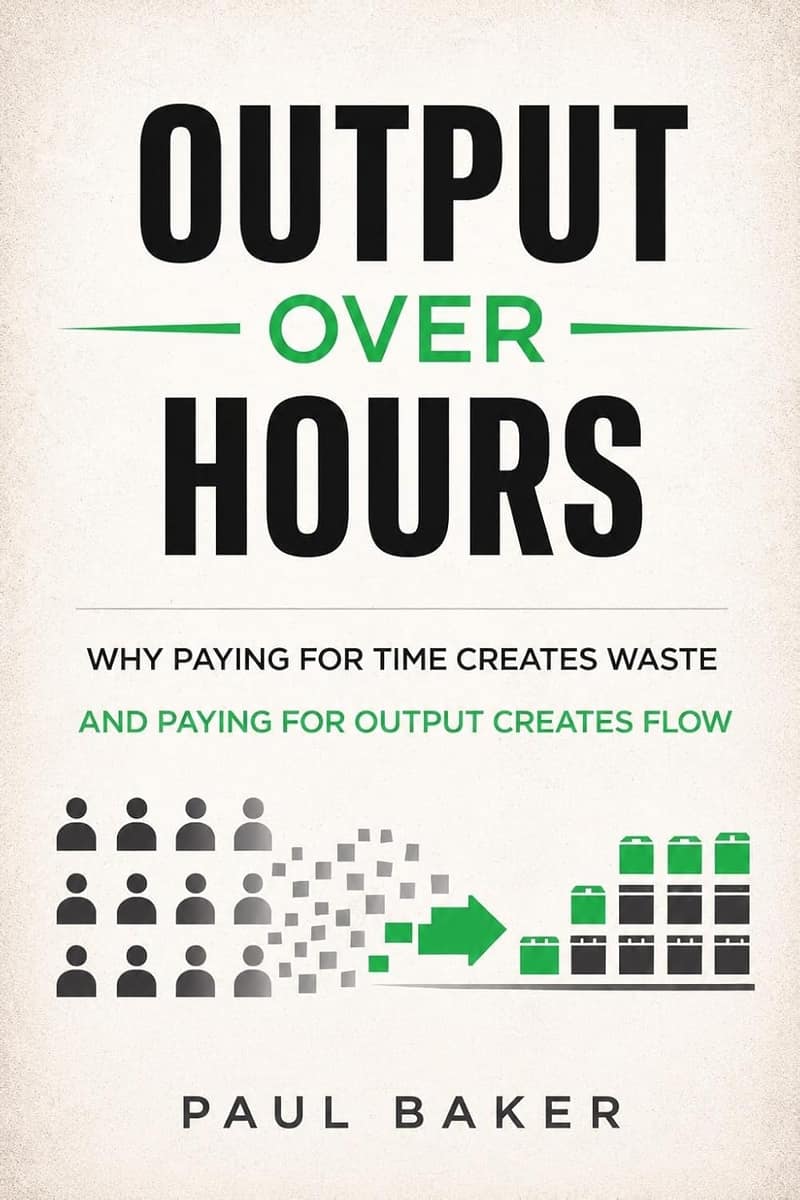
The cost-per-unit playbook, in book form.
Output Over Hours by Productiv CFO Paul Baker walks the labor economics behind the embedded model — why hourly billing caps your throughput, how to derive cost per unit, and the operating system that makes it stick.
Read the book