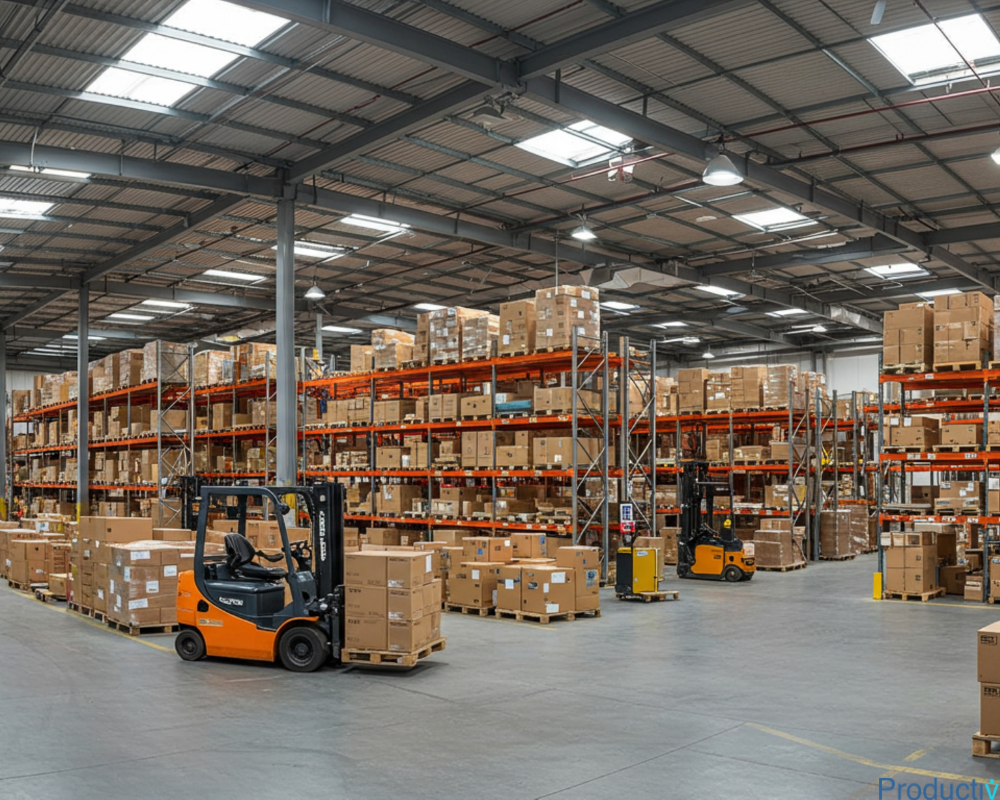
In the rush to modernize supply chains, operational leaders are under immense pressure to "automate everything." Boardrooms are demanding robotics, and trade show floors are selling a sci-fi vision of the future. This pressure is reflected in the numbers: the global warehouse automation market is projected to reach $63 billion by 2030, as companies rush to solve labor shortages that saw wage bills climb nearly 10% last year.
But there is a dangerous gap between the sales pitch and the P&L.
After analyzing failed deployments and successful pivots across the industry, we have found that many leaders are burning capital on "shiny object" syndrome while missing the actual levers of efficiency. Believing these five myths isn't just a philosophical error; it is a financial one that costs organizations millions in wasted CapEx, rigid infrastructure, and lost flexibility.
Here are the 5 myths you need to stop believing today.
Myth 1: The Goal is a "Lights Out" Facility
The Myth: The ultimate state of warehousing is a dark, silent box where machines do 100% of the work and humans are obsolete. The Reality: "Lights Out" is a recipe for bankruptcy in a high-mix environment. The Cost: Tesla famously learned this lesson during the Model 3 "production hell," where Elon Musk eventually admitted that excessive automation was a mistake and that 'humans are underrated.' The company was forced to rip out complex conveyor systems that were actually slowing down the assembly line compared to manual labor. In the 3PL world, fully automated systems are incredibly fragile. If a label is wrinkled or a box is crushed, a robot stops. In a "Lights Out" facility, one edge case brings the entire building to a halt. The Fix: Aim for the Hybrid Line. Use robots for the repetitive tasks (palletizing, transport) and humans for the complex judgment calls (picking, QC). The goal is not to replace humans, but to amplify them.
Myth 2: You Need a New Building (Greenfield) to Automate
The Myth: "My current warehouse is too old, the aisles are too narrow, and the floors aren't flat enough. We need to build a new $50M facility to deploy robots." The Reality: This was true 10 years ago. It is false today. The Cost: Moving facilities is the single most expensive disruption a logistics company can undertake. It costs millions in real estate, relocation, and lost productivity. When evaluating these investments, leaders must distinguish between 'Greenfield' projects—building from scratch—and 'Brownfield' automation. The Fix: Focus on "Brownfield" Automation. While new builds offer more freedom, brownfield retrofitting often delivers a faster ROI by leveraging existing infrastructure and a workforce that already understands the operation’s nuances. New generations of Autonomous Mobile Robots (AMRs) and emerging Humanoids (like Tesla’s Optimus or Figure) are designed to walk and roll in human spaces. They climb stairs, navigate narrow aisles, and work in existing infrastructure. Don't rebuild the warehouse for the robot; buy robots built for the warehouse.
Myth 3: Automation is About "Max Speed"
The Myth: The only metric that matters is units per hour (UPH). The Reality: Speed without flexibility is a trap. The Cost: We call this the "New Shampoo Bottle Problem." You spend $5M on a high-speed hard-automation picker. It works perfectly until your client rebrands their shampoo bottle from square to round. Suddenly, your $5M machine can't grip the product, and you face six weeks of downtime for re-tooling. The Fix: Prioritize Flexibility over Peak Speed. A slightly slower cobot that can be reprogrammed in 30 minutes is infinitely more valuable than a fast machine that takes 3 weeks to reconfigure. In a volatile market, agility is the only currency that matters.
Myth 4: Buy the Hardware First, Fix the Software Later
The Myth: "Let's buy the robots now and figure out the integration later." The Reality: Hardware is a commodity; Software is the differentiator. The Cost: This leads to "Islands of Automation"—a robotic arm that stacks pallets but doesn't talk to the WMS, or AMRs that don't sync with the dock schedule. You end up with fast robots waiting on slow data, creating massive inefficiencies. The Fix: Build the "Brain" (Factory 2) before you buy the "Muscle" (Factory 1). Rather than an afterthought, your orchestration layer must serve as the digital architect that synchronizes staffing, inventory, and robotics into a unified workflow. Without this foundational 'brain' to coordinate real-time data from your WMS and ERP, you risk building islands of automation where high-speed machines move faster than your data can support, ultimately creating more downstream bottlenecks than they solve.
Myth 5: Automation Solves Your Labor Shortage
The Myth: "If I buy robots, I don't need to worry about hiring anymore." The Reality: Automation changes the type of labor you need, but it doesn't eliminate the need for talent. The Cost: Companies that fire their floor staff to fund robotics often find themselves paralyzed when machines break. Without a skilled workforce to maintain, troubleshoot, and "wrangle" the robots, your expensive assets sit idle. The Fix: View automation as a Capacity Multiplier, not a Headcount Reducer. Use the efficiency gains to take on more volume, and upskill your floor staff from "box movers" to "robot operators." The most valuable employee in 2026 is the one who knows how to utilize the robot to maximize throughput and minimize downtime.
The Bottom Line
Automation is a superpower, but only if it serves the business strategy, not the other way around. Stop chasing the "Lights Out" fantasy and start building a Kinetic Center—a facility where flexibility, software, and human-machine collaboration drive the bottom line.
Further Reading & Industry Insights
We aren’t the only ones seeing this shift toward a software-first, flexible approach to automation. To see how these strategies are being applied across the global supply chain, explore these recent reports and expert analyses:
- The Case for Automation in Volatile Markets (2026): A strategic guide on navigating labor inflation and market shifts through phased automation implementation.
- 8 Ghostly Myths of Warehouse Automation: An expert breakdown of common misconceptions—from "job-killing" robots to the "phantom" ROI of AMRs.
- MIT Center for Transportation & Logistics: For a more academic perspective, this white paper explores the long-term evolution of "The Warehouse of the Future".
20 Years of Kitting Excellence
Ready to Streamline Your Supply Chain?
Join industry leaders achieving 99%+ SLA performance with flexible kitting, fulfillment, and 3PL solutions.
Get in Touch