Omnichannel and 3PL: How They Work Together for Growth
Retailers selling across multiple channels face a mounting logistics challenge: inventory scattered across warehouses, inconsistent delivery times, and rising operational costs.
These problems multiply when you're managing physical stores, ecommerce platforms, and marketplace channels simultaneously.
Luckily, omnichannel third-party logistics (3PL) providers solve this by unifying fulfillment operations under one roof.
This guide covers how omnichannel 3PLs work, their benefits, and what to look for when partnering with one.
What Is Omnichannel Third-Party Logistics?
Omnichannel third-party logistics refers to outsourcing your fulfillment operations to a complete logistics provider that manages inventory and order fulfillment across all your sales channels from a single, integrated system.
Rather than maintaining separate inventory pools and fulfillment processes for your website, retail stores, and marketplace channels, an omnichannel 3PL consolidates everything into one operation. This allows a single unit of inventory to fulfill orders from any channel, whether a customer buys online for home delivery, purchases in-store, or chooses buy online, pick up in store (BOPIS).
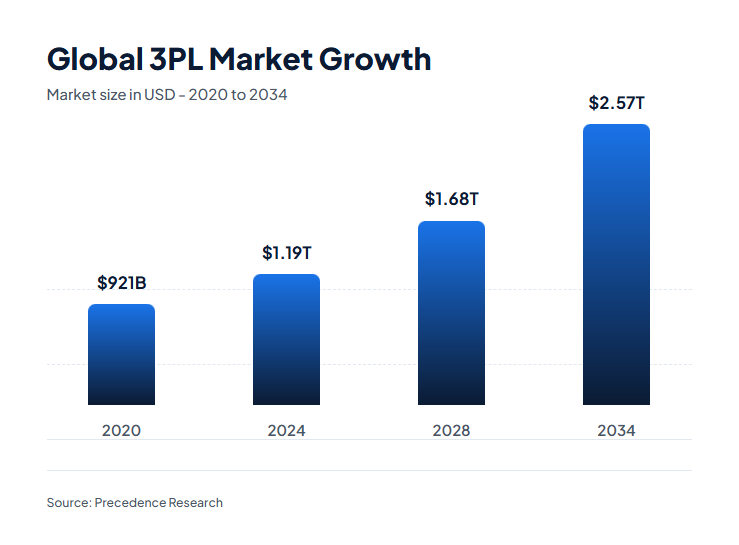
The global 3PL market reached approximately $1.19 trillion in 2024 and is projected to grow at a compound annual growth rate of around 8% through 2034, according to industry research. This growth is driven largely by e-commerce expansion and the need for multi-channel fulfillment capabilities. As e-commerce now accounts for 16.1% of total U.S. retail sales - up from 15.3% in 2023 per the U.S. Census Bureau, retailers increasingly need partners who can handle the complexity of serving customers across digital and physical touchpoints.
How Do 3PLs Support Omnichannel Retail Strategies?
3PLs enable omnichannel retail by providing the infrastructure, technology, and expertise needed to fulfill orders from any channel without requiring retailers to build these capabilities in-house. A Harvard Business Review study of 46,000 shoppers found that 73%use multiple channels during their purchase journey, making unified fulfillment a practical necessity.
Here's how 3PLs support omnichannel strategies:
- Centralized inventory management. 3PLs maintain real-time visibility across all stock, enabling any sales channel to access the same inventory pool and reducing inventory waste.
- Multi-channel order routing. Orders from websites, marketplaces, stores, and social commerce platforms are consolidated into a single system for efficient processing and fulfillment.
- Flexible fulfillment options. 3PLs support ship-to-home, ship-to-store, BOPIS, curbside pickup, and same-day delivery from a unified operation.
- Returns processing. Handling returns across channels through a single provider keeps reverse logistics organized and cost-effective.
- Technology integration. Warehouse management systems (WMS) connect with shopping carts, marketplaces, and order management systems to maintain coordination across channels.
- Distributed warehouse networks. Strategically located warehousing solutions reduce shipping distances and delivery times for customers across different regions.
Benefits of Outsourced Omnichannel 3PL Logistics
#1. Reduced Operational Costs
Outsourcing fulfillment to a 3PL eliminates the capital investment required to build and maintain your own warehouse infrastructure. Instead of paying for warehouse rent, equipment, labor, security, and packing materials, you share these costs across the 3PL's entire client base.
3PLs negotiate bulk shipping rates with major carriers through transportation management, as they ship thousands of packages daily across their networks. These volume discounts get passed on to clients, lowering per-order shipping expenses compared to what individual retailers could negotiate on their own.
#2. Faster Delivery Speeds
Omnichannel 3PLs typically operate multiple fulfillment centers in strategic locations. This distributed network places inventory closer to end customers, reducing transit times and shipping costs. When a customer in the Pacific Northwest orders a product, it can ship from a West Coast facility rather than traveling from a single East Coast warehouse.
#3. Scalability for Demand Fluctuations
Sales volume rarely stays consistent throughout the year. Holiday rushes, promotional events, and seasonal trends create demand spikes that can overwhelm internal fulfillment operations. Seasonal 3PL services help absorb these fluctuations by adjusting warehouse labor and capacity across their entire client portfolio.
When your orders triple during Black Friday, the 3PL can scale operations without you hiring temporary staff or expanding warehouse space. Understanding fulfillment scalability is key to managing these peaks. The same flexibility works in reverse: during slow periods, you're not paying for idle warehouse capacity.
#4. Access to Fulfillment Technology
Modern 3PLs invest in warehouse management systems, barcode scanning, automated equipment, and real-time tracking that many retailers can't afford to implement in-house. These fulfillment technology trends continue to reshape the industry by reducing picking errors, speeding up order processing, and providing visibility into inventory levels and order status across channels.
Mobile barcode scanning and paperless warehouse management decrease manual errors. Improving warehouse pick rates further reduces costly returns and customer complaints. The technology stack also integrates with your existing e-commerce platforms, ERPs, and order management systems.
#5. Geographic Reach Without Infrastructure Investment
Expanding into new markets normally requires leasing warehouse space, hiring staff, and establishing carrier relationships in unfamiliar regions. An omnichannel 3PL with an existing national or international network removes this barrier.
You gain access to fulfillment capabilities in new geographic areas without the upfront investment and operational learning curve. This becomes especially valuable for international expansion, where customs compliance, local carrier relationships, and retailer compliance requirements add complexity.
#6. Focus on Core Business Activities
Order fulfillment consumes significant management attention and operational resources. When fulfillment becomes the 3PL's responsibility, your team can redirect that energy toward product development, marketing, customer acquisition, and strategic planning.
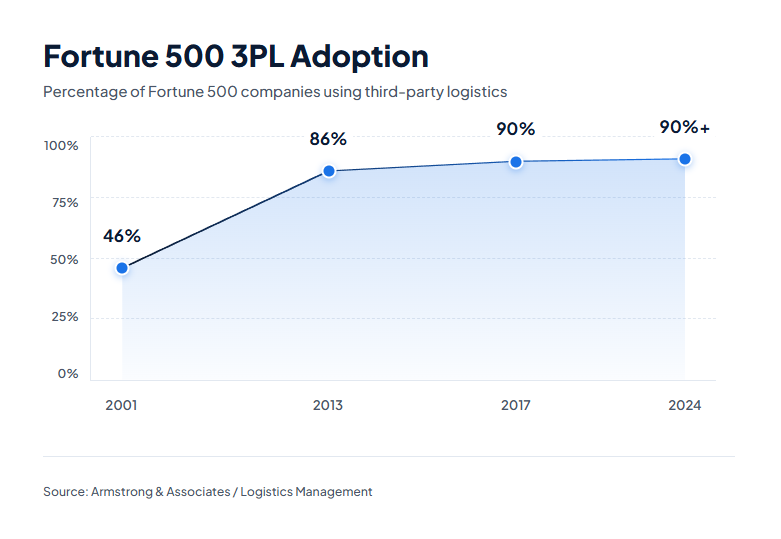
According to Armstrong & Associates' research, 90% of domestic Fortune 500 companies now work with at least one 3PL, up from 46% in 2001, reflecting the strategic benefits of 3PL partnerships.
#7. Improved Customer Experience Consistency
Customers who interact with your brand across multiple channels expect the same level of service quality regardless of where they purchase. An omnichannel 3PL delivers consistent packing, shipping speeds, and delivery experiences whether the order originates from your website, Amazon, or an in-store purchase shipped to the customer's home. This consistency, built on best order fulfillment practices, supports brand perception and customer retention.
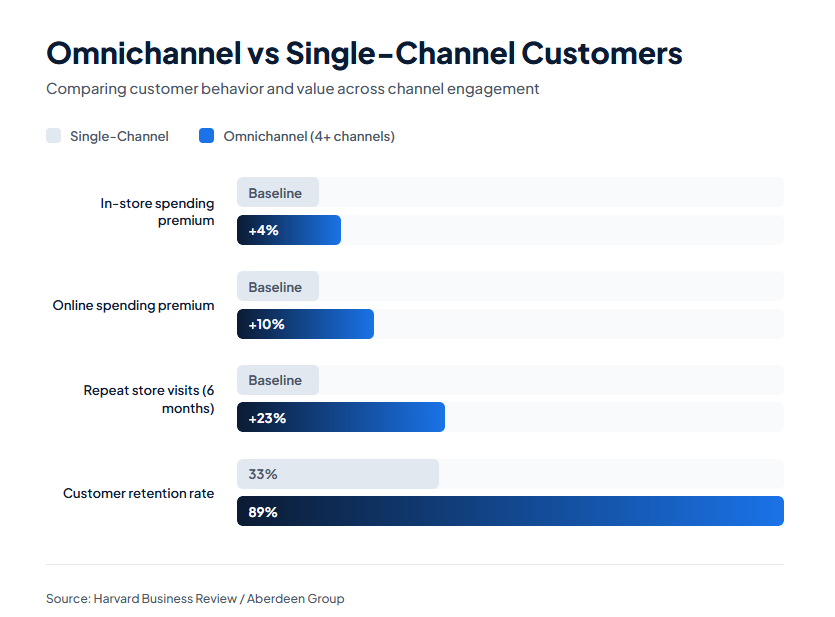
The same Harvard Business Review study cited above found that omnichannel customers spend 4% more in-store and 10% more online than single-channel customers, with customers using four or more channels spending an average of 9% more overall.
Frequently Asked Questions
#1. What's the difference between multichannel and omnichannel 3PL?
A multichannel 3PL manages separate fulfillment streams for each sales channel, often with distinct inventory pools and processes. Omnichannel 3PL integrates all channels into a unified operation in which inventory, order management, and fulfillment operate as one system. The practical difference is that omnichannel allows a single unit of inventory to fulfill orders across channels, while multichannel maintains channel-specific silos.
#2. How do 3PLs handle BOPIS and curbside pickup?
3PLs support BOPIS by shipping inventory to retail store locations or operating dedicated pickup points where customers collect online orders. Some omnichannel 3PLs operate micro-fulfillment centers in urban areas specifically for same-day pickup. The 3PL's technology integrates with your e-commerce platform to display real-time pickup availability to customers and manage the handoff process.
#3. What order volume makes 3PL outsourcing worthwhile?
Most businesses find that 3PL partnerships become cost-effective when shipping 100 or more orders per month. At this volume, in-house fulfillment typically requires dedicated staff time that pulls attention from revenue-generating activities. However, the threshold varies based on product complexity, shipping zones, and internal cost structures.
#4. Can 3PLs handle returns for omnichannel orders?
Yes, omnichannel 3PLs process returns regardless of where the original purchase occurred. A customer who bought online can return in-store, and the 3PL manages the reverse logistics to get that product back into sellable inventory. Returns processing includes inspection, repackaging, restocking, and handling damaged or unsellable items.
#5. How long does 3PL integration typically take?
Integration timelines range from two to eight weeks, depending on complexity. Simple integrations with common e-commerce platforms may be completed in under two weeks. More complex implementations involving multiple sales channels, custom integrations, or high SKU counts require longer setup periods, including inventory transfer and system testing.
#6. What happens to my inventory if I switch 3PL providers?
Most 3PL transitions involve transferring inventory from the old provider's warehouse to the new one. This process typically takes two to four weeks and requires coordination to avoid fulfillment gaps. Some businesses run both providers in parallel during the transition to maintain service continuity.
Key Takeaways
- Omnichannel 3PLs unify inventory and fulfillment across all sales channels: websites, marketplaces, stores, and social commerce - into one integrated operation.
- The global 3PL market reached $1.19 trillion in 2024 and continues growing as e-commerce expands and multi-channel complexity increases.
- Outsourcing to omnichannel 3PLs reduces capital investment, lowers shipping costs through carrier volume discounts, and eliminates the need for dedicated warehouse infrastructure.
- Distributed fulfillment networks place inventory closer to customers, enabling faster delivery times and lower shipping costs.
- 3PLs provide scalability for seasonal demand fluctuations without requiring retailers to manage staffing and capacity changes.
- 90% of Fortune 500 companies use 3PL services, up from 46% in 2001.
- Omnichannel customers spend more and show higher loyalty; businesses with strong omnichannel engagement retain 89% of customers compared to 33% for weak omnichannel approaches.
- Productiv is an example of a specialized 3PL — focused on kitting, assembly, retail compliance, and embedded manufacturing operations rather than broad supply chain orchestration. For companies evaluating whether to use a 3PL or 4PL, Productiv's model suits brands that need operational execution depth, not strategic oversight.
20 Years of Kitting Excellence
Ready to Streamline Your Supply Chain?
Join industry leaders achieving 99%+ SLA performance with flexible kitting, fulfillment, and 3PL solutions.
Get in Touch