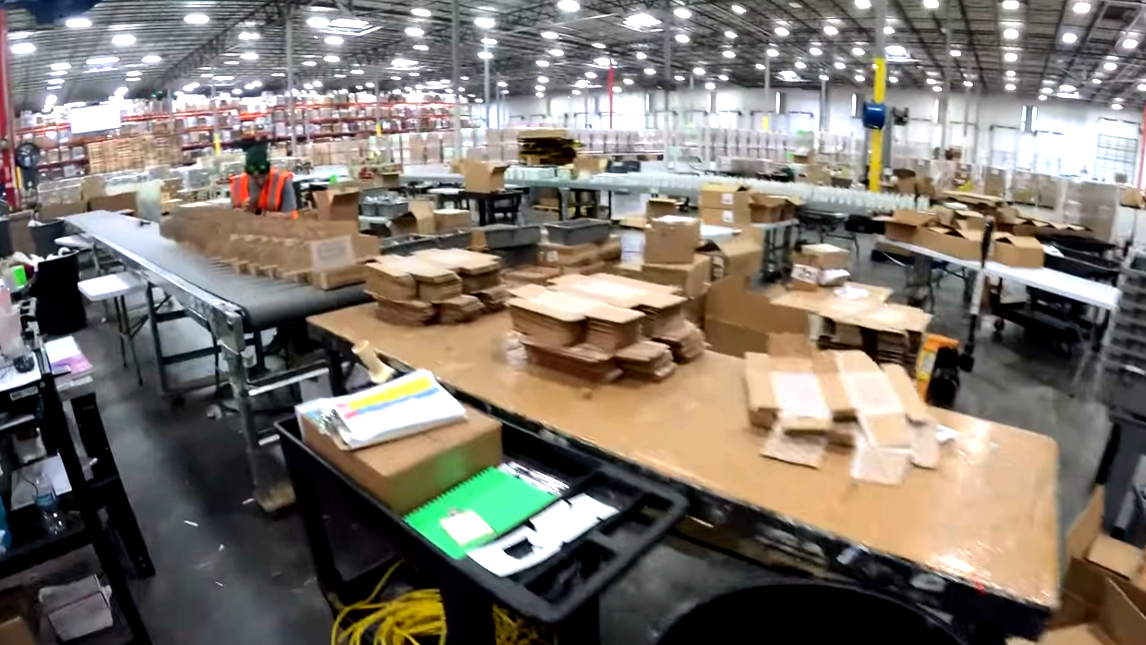
Every operations leader has lived this moment: a retailer calls with a promotional display that ships in three weeks, your subscription box launches a new SKU configuration next month, and your current 3PL just told you kitting isn't a priority because their automation lines are backed up with standard pick-and-pack.
Kitting and assembly sounds simple—put things together, put them in a box. But anyone who has run these programs at scale knows the reality is anything but. Variable BOMs, seasonal surges that triple your headcount overnight, retail compliance requirements that change by retailer and by quarter, and quality standards where a single mislabeled unit can trigger a chargeback that wipes out the margin on a thousand.
After two decades of designing and running kitting operations for consumer brands, medical device companies, cosmetics manufacturers, and everything in between, we've learned that the difference between kitting that works and kitting that becomes a liability comes down to how the operation is engineered—not just staffed.
What is Kitting and Assembly?
Kitting is the process of grouping multiple individual items together as a single unit—a subscription box, a promotional bundle, a sample kit, or a retail-ready display. Assembly goes a step further: physically combining components to create a finished product, whether that's inserting hardware, applying labels, or building a point-of-purchase display from flat-pack components.
In practice, most operations blend both. A subscription box program might involve kitting five products together while also assembling custom inserts and applying personalized labels. A medical procedure tray requires kitting sterile components in a specific sequence while assembling the tray packaging to exact specifications. The line between kitting and assembly is often a matter of degree, and the best operations handle both without treating them as separate workflows.
What makes kitting and assembly operationally distinct from standard warehousing is variability. A standard pick-and-pack operation processes the same SKUs the same way, day after day. Kitting programs change—new promotions, seasonal configurations, client-specific packaging, retailer-mandated label placements. That variability is exactly where most 3PLs struggle, and where the right partner creates real value.
Why Most 3PLs Treat Kitting as an Afterthought
The economics of large-scale 3PL warehousing favor standardization. Automation systems, conveyor layouts, and WMS configurations are optimized for high-volume, low-variation throughput—cases in, cases out. When a client comes to a large 3PL with a kitting program that requires 15 people hand-assembling promotional displays for Target, that work often gets deprioritized because it doesn't fit the operational model the facility was built around.
This isn't because large providers are bad at their jobs. They're structurally optimized for a different type of work. The same standardization that lets an enterprise 3PL process 100,000 identical shipments a day makes them fundamentally slower to adapt when the BOM changes mid-run, the retailer adds a compliance requirement, or a promotional window shifts by two weeks.
We saw this pattern play out with a consumer goods company that was splitting its operation across two 3PLs—one for standard fulfillment and another to handle the labor-intensive hand packaging their primary provider couldn't prioritize. They were processing 20,000 monthly ecommerce orders across 200 finished goods SKUs with 90% hand packaging requirements. The dual-provider setup created inventory visibility gaps, duplicated shipping costs, and coordination overhead that consumed their operations team's bandwidth. When we consolidated that operation, the client went from managing two provider relationships and two inventory pools to a single workflow from raw materials through packaging to shipment—with real-time KPI dashboards replacing the spreadsheets they'd been using to reconcile between providers.
What to Look for in a Kitting and Assembly Partner
Not every kitting project is the same, but the operational fundamentals that separate a reliable partner from a problematic one are consistent.
Workforce Flexibility That Actually Works
Kitting demand is rarely flat. Subscription programs have monthly surges. Promotional campaigns spike and drop. Seasonal products compress an entire quarter's volume into six weeks. A kitting partner that staffs to average demand will fail during peaks, and a partner that staffs to peak demand will bleed cost during valleys.
This is where workforce design matters more than warehouse square footage. When a national cosmetics brand suddenly shifted volume to a secondary supplier that had fill capacity but not packaging capacity, we got the call on a Friday afternoon. By Monday, we had installed two conveyor belts and two L-Bar sealers in the client's conference room and had two lines of 12 people running at a fixed unit cost. Within the first week, output went from 5,000 to 8,000 units per shift. Within six months, we were running 25,000 units per shift across 27 lines on two shifts, with a third shift added during peak periods.
As Jeremy Lockhart, Director of Operations at Orora Landsberg, put it: "We chose Productiv because of the convenience of being flexible. Most kitting partners are not as flexible as Productiv."
IT Integration That Doesn't Take Months
One of the most underappreciated aspects of kitting operations is the IT layer. Every kit has a BOM. Every BOM ties to inventory. Every inventory movement feeds a WMS. Every outbound shipment requires an ASN, a label, and often retailer-specific EDI compliance. If your kitting partner can't integrate with your ERP and your retail partners' systems, you'll spend more time managing data than managing products.
We've built integrations with NetSuite, Extensiv, SPS Commerce for EDI, and direct API connections for wholesale and DTC channels. When Orora Landsberg onboarded with us, their previous experience with IT setup from other kitting providers was a timeline of one to two months. Our IT team completed the integration in two to three days. That kind of speed matters when you're trying to get a new program live before a retail window closes.
Quality Systems That Improve Over Time
In kitting, quality isn't just about catching defects—it's about building a system where defects become increasingly rare. Every mislabeled kit, every missing component, every wrong insert is a data point. The question is whether your provider captures that data and uses it to redesign the process, or simply adds another inspector to the line.
Our approach is to engineer quality into the workflow itself: barcode verification at each station, photo documentation for compliance, and performance data that feeds back into work cell layout and staffing decisions. When we took over kitting for a surgical procedure tray manufacturer, we started with a single surge line and exceeded their throughput and quality metrics. That led to steady-state lines, which led to us identifying inventory accuracy issues that were driving production downtime—problems the client didn't know they had until we provided the data. Eventually, they asked us to take over the warehouse operations feeding their own production lines.
Pricing That Aligns Incentives: The Cost Per Unit Model
Most kitting providers—and the staffing agencies behind them—charge by the hour. That model has an embedded misalignment that most operations leaders feel but rarely quantify: the provider earns more when work takes longer. And the bill rate you see on the invoice is just the tip of the iceberg.
The real cost of hourly labor in kitting operations includes the layers you don't see on the bill: recruiting and onboarding costs that never end because temp turnover in warehouse environments often runs between 100% and 400% annually, supervision overhead for a rotating workforce that never fully learns your BOMs, quality failures from undertrained hands building kits incorrectly, and the productivity gap between a seasoned crew and a fresh one. We've tracked this across hundreds of kitting programs, and the difference is stark: a well-engineered crew operating at peak efficiency can produce units at roughly half the cost per unit of a poorly managed one doing the same work. Same product, same facility, same equipment—the variable is how the labor is managed.
That's why we built our entire model around Cost Per Unit (CPU) pricing—a fixed price per kit assembled or unit processed. This isn't just a billing preference. It fundamentally restructures the incentives: we earn more by working more efficiently, which means our financial interest is aligned with reducing your cost per unit quarter over quarter. The gains come from three interconnected systems: lean-engineered workflows that eliminate wasted motion and optimize work cell layouts, a servant leadership model where supervisors exist to remove obstacles for the crew rather than police them, and a gainsharing structure where the people doing the work benefit directly from productivity improvements.
This isn't a small difference. It changes the entire dynamic of the relationship. Instead of negotiating over headcount and hours, the conversation becomes about throughput and continuous improvement—which is what an operations leader actually cares about.
Why Kitting Performance is a Labor Engineering Problem
There's a reason kitting operations plateau—or worse, degrade—under most providers. The conventional approach treats kitting labor as a commodity: call a staffing agency, fill the headcount, hope the bodies show up tomorrow. When throughput slips, add more people. When costs rise, negotiate the bill rate down by a few cents. It's a cycle that never actually solves the underlying problem.
The underlying problem is that kitting is skilled work disguised as unskilled work. A kit builder who understands the BOM, knows the quality checkpoints, and has muscle memory for the assembly sequence will outperform a new temp by a factor of two or three—not because they're working harder, but because they're not making the mistakes, asking the questions, or creating the rework that eats productivity. The math is straightforward: if your kitting operation turns over its workforce every few months, you're permanently operating with a partially trained crew, and your cost per unit reflects that.
Our approach inverts the traditional model. Instead of treating kitting labor as interchangeable bodies filling a headcount requisition, we engineer the workforce the same way you'd engineer a production line. That means designing work cells for optimal flow, training crews on specific programs until the work becomes second nature, measuring individual and line-level performance daily, and sharing productivity gains with the people creating them. When the crew sees that working more efficiently directly improves their compensation—not just the company's margin—discretionary effort goes up, turnover goes down, and cost per unit drops in a way that hourly billing can never replicate.
This is why our focus has always been on human productivity rather than chasing automation for its own sake. Robotics and automation have their place, but in high-variability kitting environments where BOMs change monthly and product configurations shift by season, a well-engineered human crew with the right training, the right layout, and the right incentive structure will outperform a rigid automated system—and adapt to change without a six-figure retooling bill.
Common Kitting and Assembly Applications
The operational principles are the same, but the specifics vary significantly across industries and use cases.
Subscription Box Fulfillment
Subscription programs are where kitting complexity peaks. Each month's configuration may be different. Personalization rules mean individual subscribers receive different items based on preferences or tier. The BOM changes monthly, the volume is compressed into a shipping window, and late shipments directly impact subscriber retention. We've managed these programs for brands processing thousands of unique kit configurations per cycle, building the staffing and quality systems to handle variability without sacrificing on-time delivery.
Retail Display and PDQ Assembly
Point-of-purchase displays for retailers like Target, Walmart, and Sephora have exacting compliance requirements. Display dimensions, label placement, barcode positioning, inner pack quantities—every element is specified, and deviations trigger chargebacks or rejected shipments. We assemble and fulfill these programs with built-in compliance verification, handling everything from flat-pack display construction to product loading and shrink-wrapping.
Medical Device and Procedure Tray Kitting
Medical kitting demands a level of documentation and precision that consumer goods operations rarely require. Procedure trays must contain exactly the right components in the right quantities, with lot traceability and expiration date management. When a competitor recall created a short window for one of our medical device clients to capture market share, we stood up surge kitting capacity that scaled from a single line to full production—and when elective procedures paused during an industry disruption, the client was able to flex costs down faster than competitors who were carrying permanent headcount for the same work.
Promotional and Seasonal Kitting
Holiday gift sets, limited-edition bundles, product launch kits—these programs have hard deadlines, variable volumes, and often evolving specifications. Buzzy Seeds, a seasonal brand where "everything hits at once," transitioned from 95% in-house kitting to fully outsourced operations with us. As Chuck Springer, their Procurement Manager, noted: "We get a lot of requests from large retailers. Productiv's willingness to accommodate work from us and have awesome communication is really what makes them a head above other people we've talked to."
Product Bundling and Multi-Pack Assembly
Bundling individual items into multi-packs or variety packs for retail channels requires not just assembly labor but inventory coordination—ensuring the right mix of SKUs is available at the right time to build complete bundles without creating overstock of individual components. We manage the BOM planning, inventory allocation, and assembly workflow as an integrated process rather than treating each step as a handoff.
How to Evaluate Kitting and Assembly Services
If you're evaluating kitting partners—whether you're currently handling it in-house, splitting it across providers, or looking to switch—these are the questions that reveal whether a provider can actually execute:
What is your onboarding timeline from contract to first kit shipped? The answer should be specific. Ours is typically six weeks for program design and pricing (during which we analyze your order, inventory, shipping, and SLA data in detail) followed by twelve weeks to first live orders. Providers who can't give you a concrete timeline likely haven't built a repeatable onboarding process.
How do you handle demand surges? "We'll scale up" is not an answer. Ask about workforce design, lead times for additional headcount, and whether they have surge capacity commitments. We've ramped teams with as little as one to two days of lead time for clients whose volumes can swing from needing 20 people to 150 people depending on the week.
What does your quality system look like, and how does it improve? Any provider can describe a QC checkpoint. The differentiation is in the feedback loop. Ask how defect data flows back into process changes. Ask to see examples of throughput improving over the first six months of a program.
What is your pricing model? Hourly billing incentivizes inefficiency. Per-unit billing incentivizes continuous improvement. It's that straightforward.
Can I talk to your leadership directly? If the answer involves routing you through an account manager who routes you through a regional VP, the operational agility that kitting demands will not survive the organizational structure. As John Toler, CEO of Evergreen Enterprises, said: "I have direct access to the key decision-makers, Paul and Doug, and they make decisions quickly. There's not a lot of hierarchy in the organization, so if we need something done, a 10-minute phone call is all it takes."
The Real Cost of Getting Kitting Wrong
Bad kitting isn't just an operational inconvenience. It's a financial liability that compounds in ways most P&Ls don't capture. The visible costs are obvious: missed retail compliance triggers chargebacks, late subscription boxes drive churn, quality defects in medical kitting create regulatory exposure. But the hidden costs are where the real damage accumulates.
Think of your total kitting cost as an iceberg. Above the waterline is the bill rate or unit price you negotiate—the number that gets scrutinized in quarterly reviews. Below the waterline sits everything else: the recruiting and retraining costs from chronic turnover, the supervision overhead for a workforce that never stabilizes, the quality failures and rework from undertrained assemblers, the lost throughput during ramp-up periods every time the crew turns over, and the opportunity cost of your operations team spending their days managing a labor problem instead of growing the business. When you add it all up, the total cost of a poorly managed kitting operation can be double what the invoice suggests.
And splitting kitting across multiple providers—a surprisingly common pattern—layers coordination costs on top of all of that: duplicate inventory pools, reconciliation overhead, and the constant friction of managing handoffs between organizations that don't share systems or incentives.
The brands that get this right aren't necessarily the ones with the biggest budgets. They're the ones that recognize kitting and assembly as an engineered operation, not a labor problem to be staffed, and choose a partner whose operational model and incentive structure are built for the variability that kitting demands.
If your current kitting setup feels like it's held together by workarounds, or if you're spending more time managing your provider than your products, that's not a scaling problem—it's a structural one. And structural problems require structural solutions.
Productiv provides kitting and assembly services across a nationwide network of facilities. Whether you need dedicated kitting lines, subscription box fulfillment, or embedded kitting operations inside your facility, we design programs that improve over time—not just run. Talk to our team about your kitting requirements.
Key Takeaways
- →Kitting and assembly demand workforce flexibility—not just warehouse space. The ability to scale from 20 to 150 people with 1-2 days lead time separates reliable kitting partners from those who miss deadlines during surges.
- →IT integration speed is a leading indicator of operational agility. If onboarding your kitting provider's systems takes months instead of days, every future change will follow the same pattern.
- →Fixed unit cost pricing aligns your kitting partner's incentive with yours—they earn more by working efficiently, driving continuous cost-per-unit reduction instead of billing more hours.
- →Quality systems must create a feedback loop, not just an inspection checkpoint. The real value is when defect data drives process redesign and throughput improves month over month.
- →Splitting kitting across multiple providers creates hidden costs—inventory visibility gaps, duplicated shipping, and coordination overhead that consumes your ops team's bandwidth.
Frequently Asked Questions
What is the difference between kitting and assembly?
Kitting involves grouping multiple individual items together as a single sellable unit—like combining five products into a subscription box or bundling accessories with a main product. Assembly goes further by physically combining components to create a finished product, such as building a point-of-purchase display or inserting hardware into a device. Most real-world operations blend both: a subscription program might kit five products together while also assembling custom inserts and applying personalized labels.
How long does it take to onboard a kitting and assembly program?
A well-structured onboarding typically takes 6 weeks for program design and pricing—during which your order, inventory, shipping, and SLA data is analyzed in detail—followed by 12 weeks to first live orders. This includes IT integration (EDI for retailers, API for wholesale/DTC, WMS-to-ERP connections), process engineering, quality system setup, and training. Providers who can't give a concrete onboarding timeline likely haven't built a repeatable process.
What industries use kitting and assembly services?
Kitting and assembly services span consumer goods (subscription boxes, promotional bundles, gift sets), medical devices (procedure tray kitting with lot traceability), cosmetics and beauty (retail display builds, sample kits), food and beverage (variety packs, seasonal packaging), and retail (POP displays, PDQ assembly for retailers like Target, Walmart, and Sephora). The operational principles are consistent, but compliance requirements, quality standards, and documentation vary significantly by industry.
How do you handle seasonal kitting surges?
Effective surge management comes down to workforce design, not just warehouse capacity. The best kitting operations can scale headcount with 1-2 days of lead time using trained flexible workforce teams, rather than relying on temp agencies that introduce quality and consistency risk. This matters for seasonal brands where the majority of annual volume compresses into a few weeks—you need a partner whose operational model is built for variability, not one that treats surges as exceptions to a steady-state plan.
What is a fixed unit cost pricing model for kitting?
Fixed unit cost pricing means you pay a set price per kit assembled or per unit processed, rather than paying by the hour. This aligns your kitting partner's financial incentive with yours: they earn more by working more efficiently, which drives continuous improvement in cycle times, throughput, and cost per unit. Hourly billing creates the opposite incentive—the provider earns more when work takes longer. Over the life of a kitting program, this pricing difference compounds significantly.
What IT integrations are needed for kitting operations?
A kitting operation typically requires WMS integration for inventory tracking, EDI connections for retailer compliance (ASN transmission, UCC-128 labels), API connections for ecommerce and wholesale order flow, and ERP integration for financial and inventory reconciliation. Common platforms include NetSuite, Extensiv, and SPS Commerce. The critical factor isn't which systems are supported—most providers handle the major platforms—but how fast the integration happens. A provider that takes months to integrate will be equally slow to adapt when requirements change.
Why does workforce turnover matter so much in kitting operations?
Kitting is skilled work that's often misclassified as unskilled. A trained kit builder who knows the BOM, quality checkpoints, and assembly sequence can produce units at roughly half the cost per unit of a new worker doing the same task. High turnover—common with traditional temp staffing models where annual turnover can run 100-400%—means you're permanently operating with a partially trained crew. The hidden costs compound: constant recruiting and onboarding, supervision overhead, quality failures from undertrained hands, and lost throughput during every ramp-up cycle. These below-the-surface costs can double the true cost of a kitting operation beyond what the hourly bill rate suggests.
20 Years of Kitting Excellence
Ready to Streamline Your Supply Chain?
Join industry leaders achieving 99%+ SLA performance with flexible kitting, fulfillment, and 3PL solutions.
Get in Touch