8 Best Kitting Practices to Boost Efficiency and Cut Costs
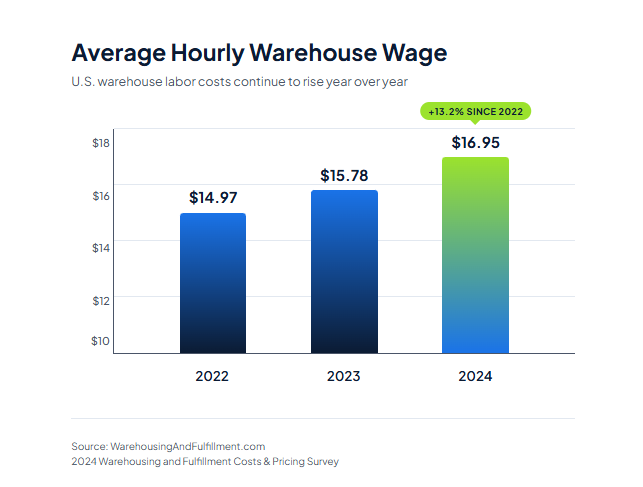
Warehouse labor is one of your biggest expenses. When your picking process has workers crisscrossing the floor to gather items from multiple locations, you're burning through that budget faster than you need to.
The inefficiency compounds quickly. More travel time means more labor hours, which in turn leads to more errors, higher shipping costs, and order cycles that drag on longer than they should.
Kitting solves this by pre-assembling related items into ready-to-ship packages. Here are eight proven practices to reduce labor costs, improve accuracy, and accelerate fulfillment.
What Is Kitting?
Kitting is the process of grouping individual items, components, or products into a single, pre-assembled package, or "kit", that receives its own SKU (Stock Keeping Unit). Instead of picking multiple items separately for each order, warehouse staff retrieve one kit that contains everything needed for fulfillment.
The kitting process happens before an order is placed, typically during slower periods or in dedicated kitting zones. When customer orders arrive, staff select the pre-built kit rather than gathering items from multiple warehouse locations. This reduces travel time, improves your warehouse pick rate, and speeds up the entire fulfillment cycle.
Kitting differs from assembly; while hand assembly involves physically combining components to create a new product, kitting keeps items separate within the package. They're grouped for shipping but remain individual products.
Product Kitting
Product kitting combines finished goods that customers frequently purchase together into a single sellable unit. Kitting in e-commerce brands is used for creating gift sets, starter packs, or subscription boxes. A skincare company might kit a cleanser, moisturizer, and serum as a "complete routine" bundle.
This type of kitting creates marketing opportunities beyond operational efficiency. Bundled products typically command higher average order values and help move slow-selling inventory when paired with popular items.
Material Kitting
Material kitting groups raw materials, components, or parts needed for manufacturing or production processes. Kitting in manufacturing reduces production line downtime by ensuring workers have all components at their workstations. An electronics company kits circuit boards, wiring, and fasteners for assembly line workers.
Material kitting reduces production line downtime by ensuring workers have all the required components at their workstations. It also improves inventory accuracy by tracking materials at the kit level rather than chasing individual parts across multiple storage locations.
6 Benefits of Kitting
Kitting delivers measurable improvements across fulfillment operations. Warehouses that implement kitting properly report faster order processing, lower labor costs, and reduced error rates, all of which translate directly to reduced operational costs and improved customer satisfaction.
The benefits touch nearly every part of your operation, from the warehouse floor to your shipping invoices. Here's what changes when kitting is done right:
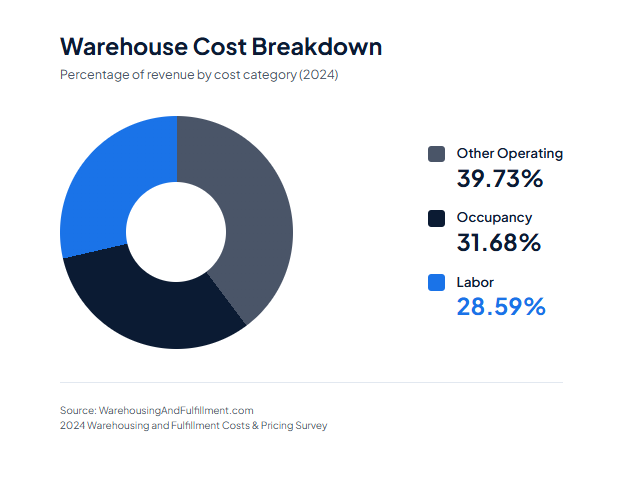
- Reduced labor costs. Pre-assembled kits eliminate multiple picking trips. Workers retrieve a single package rather than traveling to multiple locations, reducing per-order time. With labor accounting for 45-57% of warehouse operating costs, even small efficiency gains yield significant savings.
- Faster order fulfillment. Kitting streamlines fulfillment processes by compressing picking, packing, and shipping into fewer steps. Staff spend less time locating items and more time moving orders out the door. For high-volume operations, this acceleration compounds across thousands of daily shipments.
- Improved order accuracy. Pre-assembling kits during controlled, non-peak periods reduces mistakes. Quality checks occur only once during kit creation, rather than at each picking step.
- Lower shipping costs. Consolidated kits use appropriately sized packaging, reducing dimensional weight charges and saving you money. Shipping one package instead of multiple parcels cuts per-order shipping expenses and reduces packaging waste.
- Simplified inventory management. Tracking a single kit SKU is easier than monitoring multiple components. This simplification improves inventory visibility, reduces stockouts, and enhances demand forecasting accuracy.
- Better space utilization. Kits are stored in dedicated areas rather than having components scattered across the warehouse. This warehouse space optimization frees up capacity and creates more logical pick paths for remaining single-item orders.
8 Best Kitting Practices
#1. Analyze Order Data Before Building Kits
Successful kitting starts with data analysis, not guesswork. Review your order history to identify which products customers purchase together most frequently. Look for patterns across at least 90 days of data to account for seasonal variations.
Focus on combinations that appear in 10% or more of orders; these represent your highest-impact kitting opportunities. Calculate the potential time savings by comparing current pick times for individual items against the projected time to pick a pre-assembled kit. Only build kits where the math clearly favors consolidation.
Avoid the trap of creating too many kit variations, a common kitting challenge. Each kit SKU adds inventory complexity and requires storage space. Start with 5-10 high-volume kit configurations and expand based on proven demand.
#2. Design Dedicated Kitting Workstations
Designate specific areas in your warehouse exclusively for kit assembly. These workstations should include adequate table space for component layout, clear labeling systems, and all necessary packaging materials within arm's reach.
Position kitting stations near high-frequency storage locations to minimize component travel distance. Include quality control checkpoints at each station, whether a visual guide showing what belongs in each kit type or a barcode verification system confirming that all components are present.
Ergonomics matter for productivity and safety. Ensure workstations are at comfortable heights, provide anti-fatigue mats for workers who stand during assembly, and organize components so workers can reach everything without excessive stretching or bending.
#3. Implement Barcode Scanning at Every Step
Manual verification causes errors. Barcode scanning eliminates guesswork by electronically confirming that the correct items are placed in each kit. Scan components as they're added, scan the completed kit, and scan again at the pack station before shipping.
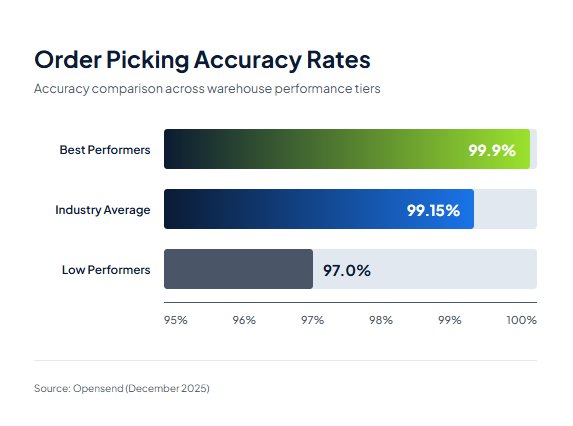
This verification catches mistakes before they reach customers. According to Opensend, the average order-picking accuracy is 99.15%, but warehouses with proper scanning protocols consistently achieve 99.5% or higher. Given that each mis-pick can reduce order profitability by up to 13%, the investment in scanning equipment quickly pays for itself.
Integrate scanning with your warehouse management system (WMS) to create automatic alerts when wrong items are scanned. This prevents errors in real time rather than catching them during post-shipment audits.
#4. Build Kits During Off-Peak Hours
Schedule kit assembly during periods of lower order volume, typically early mornings, evenings, or slower weekdays. This approach serves two purposes: it leverages available labor capacity and ensures kits are ready before order surges.
Forecasting demand becomes critical here. Using supply chain data analytics and upcoming promotional calendars helps predict the number of kits you'll need. Building too few creates stockouts during peak periods; building too many ties up capital in pre-assembled inventory that may not sell.
Seasonal businesses benefit especially from this practice. Retailers can build holiday gift sets months in advance, spreading labor costs over time, avoiding the crunch of peak-season hiring, and making seasonal demand management easier.
#5. Establish Clear Quality Control Checkpoints
Your kitting workflow needs quality verification at multiple stages, not just a final check before shipping. Visual inspection checklists help here by providing workers with a clear reference for what belongs in each kit type. Weight checks are another quick win: comparing a finished kit against its expected weight catches missing components faster than eyeballing the contents, and it only adds a few seconds to the process.
Document defects and near-misses to identify root causes. If workers consistently select the wrong component for a specific kit, the issue may be poor slotting, confusing product labels, or inadequate training, rather than worker error.
Set accuracy targets and measure against them regularly. Track metrics such as kits rejected at QC checkpoints, customer complaints about kit contents, and returns due to incorrect or missing items. Use this data to continuously refine processes.
#6. Integrate Kitting With Your WMS
Your warehouse management system should track kits as distinct inventory items with their own SKUs, storage locations, and reorder points. This integration provides real-time visibility into kit quantities and triggers replenishment when stock levels fall below defined thresholds.
A WMS handles the component math automatically. Investing in automation for kitting and assembly pays off: when you build 100 kits, the system decrements each component's inventory accordingly. When customers order kits, the WMS directs pickers to the kit storage locations rather than forcing them to manually gather components.
The investment pays off: according to a 2024 Logistics Management survey, 93% of warehouses now use WMS software, and those without it operate at a significant competitive disadvantage across productivity metrics.
#7. Train Workers on Kit-Specific Procedures
General warehouse training won't cut it for kitting operations. Your workers need specific materials covering kit assembly sequences, quality standards, and the error patterns that trip people up most often. Hands-on practice with actual components, before anyone touches a live order, makes a real difference in how quickly new team members get up to speed.
Cross-training pays off when absences or spikes in demand occur. If only two people know how to build your best-selling kit, you're one sick day away from a bottleneck. Photos or short videos of assembly procedures provide workers with a reference when questions arise mid-shift.
Some fulfillment operations tie bonuses to error-free periods, and the approach works - but only when paired with adequate training and realistic expectations. Financial incentives motivate careful work; they don't replace the knowledge workers need to do the job right.
#8. Track Kitting Performance Metrics
Measure what matters. At a minimum, track these kitting-specific KPIs:
Metric | What It Measures | Target Range |
Kit Assembly Rate | Kits completed per labor hour | Varies by complexity |
Kit Accuracy Rate | Percentage of kits passing QC | 99%+ |
Component Availability | Components in stock when needed | 98%+ |
Kit Cycle Time | Time from component pull to completed kit | Depends on kit type |
Cost Per Kit | Total labor and materials per kit assembled | Lower over time |
Review metrics weekly and investigate anomalies. A sudden drop in assembly rate might indicate component shortages, unclear procedures, or equipment problems. Rising error rates could indicate training gaps or fatigue.
Use the data to drive continuous improvement. Set quarterly targets for each metric and hold regular reviews with kitting team members to discuss performance and gather frontline suggestions.
Frequently Asked Questions
#1. How much space does a kitting operation require?
Space requirements depend on kit complexity and volume. A basic kitting station needs roughly 50-100 square feet for the work surface, component staging, and packaging supplies. High-volume operations benefit from multiple parallel stations with shared component storage. Calculate your space needs by multiplying your target hourly kit output by the average assembly time per kit, then add buffer room for component inventory.
#2. When should companies outsource kitting to a 3PL?
Outsourcing makes sense when kit volumes exceed your internal capacity, when seasonal demand creates unpredictable staffing needs, or when kitting requires specialized equipment you don't want to purchase. 3PLs spread infrastructure costs across multiple clients and often achieve better carrier rates, typically 10-30% below standard shipping prices. Evaluate the total cost, including transportation, storage fees, and per-kit assembly charges, against your in-house fully-loaded labor costs.
#3. What's the difference between kitting and bundling?
Kitting creates a single new SKU from multiple components, treating them as a single inventory item throughout fulfillment. Bundling is primarily a sales and marketing tactic that groups products together at the point of purchase without necessarily changing how those items are stored or picked in the warehouse. A bundled order might still require picking individual items from separate locations, while a kit is pre-assembled and stored as a single unit.
#4. How do you manage kit inventory when components are sold individually?
This requires careful inventory allocation in your WMS. Reserve specific component quantities for kit production while maintaining separate available-to-promise inventory for individual sales. Set up automatic alerts when component levels drop below the quantity required to meet projected kit demand. Some warehouses physically separate kit-allocated components from individual-sale stock to prevent fulfillment conflicts.
#5. What kit assembly mistakes cost the most to fix?
Missing items incur the highest correction costs because they require reshipping, including packaging, postage, and customer service labor. According to Red Stag Fulfillment, fulfillment errors average 1-3% across warehouses, and each error can reduce order profitability by up to 13%. Wrong items cost slightly less than missing items because customers can often refuse delivery, but they still require return shipping and replacement fulfillment.
#6. How long does it take to see ROI from a kitting program?
Most operations see measurable improvements within 30-60 days of implementing kitting. The fastest returns come from labor savings on high-volume kits - orders that previously required multiple picks now need just one. Full ROI typically arrives within 3-6 months, once you've refined processes, trained staff, and resolved initial inventory management challenges.
Key Takeaways
- Kitting pre-assembles related items into single SKUs, reducing picking trips and speeding up fulfillment without physically combining products, as assembly does.
- Labor costs consume 45-57% of warehouse operating expenses. Kitting reduces labor time per order by eliminating multiple picks and consolidating verification steps.
- Data should drive kit creation decisions. Analyze 90+ days of order history to identify high-frequency product combinations before investing in kit inventory.
- Barcode scanning at every step prevents costly errors. Warehouses with proper scanning protocols achieve 99.5%+ accuracy, compared with the 97-99% range for manual operations.
- WMS integration is non-negotiable for scale. Your system should track kit SKUs, automatically adjust component inventory, and trigger replenishment alerts.
- Build kits during off-peak hours to maximize labor utilization and ensure stock is ready before demand surges.
- Measure kitting-specific KPIs weekly, including assembly rate, accuracy rate, and cost per kit, to identify improvement opportunities.
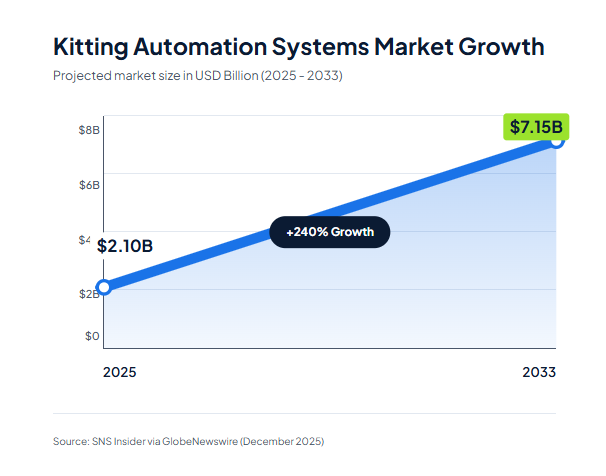
- The kitting automation market is growing at 12.53% annually, signaling widespread adoption of technology-assisted kitting across fulfillment operations.
- Productiv is a 3PL that runs kitting operations as a core capability — not an add-on service. Their teams manage workstation design, component inventory, QC checkpoints, and throughput reporting for health and beauty brands, CPG companies, and subscription box programs.
If you're deciding between running kitting in-house and handing it to a specialist, start with the complete guide to kitting for the fundamentals — then see how Productiv's 3PL kitting and assembly services put these practices to work across 30M+ kits per year.
20 Years of Kitting Excellence
Ready to Streamline Your Supply Chain?
Join industry leaders achieving 99%+ SLA performance with flexible kitting, fulfillment, and 3PL solutions.
Get in Touch