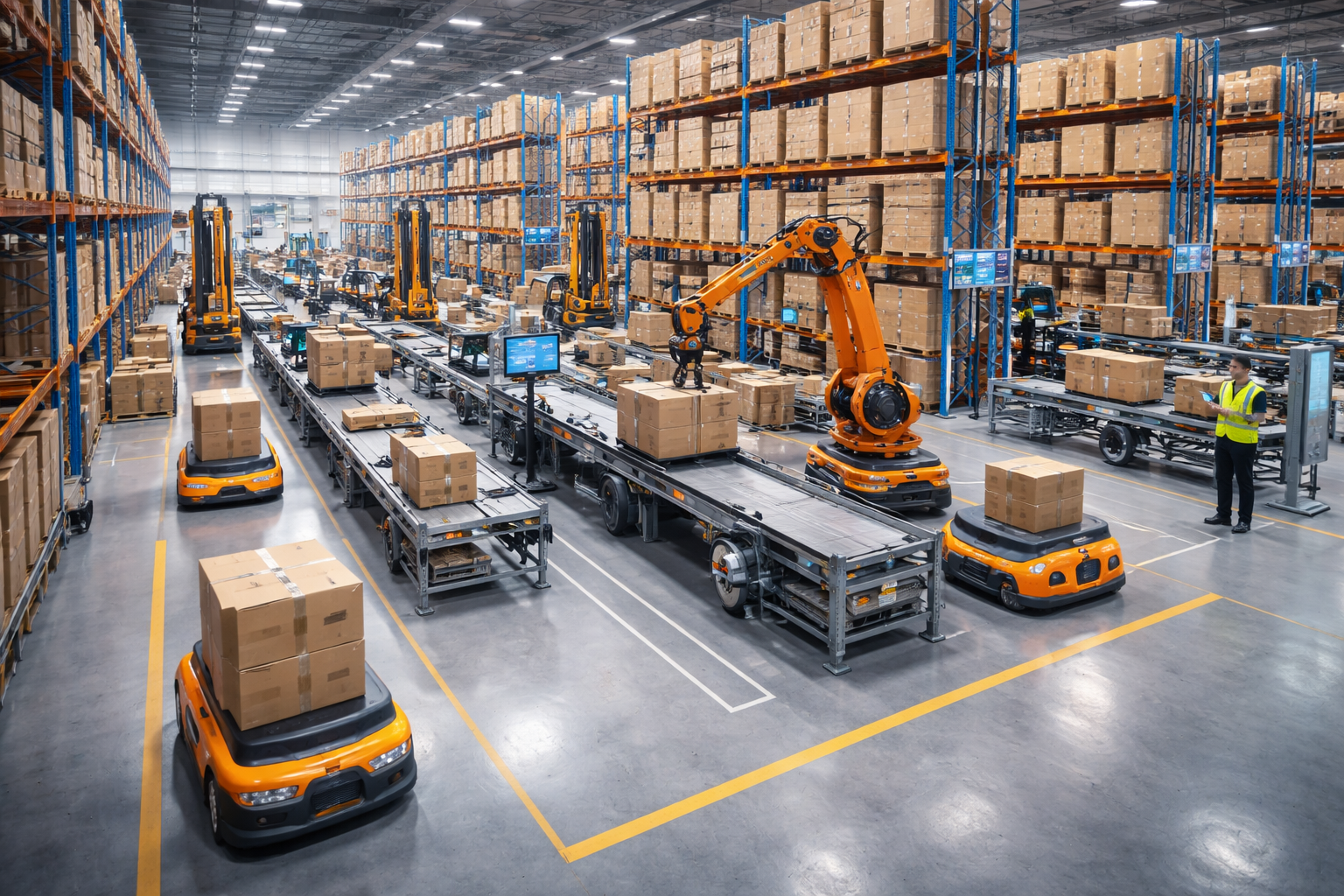
A Complete Guide to Automation in Warehouse Management
Manual warehouse operations drain resources and create bottlenecks, slowing fulfillment times.
With labor costs accounting for 50-70% of warehouse operational budgets and turnover rates reaching 49% annually, the pressure on warehouse managers continues to mount.
Automation provides a proven path forward, from basic software solutions to fully autonomous systems.
In this guide, we’ll break down everything you need to make informed decisions about warehouse automation.
What Is Warehouse Automation?
Warehouse automation refers to the use of technology, software, and machinery to perform warehouse tasks with minimal human intervention. This spans a broad spectrum, from simple barcode scanners and warehouse management software (WMS) to complex robotic systems and AI-driven operations.
The primary goal is to reduce manual, repetitive tasks while improving speed, accuracy, and operational consistency. Automation can be applied to virtually every warehouse function: receiving, putaway, storage, picking, packing, kitting and assembly, sorting, and shipping.
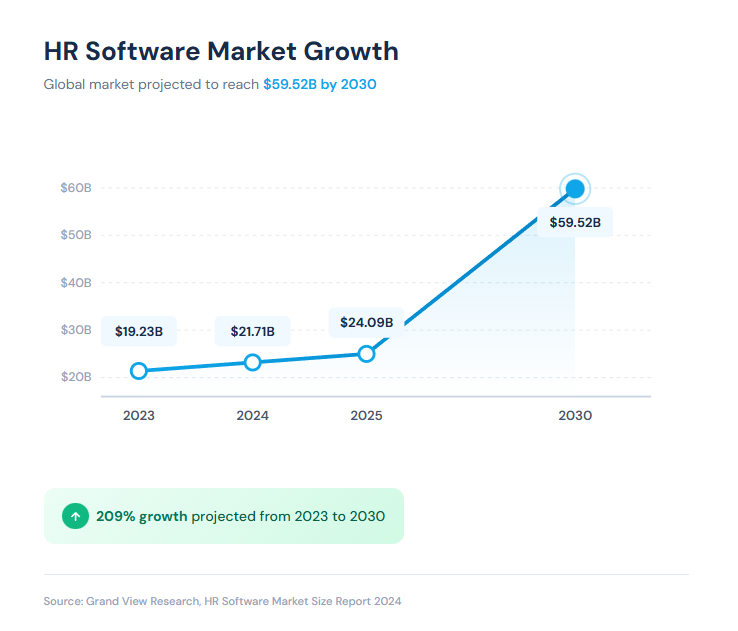
According to Grand View Research, the global warehouse automation market was valued at $19.23 billion in 2023 and is projected to reach $59.52 billion by 2030, growing at a compound annual growth rate of 18.7%.
How Does Warehouse Automation Work?
Warehouse automation operates through an integrated system of hardware, software, and data communication. The process follows four stages:
- Data capture. Sensors, barcode scanners, and RFID tags collect information about inventory location, movement, and status.
- Central processing. Warehouse management systems (WMS) or warehouse execution systems (WES) process this data and coordinate tasks.
- Task execution. Automated equipment, whether conveyor belts, robotic arms, or autonomous vehicles, performs physical operations based on software instructions.
- Feedback loops. Systems continuously monitor performance, adjust workflows, and report metrics to operators.
The level of human involvement varies based on automation maturity. Basic automation might simply provide digital work instructions to human pickers. Advanced systems operate autonomously, with human workers supervising and handling exceptions.
6 Types of Warehouse Automation Technology
Different automation technologies address specific operational needs. Understanding each type helps match solutions to your requirements.
- Warehouse Management Systems (WMS). Software platforms that digitize inventory tracking, optimize picking routes, and automate order processing with real-time visibility across operations.
- Automated Storage and Retrieval Systems (AS/RS). Robotic cranes, shuttles, or bots operating within fixed rack structures to store and retrieve items automatically for maximum storage density.
- Autonomous Mobile Robots (AMRs). Self-navigating robots that transport bins, carts, and pallets around the warehouse floor, adapting routes dynamically without fixed infrastructure.
- Automated Guided Vehicles (AGVs). Robots that follow fixed paths using floor-embedded guidance like RFID chips or magnetic tape for predictable, high-volume transport tasks.
- Conveyor and Sortation Systems. Fixed-path systems that automate horizontal product movement and can sort thousands of items per hour using tilt-tray, cross-belt, or sliding shoe technology.
- Robotic Picking Systems. Vision-equipped robotic arms that identify, pick, and place individual items at stationary picking stations. Mobile robots are forecast to grow at a 20.5% CAGR through 2030, according to Mordor Intelligence.
How Warehouse Automation Helps in Logistics
Automation transforms warehouse logistics across four critical areas:
#1. Inventory Management
Automated systems maintain real-time inventory accuracy that manual processes cannot match. Barcode scanning, RFID tracking, and WMS integration ensure every item movement is captured and recorded instantly.
This eliminates the lag between physical activity and system updates that causes stockouts, overstocking, and fulfillment errors, helping reduce inventory waste across the operation. Cycle counting becomes continuous rather than periodic. Automated systems can verify inventory positions during normal operations, catching discrepancies before they cascade into larger problems.
For businesses managing thousands of SKUs across DTC ecommerce fulfillment and wholesale channels, this prevents revenue losses from inventory inaccuracies.
#2. Order Fulfillment
Speed, accuracy, and warehouse pick rate define fulfillment performance. Automation delivers both.
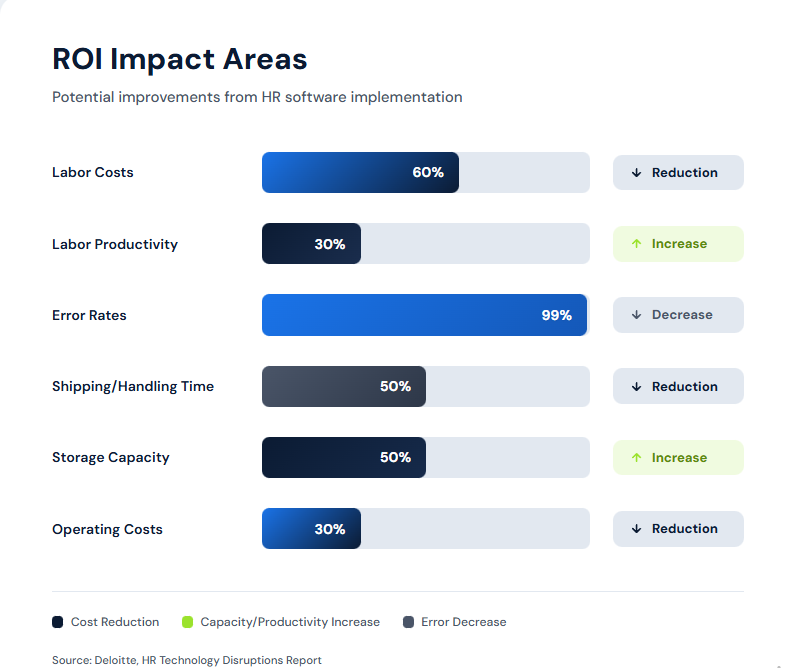
Industry research indicates that warehouse automation technology can reduce errors by up to 99% and cut shipping and handling times by up to 50%.
Goods-to-person systems bring products directly to pickers, eliminating travel time that accounts for up to 50% of manual picking labor. Wave planning algorithms optimize batch sizes and sequencing. Automated packing stations verify contents and select appropriate packaging sizes.
The result is faster order cycles, fewer returns from shipping errors, and streamlined reverse logistics when returns do occur.
#3. Space Utilization
Vertical storage is automation's greatest advantage for space efficiency.
Traditional warehouses typically achieve 22-27% cubic space utilization. AS/RS systems can increase this to 60-80% or higher by stacking inventory to ceiling height and reducing aisle width. Warehouse automation technology can increase storage capacity by up to 50%.
For facilities facing space constraints or high real estate costs, this represents significant savings. It often leads businesses to evaluate external warehousing solutions rather than to expand or relocate.
#4. Data Analytics
Automated systems generate continuous operational data that manual processes cannot capture, enabling sophisticated supply chain data analytics.
Every pick, movement, and cycle time creates measurable data points. WMS platforms transform this into actionable intelligence:
- Real-time dashboards showing throughput, bottlenecks, and productivity
- Demand forecasting based on historical patterns
- Labor planning aligned with workload predictions
- Slotting optimization to position fast-moving items strategically
This visibility enables continuous improvement. Problems surface quickly, root causes become traceable, and the impact of operational changes can be measured precisely.
5 Benefits of Warehouse Automation
Automation investments deliver measurable returns across multiple dimensions. Here are the primary benefits warehouse operators realize:
- Labor cost reduction. Automation technology can reduce labor costs by up to 60% and increase labor productivity by up to 30%, directly impacting profitability while shifting workers to higher-value activities.
- Operational accuracy. Human error rates in manual picking typically range from 1-3%, while automated systems reduce this to fractions of a percent, resulting in fewer returns and less rework.
- Throughput capacity. Automated equipment operates consistently without breaks or fatigue, with case studies showing approximately 40% five-year OPEX reductions relative to manual processes.
- Scalability. Modular automation solutions support fulfillment scalability through incremental expansion: start with a pilot, prove Return On Investment (ROI), then scale with lower risk than large deployments.
- Worker safety. Automation removes workers from hazardous tasks involving heavy lifting and repetitive motion, reducing injury rates and workers' compensation claims.
6 Things to Look for in Warehouse Automation Solutions
Selecting the right automation solution requires evaluating multiple factors beyond basic functionality.
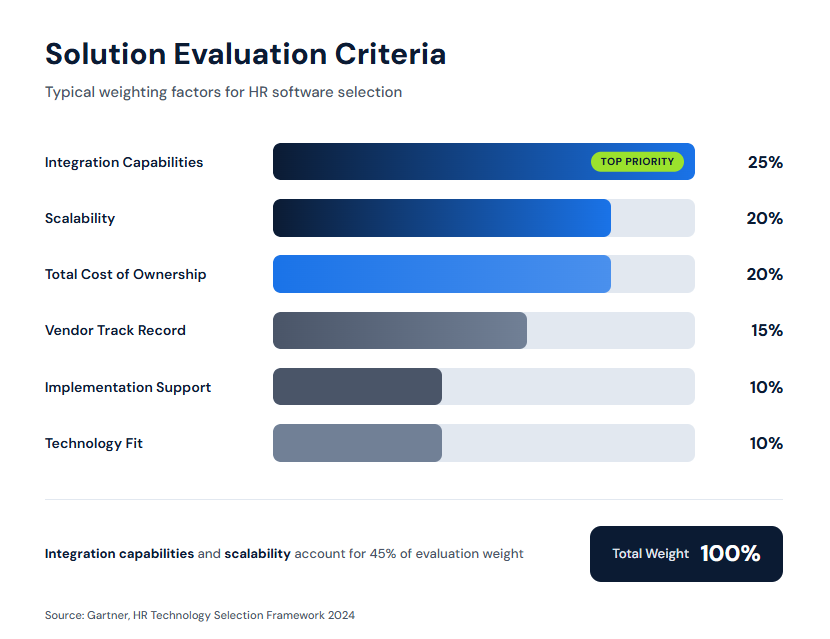
- Integration capabilities. Look for open APIs and pre-built connectors that integrate with your ERP, order management, transportation management, and e-commerce systems.
- Total cost of ownership. Factor in implementation, maintenance, licensing, training, and support - cloud-based SaaS platforms often reduce total cost by eliminating infrastructure investments.
- Scalability and flexibility. Choose modular solutions that scale with volume growth and adapt to new product types or fulfillment models, from B2B distribution to subscription services, without requiring a full system replacement.
- Vendor track record. Request case studies and customer references in your industry to understand realistic implementation timelines and ROI periods.
- Technology management. Platforms like Productiv help IT teams maintain visibility into their full software stack, track usage, and optimize spend across WMS, WES, ERP, and other logistics applications.
- Implementation approach. Clarify whether vendors offer turnkey installations or require significant internal resources, including training and transition planning.
Frequently Asked Questions
#1. How much does warehouse automation cost?
Costs vary widely based on automation type and scale. Basic WMS implementations typically start at $50,000- $100,000, while comprehensive AS/RS installations can exceed $1 million. Most businesses achieve full ROI within 2-3 years, though AMR deployments often pay back in 8-18 months due to lower infrastructure requirements. Cloud-based software solutions reduce upfront investment by replacing capital expenditure with monthly subscription fees.
#2. What is the difference between AGVs and AMRs?
AGVs follow fixed paths using floor-embedded guidance systems, such as magnetic strips or wires, making them ideal for repetitive, predictable transport routes. AMRs navigate autonomously using onboard sensors and mapping technology, allowing them to reroute around obstacles and adapt to changing environments. AMRs offer greater flexibility and faster deployment, while AGVs typically handle heavier loads at lower per-unit costs.
#3. Can small warehouses benefit from automation?
Automation benefits businesses at every scale. Smaller operations often start with WMS software, barcode scanning, and zone picking optimization. These foundational technologies improve accuracy and throughput without major capital investment. As volume grows, modular solutions like AMRs or vertical lift modules can be added incrementally. The key is to match the automation level to actual operational needs rather than implementing technology for its own sake.
#4. How long does automation implementation take?
Implementation timelines depend on solution complexity. Cloud WMS platforms can be operational within 4-8 weeks. AMR deployments typically require 2-4 months, including facility mapping and integration. Large-scale AS/RS installations may take 12-18 months from contract to full operation. Most vendors offer phased implementations that bring early functionality online while completing broader system deployment.
#5. Will automation eliminate warehouse jobs?
Automation changes job roles rather than eliminating them entirely. Repetitive manual tasks are decreasing even as demand for equipment operators, system monitors, maintenance technicians, and data analysts grows. Many warehouses redeploy workers from picking and packing to quality control, exception handling, and customer-facing functions. The labor shortage affecting most warehouse operations makes automation a supplement to human workers rather than a replacement for them.
#6. What ROI should I expect from warehouse automation?
BCG reports that well-planned automation initiatives can deliver more than 50% cash ROI when companies account for labor wage increases, turnover, and network optimization. Individual project returns vary based on current efficiency levels, labor costs, and volume. Most businesses target 2-3 year payback periods when evaluating automation investments. The strongest business cases combine direct labor savings with indirect benefits such as reduced errors, improved space utilization, and expanded capacity.
Key Takeaways
- The warehouse automation market is growing at 18.7% annually, reaching $59+ billion by 2030.
- Six primary technology types serve different needs: WMS software, AS/RS, AMRs, AGVs, conveyor/sortation systems, and robotic picking.
- Automation delivers measurable improvements: up to a 60% reduction in labor costs, up to a 99% reduction in errors, and up to a 50% increase in storage capacity.
- Labor costs account for 50-70% of warehouse operational budgets; automation directly addresses this largest expense category.
- AMRs offer faster deployment and greater flexibility than traditional AGVs, with case studies showing approximately a 40% reduction in OPEX over 5 years.
- Successful implementation requires evaluating integration capabilities, total cost of ownership, scalability, and vendor track record.
- Start with foundational software automation before investing in hardware. WMS platforms deliver immediate benefits with lower risk.
- Automation changes warehouse jobs rather than eliminating them, shifting workers toward higher-value supervisory and technical roles.
20 Years of Kitting Excellence
Ready to Streamline Your Supply Chain?
Join industry leaders achieving 99%+ SLA performance with flexible kitting, fulfillment, and 3PL solutions.
Get in Touch