Shipping is the cost most subscription box operators underestimate, and the one that quietly kills margins at scale.
At 500 subscribers, a $2 overcharge per box costs $1,000 per cycle. At 5,000, it's $10,000 gone before you've touched product costs or overhead.
Knowing how to reduce subscription box shipping costs and which levers actually move the number is what separates operators who stay profitable from those who grow themselves into losses.
These nine strategies cover exactly that.
Why Shipping Costs Are a Bigger Problem Than Most Operators Realize
Subscription box businesses face a shipping cost problem that regular e-commerce brands don't. Instead of shipping on demand, you're shipping hundreds or thousands of boxes at once on a fixed schedule to a geographically dispersed subscriber base you didn't choose. Every inefficiency multiplies by your subscriber count.
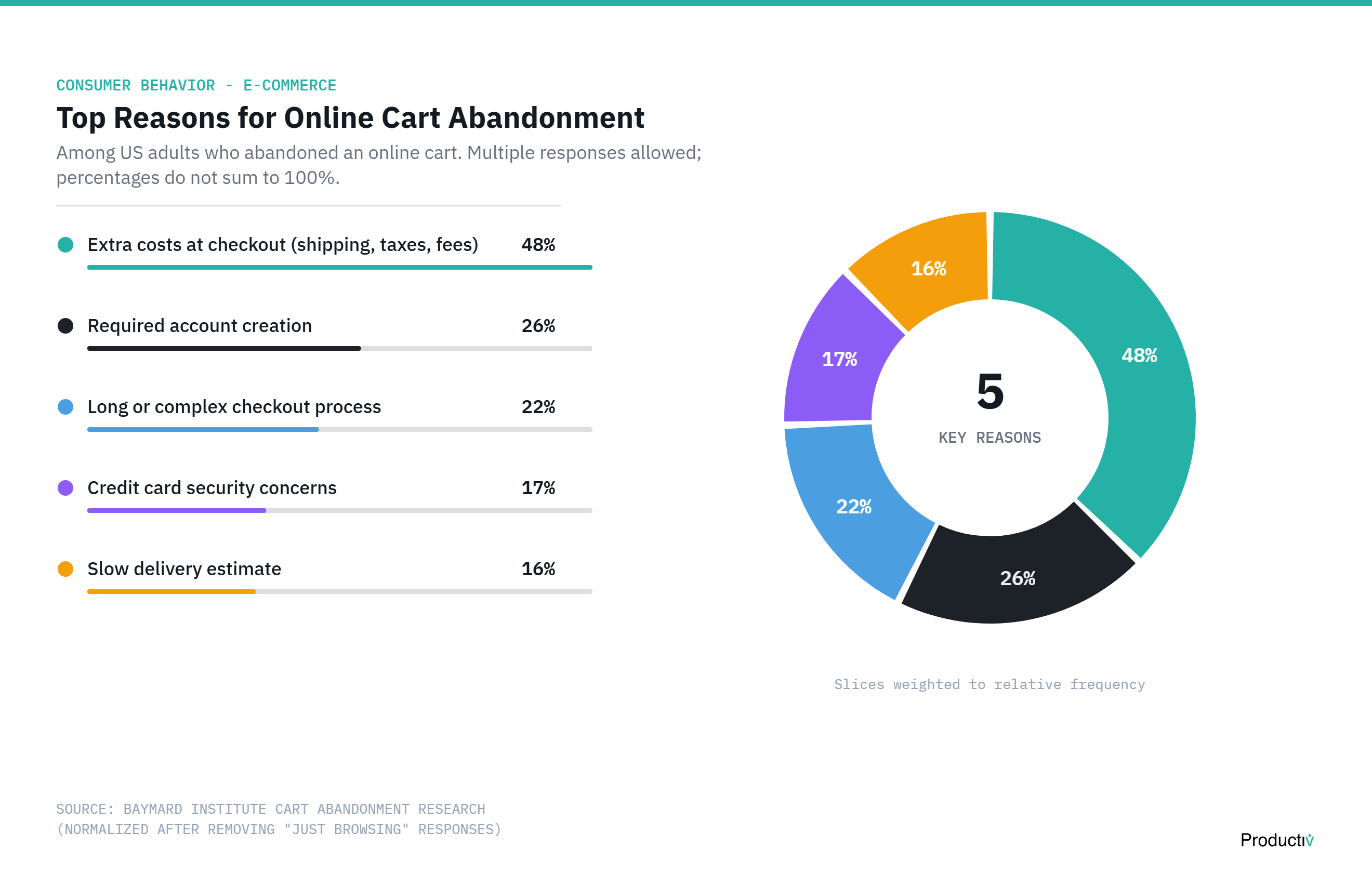
The customer-facing impact is just as significant. According to the Baymard Institute, 48% of online shoppers abandon purchases due to unexpected extra costs at checkout, with shipping fees cited as the leading driver. Subscription boxes that pass avoidable shipping costs onto subscribers through inflated pricing risk higher churn before a customer even receives their first box.
The starting point for fixing this isn't renegotiating carrier contracts. It's understanding exactly where your shipping costs come from and which ones are within your control.
9 Ways to Reduce Subscription Box Shipping Costs
Not every strategy here will apply to your operation; the right starting point depends on your current volume, fulfillment setup, and where your per-box cost is actually leaking. Work through the ones most relevant to your situation first, then layer in the rest as you scale. The compounding effect of applying several of these together is where the real savings appear.
#1. Right-Size Your Packaging
The single biggest controllable variable in subscription box shipping costs is not the box's price but its dimensions.
Major carriers calculate rates using dimensional weight pricing, which means you pay for the space a package occupies, not just its actual weight. USPS calculates dimensional weight by multiplying length x width x height, then dividing by 166 for Priority Mail Cubic-eligible packages. If the calculated weight exceeds the actual weight, you're billed for the higher amount.
A box that's two inches too tall or three inches too wide can push you into a higher-rate tier for every shipment. For a subscription with 2,000 subscribers, even a $1.50 reduction in dimensional weight charges saves $3,000 per cycle. Reviewing your subscription box packaging and auditing current dimensions against actual contents is the fastest way to find money you're already spending unnecessarily.
If your products aren't fragile and don't require a rigid container, poly mailers are worth evaluating. Subscriptions shipping soft goods like apparel, stickers, or printed materials can cut packaging costs significantly while reducing dimensional weight charges to near zero.
#2. Audit Every Carrier Surcharge
The carrier label cost is not your shipping cost. Carriers layer additional fees on top of base rates, adding $3-8 per shipment without being obvious on a summary invoice.
The most common surcharges affecting subscription boxes include residential delivery fees, address correction fees triggered by incomplete subscriber data, oversized package surcharges, and fuel surcharges that adjust quarterly. Many subscription operators see these on individual label invoices but never total them across their full monthly volume.
Pull a full invoice audit for your last two shipping cycles. Sort by surcharge type, not by shipment, and calculate the monthly total for each fee category. You'll often find one or two surcharge types account for a disproportionate share of actual spend, and several are avoidable with process changes rather than carrier negotiations.
#3. Batch Ship on a Consistent Schedule
Subscription boxes have an operational advantage that standard ecommerce doesn't: you control when you ship. Most brands underuse this.
Batch shipping, including processing and printing all labels within a single day or across two to three consecutive days, qualifies you for volume discounts with most carriers. USPS offers presort discounts for large batches, and both UPS and FedEx factor your weekly volume into your negotiated rate structure. Concentrating shipments into a tight window maximizes that weekly volume and moves you into a better rate tier.
Staggering ship dates by geographic zone is a secondary tactic. Sending boxes to distant zones first and local zones last ensures all subscribers receive their boxes on roughly the same date, creating a more consistent experience while improving volume concentration within each shipping window.
#4. Match Your Carrier to Your Package Weight
There is no single best carrier for subscription boxes. The right carrier depends on what's inside the box and how much it weighs - and getting this wrong costs money on every shipment.
For lightweight boxes under two pounds, such as think beauty samples, jewelry, or stationery, USPS Ground Advantage or First-Class Package Service typically offers the lowest base rates. For heavier boxes weighing four to six pounds or more, including meal kits, pet supplies, and craft materials, UPS Ground and FedEx Ground often become more competitive, particularly with negotiated discounts in place.
Most subscription businesses that ship across a weight range benefit from using multiple carriers. Routing lightweight boxes through USPS and heavier boxes through UPS or FedEx based on a defined weight threshold is a practical way to reduce your average per-shipment cost without renegotiating anything.
#5. Explore Regional Carriers for High-Density Zones
National carriers charge for nationwide coverage whether you use it or not. Regional carriers charge for their specific territories, and that specialization translates into lower rates within their zones.
According to Atoship's carrier rate analysis, regional carriers such as OnTrac (Western US), LSO (South-Central US), and Spee-Dee (Midwest) can reduce shipping costs by 20-30% for deliveries within their coverage areas compared to national carrier rates. If a meaningful portion of your subscriber base is concentrated in one region, adding a regional carrier to your mix can reduce your average per-shipment cost without any other changes to your operation.
Review your subscriber zip code distribution. If 30% or more of your subscribers fall within a regional carrier's coverage zone, the math on routing that portion of your volume is usually worth running.
#6. Negotiate Carrier Rates Directly
At subscription box volumes, typically hundreds to thousands of boxes per month, you have genuine negotiating power with carriers. Most subscription operators never use it.
Contact UPS and FedEx business sales representatives directly and share your monthly volume, average package weight, and destination zone distribution. Both carriers have dedicated small business teams that can offer discounted rate structures based on committed volume. The carriers want your shipments on their networks; they have more pricing flexibility than their published rate cards suggest.
Come to the negotiation with data. Know your monthly shipment count, average dimensional weight, zone distribution, and current spend per carrier. Understanding how to choose a fulfillment partner also helps you evaluate whether a 3PL's pre-negotiated rates would outperform what you can achieve independently.
#7. Use a 3PL's Pre-Negotiated Carrier Rates
Third-party logistics providers ship tens of thousands of packages per month across all their clients. That volume gives them negotiating leverage with major carriers that most individual subscription box businesses can't achieve on their own.
When you work with a 3PL, their pre-negotiated carrier rates become your rates. The per-box shipping savings alone can significantly shift the in-house vs. outsourced fulfillment calculation, even before accounting for savings in labor, warehousing, or packaging materials.
A 3PL that ships for $7.00 per box, which would cost you $9.00 on your own account, generates $2.00 per box in savings. At 2,000 subscribers, that's $4,000 per cycle, often enough to offset the 3PL's pick-and-pack fee entirely.
Fulfillment partners that specialize in subscription box fulfillment services also purchase packaging materials at wholesale, further compounding per-box savings. Reviewing the full subscription box fulfillment guide is a good starting point for understanding what a 3PL relationship involves before reaching out.
#8. Optimize Your Fulfillment Location for Zone Distribution
Where you ship from affects your shipping costs just as much as how you ship. Every destination is assigned a carrier zone based on the distance from your origin zip code, and higher zones cost more.
If your fulfillment is based on the West Coast but 60% of your subscribers are in the Northeast, you're paying Zone 7-8 rates on the majority of your shipments. Shifting fulfillment to a central location, or adding a second fulfillment point in a high-density subscriber region, reduces your average zone exposure and lowers your average per-shipment cost.
Analyze your subscriber zip code distribution before committing to a fulfillment location. A centrally located warehouse can reach the majority of the US population within lower zone tiers, resulting in meaningful cost savings compared with shipping from either coast. This is also worth building into your subscription box inventory management strategy from the start, as zone distribution affects reorder planning and stock allocation.
#9. Build Shipping Costs Into Your Billing Cycles
The frequency at which you ship is also a cost lever. Quarterly and annual billing plans reduce the number of shipments per subscriber per year, cutting shipping spend proportionally without changing the box content or the subscriber experience.
A subscriber on a monthly plan generates 12 shipments per year. The same subscriber on a quarterly plan generates four. For a brand shipping 2,000 boxes per cycle at $8.50 per box, converting 20% of subscribers to quarterly billing saves approximately $6,800 in annual shipping costs, before any changes to carrier selection or packaging.
Quarterly plans also reduce packaging material consumption and kitting labor, creating compounding savings. Your subscription box pricing strategy should account for the cost difference when structuring plan pricing, since quarterly subscribers typically expect a per-cycle discount in exchange for the commitment.
Frequently Asked Questions
#1. How much should subscription box shipping cost as a percentage of revenue?
Shipping typically accounts for 10-20% of the subscription box price for brands fulfilling in-house, according to pricing benchmarks from Cratejoy and Subbly. That figure can drop through carrier negotiation, 3PL partnerships, or packaging optimization. Brands without a deliberate shipping strategy routinely see shipping consume well above 20% of revenue per cycle.
#2. What causes subscription box churn, and how does shipping affect it?
Churn most often stems from perceived value mismatches, but shipping issues contribute more than most operators measure. Late deliveries, damaged boxes from poor packaging choices, and unexpected fees at checkout all increase cancellation rates. According to Baymard Institute, 48% of shoppers cite unexpected extra costs - including shipping - as their reason for abandoning a purchase.
#3. Is it better to fulfill subscription boxes in-house or use a 3PL to reduce shipping costs?
For lower-volume brands, in-house fulfillment is often viable. The break-even point typically shifts around 500+ boxes per cycle, where a 3PL's pre-negotiated carrier rates and wholesale packaging costs produce per-box savings that offset the 3PL's fees. The comparison requires looking at carrier rates, labor, packaging, and your own time, not just the pick-and-pack line item.
#4. What is dimensional weight pricing, and how does it affect subscription boxes?
Dimensional weight pricing calculates your shipping rate based on a package's volume rather than its actual weight. Carriers divide the box's cubic measurements by a dimensional factor to get a calculated weight, then bill at whichever number is higher - calculated or actual. Subscription boxes are particularly vulnerable because even a modest increase in box height can trigger a higher rate across your entire subscriber volume.
#5. Do regional carriers provide reliable service for subscription box businesses?
Yes, for deliveries within their coverage areas. Regional carriers like OnTrac, LSO, and Spee-Dee often match or beat national carrier transit times in their territories because they operate focused networks in smaller geographies. The limitation is coverage; they supplement national carriers rather than replace them. Most subscription businesses that use regional carriers route them through a national carrier rather than using the regional carriers as a standalone option.
#6. When should a subscription box business start negotiating carrier rates?
Direct carrier negotiation becomes viable at roughly 300-500 shipments per month, where you have enough volume to move a carrier's rate structure. For shipments above 1,000 per month, UPS and FedEx sales representatives can offer meaningful discounts based on committed volume. Below that threshold, partnering with a 3PL gives you immediate access to pre-negotiated rates.
#7. How do I reduce shipping costs without raising my subscription box price?
The fastest wins come from sources subscribers don't see: packaging optimization, carrier mix adjustments, batch shipping scheduling, and zone distribution analysis. Raising prices to cover avoidable shipping costs treats a logistics problem as a pricing problem, which increases churn risk.
Key Takeaways
- Dimensional weight pricing means your box dimensions directly set your shipping rate; audit them before renegotiating anything else.
- Batch shipping concentrates your weekly volume, which improves your rate tier with most major carriers.
- Regional carriers can reduce per-shipment costs by 20-30% within their coverage zones compared to national carrier rates.
- 3PLs pass pre-negotiated carrier discounts to clients; the savings often exceed their pick-and-pack fee.
- Fulfillment location matters as much as carrier selection; a centrally located warehouse reduces average zone exposure across your entire subscriber base.
- Carrier surcharges can add $3- $8 per shipment; a full invoice audit typically surfaces avoidable fees.
- Quarterly and annual billing plans reduce annual shipping spend per subscriber without changing the product experience.
20 Years of Kitting Excellence
Ready to Streamline Your Supply Chain?
Join industry leaders achieving 99%+ SLA performance with flexible kitting, fulfillment, and 3PL solutions.
Get in Touch