
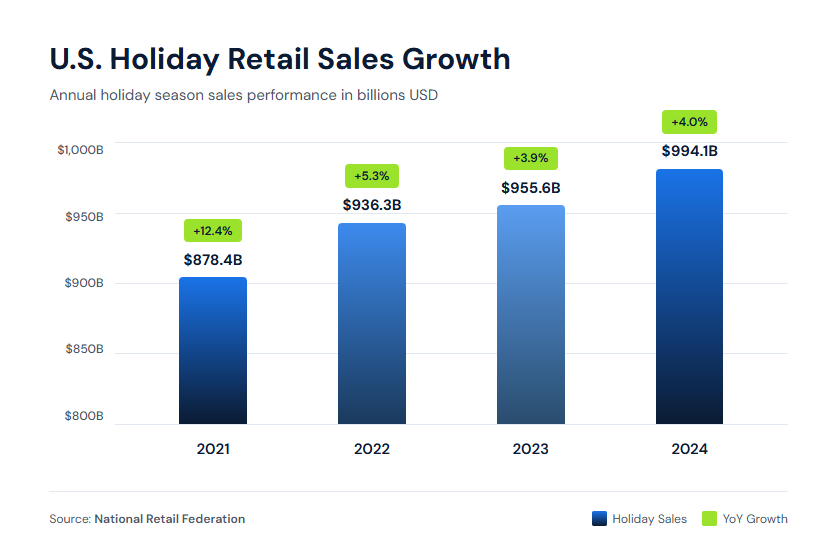
Seasonal demand spikes strain even the most well-run warehouses. When holiday sales can account for up to 32% of annual retail revenue, a single stockout during peak season can mean thousands in lost sales and damaged customer relationships.
Inventory distortion, including stockouts and overstocks, cost retailers $1.77 trillion globally in 2023, according to IHL Group.
The solution lies in proactive seasonal demand management: forecasting accurately, staffing strategically, and building flexibility into your warehouse operations before the rush hits.
Here’s how to prepare your warehouse for peak season success!
What Is Seasonal Inventory?
Seasonal inventory refers to stock levels that fluctuate predictably in response to seasonal demand patterns. These patterns are driven by holidays, weather changes, back-to-school periods, and other recurring events that cause temporary spikes or drops in consumer purchasing behavior.
For warehouses, seasonal inventory requires different handling than steady-state stock. Products may need to arrive months in advance, temporarily occupy additional storage space, and move through fulfillment at much higher velocities during peak periods, requiring fulfillment scalability.
A swimwear retailer, for example, must begin receiving spring inventory in January to have adequate stock positioned by April, while simultaneously clearing winter merchandise to make room.
Why Is Proper Seasonal Demand Management Essential?
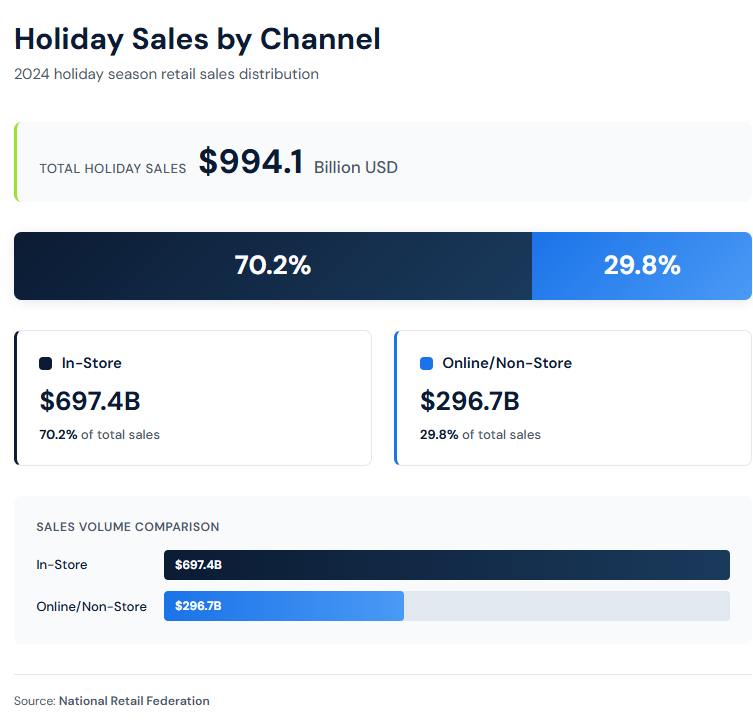
Failing to manage seasonal demand properly creates a cascade of operational and financial problems. According to research from Bain & Company, the combined November-December 2024 holiday season saw 4.2% year-over-year growth, with digital channels accounting for nearly 29% of sales; it’s the highest seasonal share on record.
Here is why getting seasonal demand management right matters:
- Revenue protection. Stockouts result in immediate lost sales and can permanently shift customers to competitors. Research indicates that 91% of consumers won't wait for a restock and will switch to a competitor or abandon the purchase.
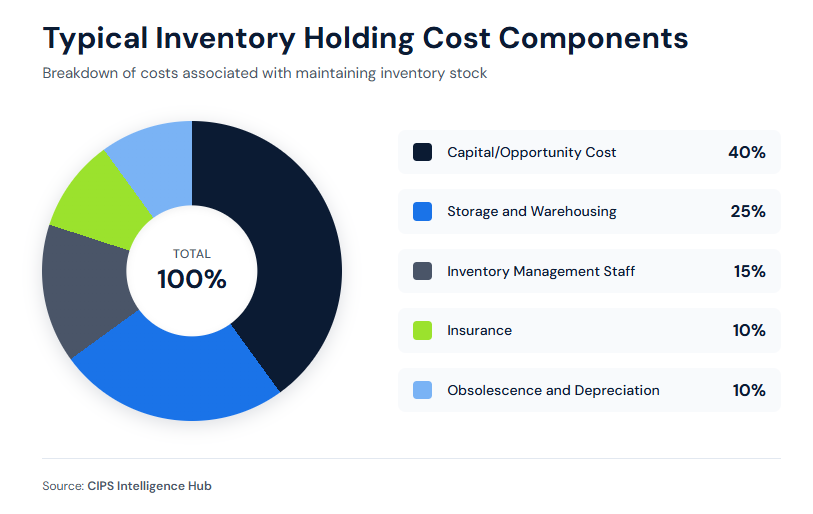
- Cost control. Overstocking ties up capital and increases holding costs, which typically range from 12% to 35% of total inventory value annually. Excess inventory often requires markdowns that erode margins.
- Labor efficiency. Poor demand planning leads to overstaffing during slow periods or scrambling for temporary workers at premium rates during unexpected surges.
- Customer experience. Delivery delays, order cancellations, and out-of-stock notices during peak season are some of the order fulfillment challenges that damage brand reputation when it matters most.
- Cash flow management. Capital locked in excess inventory cannot be deployed for marketing, equipment upgrades, or other growth investments.
8 Strategies for Seasonal Demand Warehouse Management
#1. Build Accurate Demand Forecasts
First, demand forecasting forms the foundation of seasonal inventory management. Start by examining at least three years of historical sales data, broken down by SKU, location, and week. Don’t forget to look for patterns in when demand begins ramping up, peaks, and tapers off for each product category – modern forecasting goes beyond simple historical averages.
According to McKinsey research, AI-driven forecasting can reduce errors by 20% to 50% compared to traditional methods, translating into up to 65% fewer lost sales due to product unavailability. Machine learning models continuously learn from new data, enabling forecast accuracies of 85-95% for organizations with quality data.
#2. Set Safety Stock by Demand Variability
Safety stock serves as your buffer against unexpected demand surges or supply disruptions. However, the right safety stock level varies significantly by product and season.
For seasonal items, calculate safety stock based on demand variability during peak periods, specifically, not annual averages. A product that sells 100 units weekly most of the year but 500 units weekly during the holiday season needs safety stock calculated against that 500-unit baseline during peak months.
The formula considers three factors: demand variability (how much daily or weekly sales fluctuate), lead time variability (how reliably suppliers deliver), and your target service level (typically 95-98% for key SKUs).
Products with longer or less reliable lead times need proportionally higher safety stock. Holding costs range from 12% to 35% of inventory value annually, so excessive safety stock quickly becomes expensive. The goal is to find the minimum buffer that prevents stockouts without incurring excessive carrying costs.
#3. Use Flexible Workforce Staffing
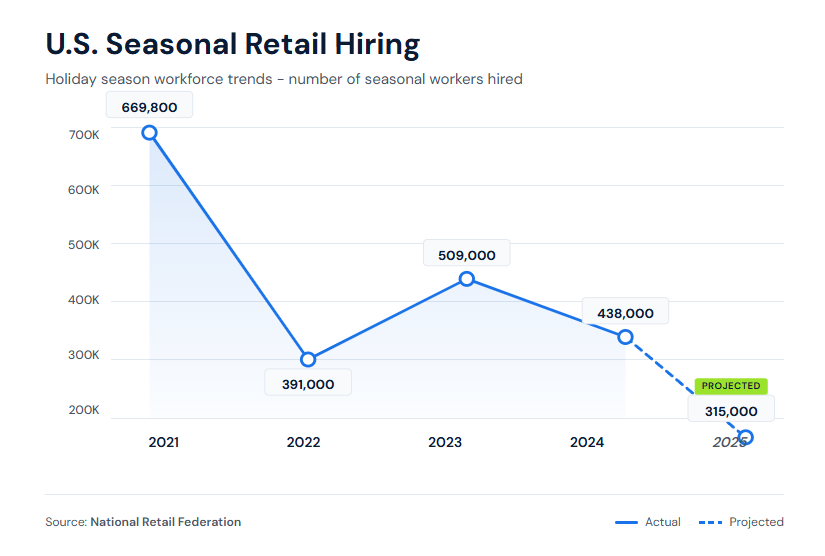
Seasonal peaks require additional labor, but staffing has shifted considerably. According to the National Retail Federation, retailers hired 438,000 seasonal workers in 2024, though 2025 projections dropped to 265,000-365,000. It’s the lowest level in 15 years, reflecting both economic uncertainty and operational efficiency gains.
Rather than simply adding headcount, consider these workforce flexibility approaches:
- Cross-train permanent staff to perform multiple functions so they can shift between receiving, picking, packing, and shipping based on daily bottlenecks. This reduces the number of seasonal hires needed and improves response time to volume changes.
- Stagger shift scheduling based on your order patterns. Schedule overlapping shifts during high-volume periods while maintaining lean staffing during predictable lulls.
- Establish temp agency partnerships before peak season begins. Pre-screen and train temporary workers in October for a November start, rather than scrambling to onboard people during the rush.
- Implement performance incentives during peak season to maintain warehouse pick rates and accuracy when the pressure is highest.
#4. Pre-Position Inventory Strategically
If you operate multiple warehouses or use distributed fulfillment, strategically positioning inventory before peak season can reduce warehouse operational costs and delivery times during the rush.
Analyze order data by geography to identify demand concentration. Products selling heavily in the Northeast should be positioned in East Coast facilities before Black Friday, not shipped cross-country during the busiest week of the year. A distributed network makes this play practical — Productiv's warehouse locations in Dallas, Charlotte, and Reno cover Central, East, and West positioning from one partner.
For single-warehouse operations, pre-positioning means organizing inventory by velocity. Move fast-moving seasonal SKUs to prime picking locations near packing stations. Stage high-volume items in forward pick areas with replenishment stock positioned nearby for quick restocking.
This preparation should happen before the seasonal surge begins – typically 4-6 weeks in advance for holiday peaks. Trying to reorganize warehouse layout while processing peak-season volumes creates chaos.
#5. Negotiate Flexible Storage Agreements
Seasonal demand often requires temporary storage capacity that sits empty during slower periods. Instead of carrying year-round costs for peak-season space, explore flexible options for warehouse capacity planning:
- On-demand warehousing through seasonal 3PL services often offers short-term storage contracts specifically for seasonal overflow. These agreements let you scale warehouse capacity up or down without long-term lease commitments.
- Overflow protocols with nearby facilities can handle overflow during your peak periods. Knowing how to choose a 3PL provider helps you find the right fit.
- Utilizing vertical space through temporary racking, mezzanines, or higher stacking during peak season can add 20-30% capacity without additional real estate costs. Audit your current facility for underused vertical space before adding external storage.
Build these arrangements 3-6 months before peak season. Storage space becomes scarce and expensive when everyone needs it simultaneously.
One more capacity check that gets missed: if your peak volume includes gift sets, bundles, or retail displays, storage is rarely the first bottleneck — assembly is. Confirm your partner can flex kitting and assembly throughput for the surge, not just square footage. Holiday kit programs run at volumes that overwhelm a pick-and-pack operation set up for steady-state orders.
#6. Upgrade to Real-Time Inventory Tracking
You cannot manage seasonal demand effectively without accurate, real-time inventory data. According to research from Auburn University's RFID Lab, inventory accuracy in U.S. retail operations averages only 63%; that gap becomes critical during high-volume periods.
Warehouse management systems provide the foundation for inventory visibility by tracking stock levels at the bin and location level. This reflects broader fulfillment technology trends across the industry.
Key capabilities for seasonal demand management include:
- Automated low-stock alerts that trigger before stockouts occur, not after
- Real-time inventory synchronization across sales channels to prevent overselling
- Receiving and putaway tracking to know when inbound shipments are available for picking
- Cycle counting tools to verify accuracy without full physical inventories
Modern WMS platforms can also generate demand signals by monitoring changes in order velocity, helping you spot emerging stockout risks days before they materialize.
#7. Establish Supplier Communication Protocols
Your suppliers face the same seasonal pressures you do. Proactive communication prevents surprises on both sides.
Share your demand forecasts with key suppliers 3-4 months before peak season. This gives them time to build inventory, schedule production, and allocate capacity for your orders. Suppliers who receive early visibility are more likely to prioritize your orders when transportation management capacity gets tight.
Establish clear protocols for:
- Order confirmation timelines
- Lead time commitments
- Exception handling
- Partial shipment policies
Also, identify backup suppliers for critical items. A single-source dependency during peak season creates complex supply chain challenges.
#8. Plan Post-Season Liquidation
Seasonal demand management does not end when the peak subsides. Leftover seasonal inventory must be cleared to free up space and capital for the next cycle.
Build your liquidation timeline and channels before the season begins:
- Establish a markdown calendar with predetermined price reduction schedules: For example, 20% off two weeks after peak, 40% off at four weeks, then clearance pricing. Entering markdowns without a plan often means discounting at the same time as competitors, reducing your ability to sell through inventory at higher margins.
- Identify secondary channels, such as outlet stores, liquidation marketplaces, or B2B buyers, that will purchase excess inventory in bulk. Repack and relabel services can prepare items for these channels.
- Prepare for return processing efficiency since post-holiday returns surge in January. Streamlined fulfillment processes get saleable inventory back into stock faster and identify damaged goods for disposition before they occupy valuable space.
Frequently Asked Questions
#1. How far in advance should warehouses prepare for seasonal demand?
Most warehouses should begin seasonal demand preparation 3-6 months before peak periods. This timeline allows adequate time for demand forecasting, supplier negotiations, workforce planning, and inventory positioning. For major retail holidays like the November-December shopping season, preparation typically starts in late summer with final adjustments made through October. Our complete guide to peak season fulfillment readiness walks through that timeline month by month.
#2. What is the most common cause of seasonal stockouts?
Inaccurate demand forecasting is the primary driver of seasonal stockouts. When forecasts underestimate demand - often because they rely solely on historical averages without accounting for growth trends, promotional activity, or market changes - warehouses order insufficient inventory. Secondary causes include supplier delays and inefficient receiving processes that slow product availability.
#3. How do warehouses handle workforce transitions after the peak season ends?
Successful warehouses plan workforce transitions before the season begins. Seasonal employee contracts should include clear end dates. Some operations convert top performers to permanent roles to reduce future hiring and training costs. Cross-trained permanent staff return to normal schedules, and temporary labor partnerships include provisions for gradually reducing headcount as volumes decline.
#4. Can small warehouses compete with large fulfillment centers during peak season?
Small warehouses can compete by focusing on specialization and service quality rather than volume. Advantages include flexibility to handle complex orders, personalized customer service, and the ability to serve niche markets that large fulfillment centers may overlook. Strategic inventory positioning and efficient processes matter more than square footage for many product categories.
#5. What metrics should warehouses track during peak season?
Priority metrics include order fulfillment rate (percentage of orders shipped complete and on time), inventory accuracy (stock records versus physical counts), pick rate (units picked per labor hour), and stockout rate by SKU. Tracking these daily during peak season enables rapid identification and correction of emerging problems before they affect the customer experience.
#6. How does seasonal demand management differ for perishable goods?
Perishable goods require tighter demand forecasting and smaller, more frequent orders rather than large pre-season inventory builds. Safety stock calculations must factor in shelf life constraints alongside demand variability. First-in-first-out inventory rotation becomes critical, and liquidation timelines compress significantly, often requiring same-day markdown decisions rather than weekly reviews.
Key Takeaways
- Seasonal demand can account for 33% of annual revenue, making accurate forecasting and inventory positioning critical to profitability.
- Inventory distortion costs retailers $1.77 trillion globally in 2023, with stockouts and overstocks both carrying significant financial penalties.
- Safety stock levels should be calculated against peak-period demand variability, not annual averages, to provide adequate protection during seasonal surges.
- Workforce flexibility through cross-training, staggered scheduling, and pre-established temp agency partnerships reduces reliance on last-minute seasonal hiring.
- Pre-positioning inventory by geography and velocity before peak season improves fulfillment speed while reducing shipping costs.
- Real-time inventory visibility with automated alerts is foundational - U.S. retail inventory accuracy averages only 63%.
- Supplier communication protocols established 3-4 months before peak season prevent capacity conflicts and delivery surprises.
- Post-season liquidation plans built in advance preserve margins by clearing excess inventory before competitors flood discount channels.
20 Years of Kitting Excellence
Ready to Streamline Your Supply Chain?
Join industry leaders achieving 99%+ SLA performance with flexible kitting, fulfillment, and 3PL solutions.
Get in Touch