Subscription box churn is rarely just about the products. Subscribers cancel when the experience stops feeling worth it, and for most, it begins the moment the box lands on their doorstep.
An early packaging decision, often made under cost pressure or time constraints, follows you through every shipment. A box that photographs poorly, opens awkwardly, or feels cheap on arrival chips away at the perceived value of everything inside it. Multiply that across thousands of deliveries per month, and packaging becomes one of the fastest ways to lose subscribers you worked hard to acquire.
This guide to subscription box packaging covers the decisions that actually matter: box styles, materials, design, costs, sustainable options, and the unboxing choices that give subscribers a reason to stick around.
Why Packaging Decisions Drive Subscriber Retention
For a one-time purchase, mediocre packaging is a minor annoyance. For a subscription, it's a churn risk that repeats every month.
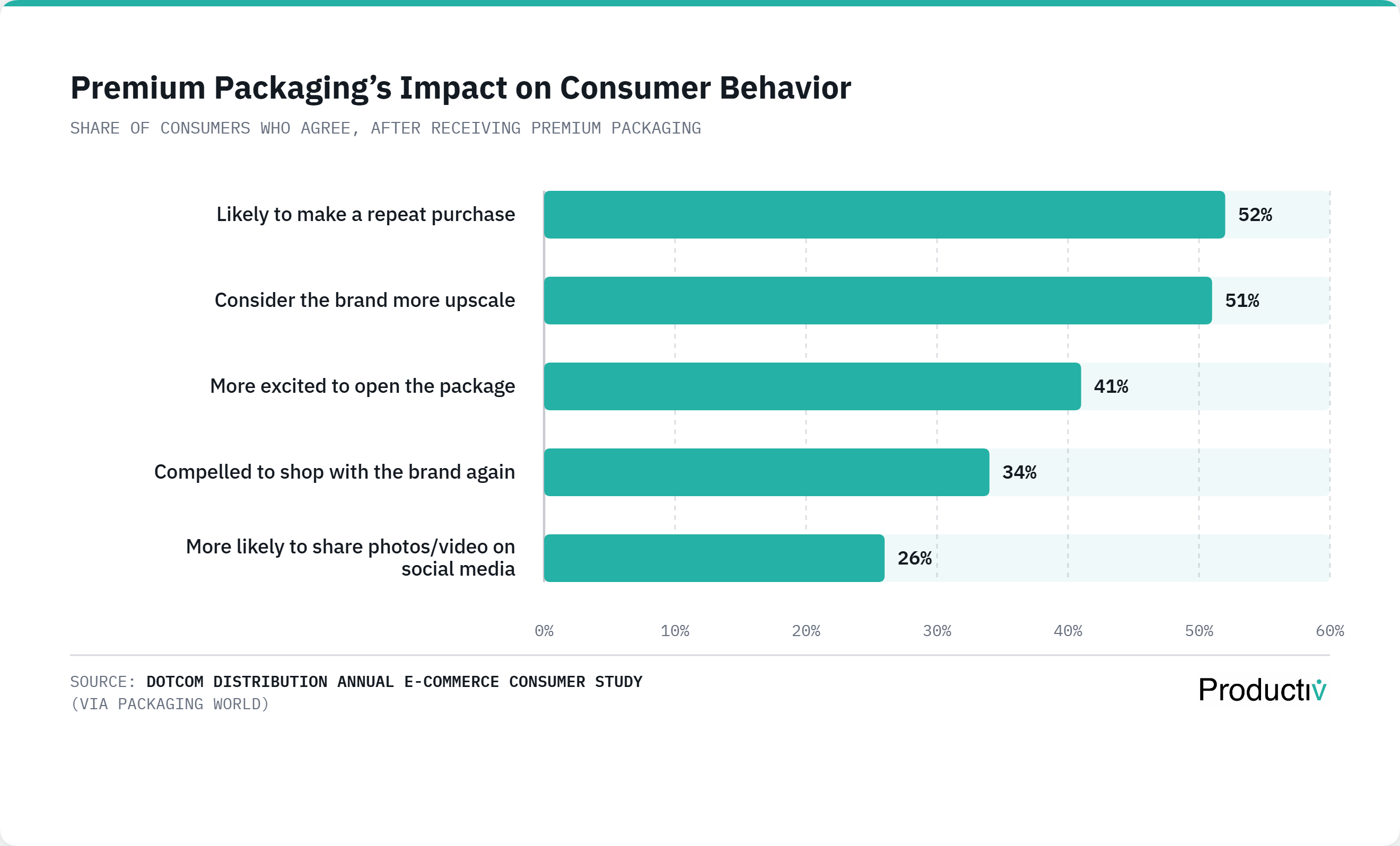
Subscribers pay for an experience, not just products. The moment someone holds your box – before it's even open – they're forming an opinion about whether next month's charge is worth it. According to Dotcom Distribution's e-commerce packaging research, 51% of consumers consider a brand more upscale after receiving premium packaging, and 41% say they're more excited to open the package. These responses aren't isolated to first deliveries; they persist across the subscription lifecycle.
The connection between packaging quality and subscription box churn is direct. A box that feels cheap, arrives damaged, or looks inconsistent signals to subscribers that something is off, even if the products inside are excellent. Retention starts with the physical moment of opening.
Box Styles: Structure Before Aesthetics
The outer box performs structural work before visual work. It needs to survive transit, protect its contents, and open cleanly, and the style determines how well it accomplishes all three.
Mailer Boxes vs. Shipping Boxes
Most subscription brands use one of two outer box formats.
Mailer boxes are self-contained and don't require tape to close. They open from the top, creating a natural reveal when the flaps lift.
The Roll-End Front Tuck (REFT) with dust flaps is the most widely used subscription box style. The dust flaps on the sides prevent particles from entering during transit, and the front-tuck closure makes for a clean opening without scissors or tearing. For most subscription brands, this is the default starting point.
Standard shipping boxes offer more protection for heavy or fragile products and pack quickly. They're less ceremonial to open, but when your contents genuinely need a sturdy outer shell, they're the right call. The Roll-End Tuck Top (RETT) is a lighter-duty mailer that opens from the top and lacks a locking mechanism; it requires tape to seal during shipping.
Sizing Your Box Correctly
Box size has a direct relationship to shipping costs. Carriers charge by dimensional weight, calculated as length × width × height. A box that's even two inches too large in each direction can push your shipment into a higher-rate bracket for every order you send that month.
Right-sizing is one of the most direct ways to reduce subscription box shipping costs without renegotiating carrier contracts. The practical rule is to leave one to two inches of clearance around your items for protective fill. Beyond that, any extra space costs money on every shipment.
Packaging Materials: The Surface That Gets Printed On
Corrugated board is the standard substrate for subscription boxes. The fluted core, a wavy inner layer sandwiched between two flat liner boards, absorbs impact, resists compression, and holds up under conditions that would collapse a paperboard box. Most subscription boxes use E-flute (1/16-inch thickness), which is thin enough for sharp print quality but sturdy enough for standard carrier handling.
Within corrugated, brands choose from three common surface options:
- Kraft. Natural brown, earthy look. Colors print somewhat muted, which works well for organic or minimalist brands.
- Standard white. The default printing surface. Color accuracy is good, with slight variation in whiteness across a production run.
- Premium white. A higher-grade liner with more consistent color and better contrast. Worth the cost when a large portion of the exterior is exposed rather than covered by full-bleed graphics.
For brands building their first box or managing tight margins, standard white E-flute corrugated is the practical starting point. Material upgrades make more sense once subscriber volume justifies larger order quantities.
Designing Your Subscription Box
Once structure and material are settled, design is where your brand's personality enters the packaging.
The Outside: What Arrives at the Door
The exterior travels across the country, sits on doorsteps, and ends up in unboxing videos. Keep it legible; your logo, brand colors, and printed elements should be placed where carrier labels and tape won't cover them. Your packaging partner will provide a dieline: a flat template showing every panel, fold, and flap before production.
Always proof your design against the dieline. A misaligned logo that wraps awkwardly around a fold at 500 units is manageable. At 5,000, it's expensive.
The Inside: Where the Experience Happens
The interior is the reveal. Most brands use some combination of the following:
- Tissue paper. Inexpensive, easy to brand with custom printing, and it crinkles when subscribers dig through it. That sound is part of the experience.
- Filler material. Crinkle paper or honeycomb fill keeps items from shifting in transit. Avoid packing peanuts; they create waste and are widely disliked.
- Custom inserts. Die-cut cardboard holds specific items in place and creates a clean, intentional reveal. They cost more than loose fill but reduce damage rates and lift the perceived value of the box.
- Printed cards. A product card, a curated note, or a small booklet gives you space to tell a story. This is where personalization earns its keep: a subscriber's name, a reason for each product's selection, or a prompt to share.
For brands thinking through subscription box kitting and assembly, the interior configuration also affects packing efficiency. Inserts designed around your actual assembly workflow can cut labor time per box, which matters when you're shipping thousands of units a month.
Print Methods
Analog printing (flexography, litho-lamination) uses plates to transfer ink. It's cost-effective at very high volumes, above 5,000-10,000 units, but requires more setup time and is typically limited to a smaller color range per run.
Digital printing works like a large-format printer. No plates, lower setup costs, faster turnaround, and full CMYK color. For brands shipping under 5,000 units per month, digital printing is almost always the better choice.
Finishing Options
Finishing treatments sit on top of the printed surface and change how the box feels and photographs:
- Matte laminate. Soft, fingerprint-resistant, looks premium.
- Gloss laminate. Vibrant colors that photograph well.
- Soft-touch coating. A velvet-like feel, common in luxury subscription brands.
- Spot UV. A glossy accent on specific elements (logos, icons) on a matte background.
- Embossing/debossing. A raised or recessed impression that adds tactile depth.
These finishes add cost per unit, but they're also where the perceived value of a subscription box moves noticeably. A matte-laminated box with spot UV on the logo photographs differently from a plain corrugated print, and that difference matters when subscribers open boxes on camera.
What Custom Subscription Box Packaging Actually Costs
Custom packaging costs depend on box style, material, order volume, and finishing. For a standard corrugated mailer with basic digital printing, costs run approximately $0.40-$1.20 per unit at low volumes. A 10,000-unit run can be 50-65% cheaper per unit than a 500-unit run, according to wholesale packaging pricing data from 2026.
Rigid boxes, such as those with premium chipboard construction and specialty paper wrapping, cost $4-$12 per unit at lower volumes. They're used by luxury and high-ticket subscription brands where packaging cost represents a smaller percentage of overall product value.
Several variables drive cost beyond box style and volume:
- Box dimensions. Larger boxes use more material.
- Print colors. More colors mean more passes or additional plates in analog runs.
- Finishing treatments. Each adds $0.25 to $0.70 per unit, depending on the process.
- Die-cut inserts. Tooling fees ($150-$500) are a one-time cost spread across the production run.
- Flute type. Thicker board (B- or C-flute) costs more per unit than E-flute.
Understanding these variables is essential when working through subscription box pricing. Brands that don't account for full packaging costs, including inserts, filler material, printed cards, and assembly labor, often find their margins tighter than expected once operations are running.
The most common financial mistake is over-investing in packaging at low subscriber counts. A 500-unit minimum at $1.20 per box is manageable. Committing to 5,000 units before your subscriber base can absorb that inventory risk is not. Build your packaging budget around a subscriber threshold you can confidently reach, then scale design investment from there.
Sustainable Packaging: What Subscribers Notice
Sustainability has moved from brand aspiration to a real factor in purchasing decisions.
According to Dotcom Distribution's annual e-commerce consumer study, 66% of consumers cite eco-friendly packaging as the sustainability factor most likely to make them shop with a brand, above fuel-efficient transportation and ethical sourcing. An additional 26% said receiving eco-friendly packaging would make them more likely to share photos or videos of the product on social media.
Practical options for subscription brands include:
- Recycled corrugated board. Most corrugated already contains 70-90% recycled content. Confirming this with your supplier and printing it on the box costs very little.
- FSC-certified materials. Forest Stewardship Council certification verifies that paper and board come from responsibly managed forests.
- Soy-based inks. A lower-VOC alternative to petroleum-based inks, with no visible quality difference to consumers.
- Plastic-free fillers. Crinkle paper and honeycomb fill replace bubble wrap and packing peanuts, which most consumers view negatively.
- Compostable mailers. For brands shipping soft goods, compostable poly mailers are now widely available and cost-competitive with conventional alternatives.
Communicating your sustainable choices on the packaging matters as much as making them. A short printed note on the inner flap that explains what your box is made from and how to recycle it converts an operational choice into a brand touchpoint.
The Unboxing Experience: Turning a Delivery Into a Moment
Unboxing has become a meaningful channel for subscription brands. According to data cited in the DeliveryX Packaging 2023 report, unboxing videos on YouTube have accumulated more than 1.1 billion views. A Google consumer survey found that 62% of unboxing viewers were watching because they were actively considering purchasing the product they were watching someone open.
The brands that benefit from this aren't the ones with the largest budgets – they're the ones that design the opening sequence as deliberately as the products inside.
Several specific choices contribute to a shareable unboxing experience:
- Sequence the reveal. What subscribers see first when they lift the lid shapes the entire first impression. If your strongest item is buried, it gets discovered rather than revealed. Intentional staging makes the experience feel curated.
- Use the inner lid. The underside of the box lid is a canvas most brands leave blank. A printed pattern, message, or illustration on the inner lid creates a moment of discovery that subscribers genuinely don't expect.
- Add a tactile layer. Tissue paper that crinkles, a cardstock insert that requires a pull tab to lift, or a ribbon tied around the contents; any element that requires a second action before the products appear, extends the experience and invites more engagement.
- Include a reason to share. A hashtag prompt, an invitation to tag your brand, or a QR code linking to a short video gives subscribers a path from their living room to your social feed.
For brands exploring subscription box packaging ideas beyond the basics, the inner lid and a sequenced reveal are among the highest-impact, lowest-cost changes available.
Brands running fulfillment through a 3PL (third-party logistics) provider, like Productiv, need to confirm that their unboxing design translates into consistent execution at scale. A packaging sequence that works when you're assembling 50 boxes at home is different from one that needs to run at 500 boxes per shift.
When choosing a subscription box fulfillment partner, ask specifically how they handle custom insert placement, layering sequences, and any special reveal elements your packaging requires.
When to Upgrade Your Packaging
Subscription brands go through predictable stages. Knowing which one you're in helps you avoid over-investing early and under-investing late.
- Early stage (under 500 subscribers): plain white corrugated, branded tape, or a sticker seal. Validate the product before committing to custom packaging minimums. Brands that have since scaled their subscription-box businesses almost universally started here.
- Growth stage (500-2,000 subscribers). Digital printing becomes cost-effective. A branded outer box with logo, colors, and a basic interior treatment delivers a real return on retention at this volume.
- Scale (2,000+ subscribers). Custom inserts, finishing treatments, and analog print runs become financially viable. Use a detailed subscription box fulfillment checklist to keep packaging configurations consistent across your fulfillment team each month.
Most brands that struggle with packaging decisions are trying to jump stages, committing to rigid boxes and specialty coatings before their subscriber count justifies the expense, or holding onto plain corrugated long after the brand has outgrown it.
Frequently Asked Questions
#1. What is the best box style for a subscription box?
The Roll-End Front Tuck (REFT) with dust flaps is the most widely used subscription box style. It offers a secure, no-tape closure, a clean opening experience, and side flaps that keep particles out during shipping. For brands shipping heavier or fragile products, a standard corrugated shipping box with custom die-cut inserts may provide more appropriate protection.
#2. How can I improve my subscription box unboxing experience?
Start with the reveal sequence; what subscribers see first when they lift the lid should be deliberate, not incidental. Printing the inner lid, adding tissue paper or a ribbon that requires an extra action before products appear, and including a hashtag or share prompt each contribute to an experience worth documenting. If you work with a fulfillment partner, confirm they can execute custom insert sequencing consistently at your monthly volume.
#3. How do I reduce shipping costs through packaging decisions?
Right-sizing your box is the highest-impact change. Carriers charge by dimensional weight, so boxes with space generate inflated shipping costs on every order. Reducing dimensions by even two inches in each direction can shift shipments into a lower rate tier. Using E-flute corrugated rather than thicker substrates also keeps box weight down, which affects ground shipping rates.
#4. How much does custom subscription box packaging cost?
Simple corrugated mailers with digital printing cost approximately $0.40-$1.20 per unit at low volumes, with per-unit costs falling 50-65% at 10,000-unit order quantities. Custom rigid boxes run $4- $12 per unit at lower volumes. Finishing treatments (matte laminate, spot UV, embossing) add $0.25-$0.70 per unit, depending on the process. Die-cut insert tooling fees typically run $150-$500 as a one-time cost.
#5. When should I invest in custom subscription box packaging?
Most brands benefit from switching to branded corrugated packaging somewhere around 500 subscribers, where digital print minimum order quantities become manageable relative to monthly box volume. Basic branding, such as a logo, colors, and a simple interior treatment, delivers a return at this stage through improved retention and subscriber perception. Premium finishes and custom inserts make more sense at 2,000+ subscribers, where larger order volumes bring per-unit costs down to a level that justifies the investment.
#6. Does packaging affect subscription box churn?
Yes, directly. Packaging is the first physical touchpoint of every billing cycle, and a box that looks or feels below expectations creates doubt about renewal, even when the products inside are strong. Poor packaging is among the more overlooked subscription box fulfillment mistakes, and brands often attribute churn to product selection or price without examining whether the delivery experience itself is the issue.
#7. What sustainable packaging options work for subscription boxes?
Recycled corrugated board (most already contain 70-90% recycled content), FSC-certified materials, soy-based inks, crinkle paper or honeycomb fill in place of plastic filler, and compostable mailers for soft goods are the most practical options. The most important step after choosing eco-friendly materials is communicating that choice directly on the packaging.
Key Takeaways
- The box is the first physical interaction subscribers have with your brand every billing cycle. 52% of consumers are more likely to make a repeat purchase after receiving premium packaging, per Dotcom Distribution.
- REFT with dust flaps is the most widely used subscription box style. Choose your structure based on product weight, fragility, and the opening experience you want to create.
- E-flute corrugated is the standard substrate. It balances print quality, protection, and cost for most subscription use cases.
- Custom packaging costs $0.40-$1.20 per unit for basic corrugated mailers at low volumes, dropping 50-65% at 10,000-unit order quantities.
- 66% of consumers say eco-friendly packaging is the sustainability factor most likely to influence which brand they shop with, per Dotcom Distribution. Communicating your material choices on the packaging itself matters.
- Build your packaging budget around a subscriber threshold you can reliably reach before investing in premium finishes or custom rigid construction.
- Design the unboxing sequence deliberately. Reveal order, inner lid printing, tactile layers, and share prompts convert a delivery into a retention and marketing tool.
Getting packaging right is only half the equation — executing it consistently at scale requires a fulfillment partner built for subscription kitting. Productiv's subscription box fulfillment services include BOM-verified assembly and pack station documentation that keeps presentation consistent across every box in the run.
20 Years of Kitting Excellence
Ready to Streamline Your Supply Chain?
Join industry leaders achieving 99%+ SLA performance with flexible kitting, fulfillment, and 3PL solutions.
Get in Touch