Subscribers who cancel within their first few months rarely leave because the products disappointed them. More often than not, the experience didn't match their expectations, and packaging was central to those expectations.
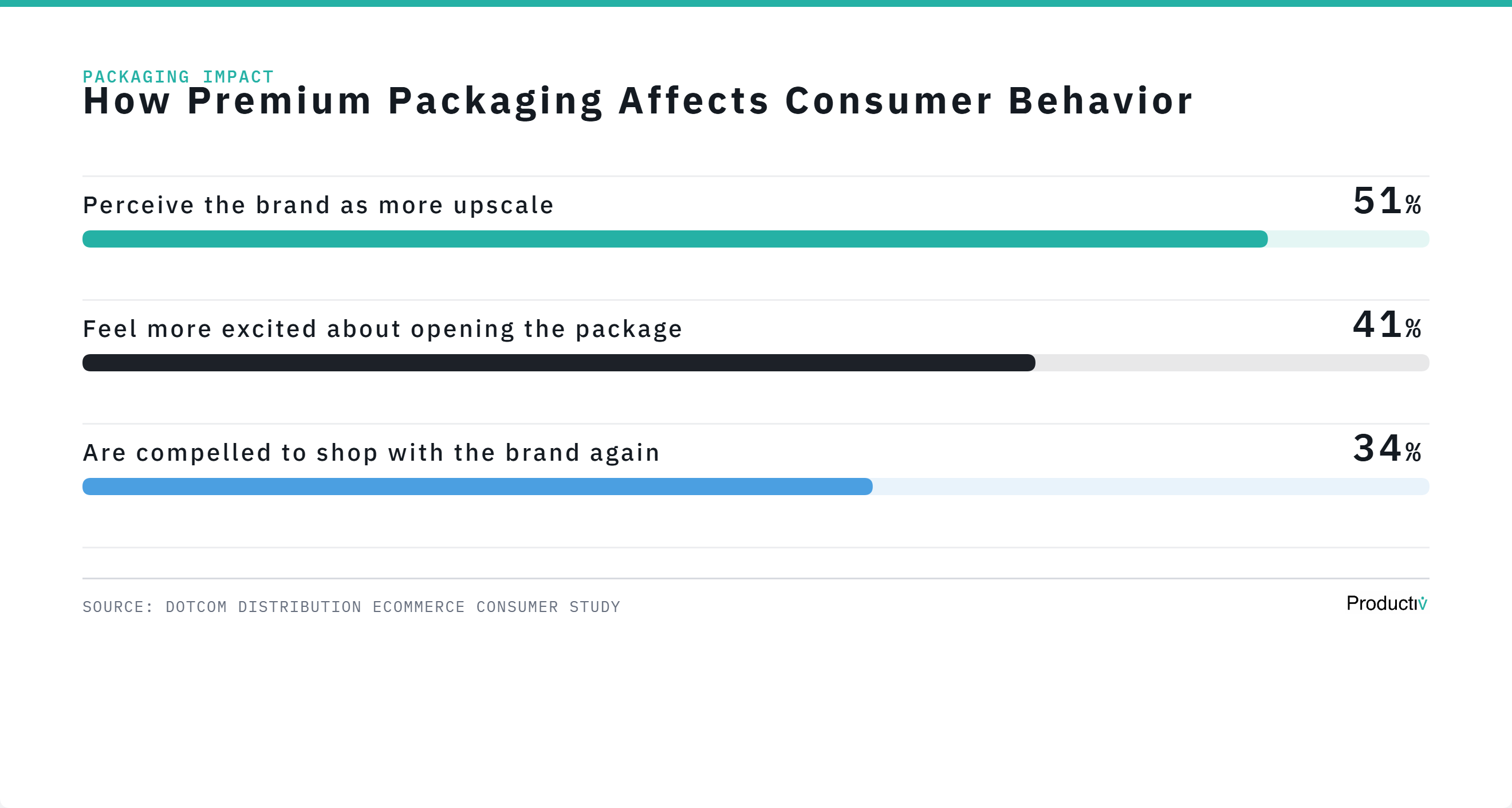
When consumers receive premium packaging, 41% get more excited about opening it, 51% perceive the brand as more upscale, and 34% are compelled to buy again. For subscription box brands, where monthly churn is a constant pressure, those numbers represent real revenue on the table.
The 12 subscription box packaging ideas below span format, design, materials, and inserts, and each one has a direct line to how subscribers experience and talk about your brand.
4 Main Box Formats to Choose From
The ideas in the next section only work when the underlying format suits your product. There are four main packaging formats subscription brands use:
- Mailer boxes. The default choice for most subscriptions. Their built-in lid opens cleanly, dust flaps add structural strength, and the interior presents well on camera. Most subscription categories, such as beauty, snacks, books, and wellness, ship in mailer boxes.
- Corrugated shipping boxes. Better suited to heavier or more fragile shipments that need additional protective padding. The trade-off is less control over the unboxing aesthetic.
- Poly mailers. Works well for soft goods like apparel or accessories, where a rigid box isn't necessary. They're lighter, which reduces per-shipment weight, but offer limited interior presentation space.
- Rigid set-up boxes. Create a high-perceived-value unboxing, common in luxury subscription tiers. They're heavier and more expensive to produce and ship, but signal quality the moment the box arrives.
Your format choice affects both the presentation and your subscription box shipping costs, so it's worth locking this in before investing in custom print or design work.
12 Subscription Box Packaging Ideas
#1. Custom Exterior Printing
A plain brown box communicates nothing about your brand before it's opened. Custom exterior printing makes the box itself the first touchpoint: your brand colors, logo, seasonal pattern, or artwork visible from the moment it lands on a doorstep.
Digital printing handles lower volumes and allows for quick design updates between cycles. Flexographic printing reduces per-unit cost at higher volumes. If full-custom printing is outside the budget early on, branded tape applied over a plain kraft box is a low-cost alternative that still adds a recognizable brand presence.
#2. Branded Interior Printing
The inside lid is one of the most underused surfaces in subscription packaging. Printing a message, color, or repeating pattern on the interior creates a deliberate reveal moment when the box is opened; exactly the frame that appears in unboxing videos and social media posts.
This doesn't require elaborate artwork. A solid brand color with a short tagline, or a simple pattern scaled to fill the lid panel, is enough to make the opening feel considered rather than incidental.
#3. Tissue Paper Layering
A layer of tissue paper over the products inside the box serves two purposes. Practically, it prevents lighter items from shifting in transit. Experientially, it adds a beat of anticipation before the contents are visible; it’s the difference between opening a package and opening a gift.
Branded or color-matched tissue paper costs very little per shipment but adds visible polish that photographs well. Among the packaging touches that drive social sharing, this is one of the cheapest per-unit investments with the most noticeable effect on presentation quality.
#4. Custom Die-Cut Inserts
If products shift during shipping or arrive disorganized when the box is opened, custom die-cut inserts solve both problems at once. Cardboard or foam inserts hold each item in position, so what the subscriber sees when they lift the lid matches the presentation you designed.
Inserts also make subscription box kitting and assembly more consistent. When each item has a designated position, assembly is faster, and the final layout is uniform across every shipment going out the door.
#5. Personalized Insert Cards
A card with the subscriber's name, a note from the founder, or a brief explanation of that month's selection adds a personal element that most competitors skip. At scale, this is handled through variable printing: the same card template, with subscriber-specific details printed per run.
This matters more than most brands expect. Research from Recurly shows that perceived value and customer experience are the primary drivers of voluntary subscription churn, well above pricing sensitivity. A $0.15 personalized card does measurable retention work at very low cost.
The card is also a logical place for calls to action: social handles, referral codes, or QR codes that link to content, without crowding the exterior of the box.
#6. Eco-Friendly Packaging Materials
Sustainable packaging has shifted from a differentiator to a baseline expectation for a meaningful share of consumers. Shorr Packaging's 2025 consumer survey found that 90% of respondents are more likely to purchase from brands with eco-friendly packaging, and 39% have already switched brands specifically over packaging sustainability.
Practical options include FSC-certified corrugated boxes, recycled-content mailers, kraft tissue paper, and water-based inks. Labeling your packaging as recyclable - on the box exterior or through inserts - reinforces the message and signals brand transparency.
Eco-friendly materials also carry margin implications. PwC's 2024 Voice of the Consumer Survey, which collected responses from over 20,000 consumers across 31 countries, found that shoppers are willing to pay an average 9.7% premium for sustainably produced goods, giving brands room to factor this into their subscription box pricing.
#7. Seasonal and Limited-Edition Packaging
Updating packaging each quarter or season gives subscribers a visual signal that something new is coming. It also gives brands a reason to communicate before the box ships, building anticipation rather than waiting for the delivery to land.
Limited-edition sleeves or themed exterior prints create a sense of exclusivity. A holiday-specific design, a collaboration wrap, or a pattern tied to that cycle's theme gives subscribers a reason to stay subscribed just to see what comes next.
For brands building a subscription box business from the ground up, establishing a seasonal packaging cadence early helps set subscriber expectations and creates natural marketing touchpoints throughout the year.
#8. QR Code Integration
A QR code on the interior lid or insert card creates a direct digital channel from the physical box. Brands use these to link to:
- Product tutorials or how-to videos
- Members-only content or community spaces
- Referral signup pages
- Feedback surveys
- Next cycle's theme reveal
This adds measurable engagement value without increasing material costs and gives brands a trackable signal of post-delivery activity beyond open rates and cancellation data.
#9. Layered Reveal Design
Organizing the box so that products are revealed in a deliberate sequence extends the unboxing experience and increases perceived value. The most common approach places a card or featured product on top, with secondary items beneath, either under tissue paper or separated by an insert layer.
Each reveal extends the experience. Smurfit Westrock's packaging design team notes that outlining the sequence and creating multiple reveals make recipients feel like they're getting more. From a social media standpoint, layered reveals generate longer content; viewers keep watching to see what comes next.
This is a design decision that costs nothing additional to implement but significantly affects how the box reads during the unboxing.
#10. Brand-Story Packaging
The exterior panels of a mailer box offer more printable surface area than most brands actually use. Beyond a logo and URL, that space can carry real brand messaging: the origin story in three sentences, the sourcing philosophy behind a food subscription, the mission statement of a cause-aligned brand.
Brand-story packaging builds a connection that a product-only presentation can't. It reinforces why someone subscribed and gives new subscribers immediate context for what the brand represents. This matters most for subscription box businesses operating in crowded categories where product differentiation alone isn't enough to drive retention.
#11. Surprise Inserts and Samples
Including a small unexpected item, such as a sample, sticker, discount code card, or trial product, that isn't listed in the product lineup creates genuine surprise. Dotcom Distribution's research found that 45% of subscribers list surprise giveaways as a desired component of their subscription packaging, and 68% of premium shoppers are more likely to repurchase from brands that include them.
The item doesn't need to be expensive. The point is that the box delivered more than expected. That surplus is what subscribers mention when recommending a box to others and what drives the kind of social sharing that works as organic acquisition.
Rotating the surprise element each cycle keeps it from becoming predictable. When subscribers never quite know what the extra will be, it becomes a reason to open the next box.
#12. Packaging That Ships Well
This one is less visible than the others but more foundational. Packaging that arrives damaged, with crushed corners, dented lids, or shifted inserts, undoes every other investment in presentation. According to Dotcom Distribution, 60% of consumers are unlikely to repurchase from an online retailer after receiving a poorly packaged order.
Structural integrity is itself a packaging decision: the correct flute thickness for your product's weight, adequate fill material, and boxes sized appropriately for what's inside. E-flute (1/16") is the standard for most subscription mailer boxes and handles the majority of standard shipments adequately. Heavier or more fragile product sets may need B-flute or double-wall corrugated construction.
Getting this right also reduces downstream costs. Damaged shipments generate customer service contacts, replacement shipments, and negative reviews – all preventable with the right structural spec. If you're working with a 3PL (third-party logistics) for subscription box fulfillment, confirm that your structural specifications account for how boxes are handled in the warehouse and what carrier handling they'll face in transit.
3 Packaging Mistakes to Avoid
Even brands with strong design work run into a few consistent problems. These are the subscription box mistakes that most often undo the investment:
- Oversized boxes. A box that's too large for its contents needs excess void filler to compensate, which looks cheap on opening and increases dimensional weight charges. Size to your average product assortment with a reasonable buffer - not the largest possible configuration.
- Inconsistent assembly. When the presentation looks different from one subscriber to the next, it signals a process problem rather than a design one. Custom die-cut inserts and documented kitting procedures maintain a uniform layout at scale.
- Ignoring label placement. Carrier labels and packing tape will cover parts of the exterior. If critical brand elements sit where labels land, they disappear in transit. Map label and tape zones before finalizing the exterior design.
Frequently Asked Questions
#1. How can I improve my subscription box unboxing experience?
The highest-impact changes are a branded interior lid print, tissue paper layering, and a deliberate reveal sequence so that all products aren't visible at once. A personalized insert card adds a low-cost personal touch. Structurally, make sure nothing shifts in transit - custom inserts maintain presentation consistency across every shipment.
#2. What packaging format works best for subscription boxes?
Mailer boxes work for most subscription products. Their built-in lid, clean opening experience, and printable interior make them the default choice across categories. Poly mailers suit soft goods where rigid presentation isn't needed. Rigid set-up boxes work for premium tiers. Corrugated shipping boxes offer the most structural protection for fragile or heavy items.
#3. How does packaging affect subscription box churn?
Packaging influences whether a subscriber feels the box is worth the monthly cost. Dotcom Distribution's research found that 60% of consumers are unlikely to repurchase from brands that deliver poorly packaged orders. Damaged products, disorganized presentation, and generic packaging all reduce perceived value; they're among the top three reasons subscribers cancel.
#4. Should I use eco-friendly packaging materials?
For most brands, yes. 90% of U.S. consumers are more likely to purchase from brands with sustainable packaging, and 39% have already switched brands over packaging sustainability. FSC-certified corrugated boxes, kraft tissue, and recyclable mailers are practical options that don't significantly increase material costs at typical subscription box volumes.
#5. How much does custom subscription box packaging cost?
Costs vary based on volume, print complexity, and format. Custom mailer boxes typically start around $1.50-$3.00 per unit at minimum order quantities of 500-1,000 units. Adding interior printing, tissue paper, and custom inserts generally increases the cost by $0.50-$1.50 per shipment. Factor packaging costs into your margin model early; compressing them out of the budget after launch is harder than building them in from the start.
#6. When does it make sense to outsource packaging and fulfillment?
If in-house assembly is producing inconsistent presentation, consuming a disproportionate share of team time, or generating damage claims, it's worth reviewing a 3PL option. Most subscription box fulfillment providers handle custom packaging assembly as part of their service, including custom inserts, branded tissue, and QC checks on each shipment.
Key Takeaways
- Your box format, including mailer, corrugated, poly mailer, or rigid set-up, determines what packaging ideas are even viable, so lock that in before investing in print or design work.
- Premium packaging has a direct line to repurchase: 51% of consumers perceive brands as more upscale, 41% feel more excited to open the box, and 34% are more likely to buy again (Dotcom Distribution).
- The highest-impact, lowest-cost changes are branded interior printing, tissue paper layering, and a layered reveal sequence, none of which require significant production investment.
- Personalized insert cards do measurable retention work at minimal cost. Perceived value and customer experience are the primary drivers of voluntary churn, well above price sensitivity (Recurly).
- Sustainable packaging is no longer optional for a large share of the market: 90% of consumers are more likely to buy from brands with eco-friendly packaging, and 39% have already switched to competitors because of it (Shorr Packaging, 2025).
- Surprise inserts outperform expectations. 45% of subscribers want them, and 68% of premium shoppers are more likely to repurchase from brands that include them (Dotcom Distribution).
- Structural integrity is a packaging decision too. 60% of consumers won't repurchase after receiving a poorly packaged order; every other design investment depends on the box arriving intact (Dotcom Distribution).
- Three mistakes consistently undo strong design work: oversized boxes, inconsistent kitting assembly, and brand elements placed where carrier labels land.
20 Years of Kitting Excellence
Ready to Streamline Your Supply Chain?
Join industry leaders achieving 99%+ SLA performance with flexible kitting, fulfillment, and 3PL solutions.
Get in Touch