How to Streamline Warehouse Returns Processing? Full Guide
Product returns are eating into your margins. Every package that comes back means shipping costs, labor hours, and inventory sitting in limbo instead of generating revenue.
Without a structured warehouse returns processing system, the problem compounds: refunds are delayed, customers get frustrated, and recoverable inventory ends up written off.
This guide breaks down how to build a returns operation that protects your bottom line and keeps customers coming back!
What is Returns Management?
Returns management, also known as reverse logistics, is the process of receiving, inspecting, sorting, and disposing of returned products. Unlike forward logistics, which moves products from the warehouse to the customer, returns management handles the backward flow: from the customer back to your facility.
A well-designed returns management system determines what happens to each returned item. Will it be restocked and resold? Refurbished and sold at a discount? Returned to the supplier? Donated or disposed of? These decisions directly affect your recovery rate and profitability.
Returns management also includes the customer-facing elements: generating return labels, communicating status updates, and processing refunds or exchanges. The speed and accuracy of these touchpoints shape customer perception of your brand.
Essential Steps of a Warehouse Returns Process
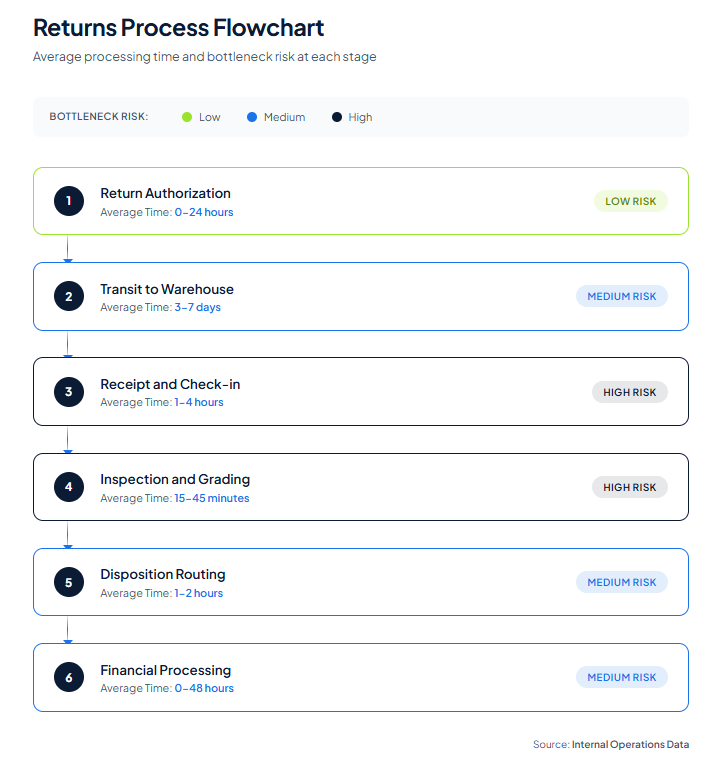
A structured warehouse returns process moves products through defined stages, with clear ownership at each step. Missing or poorly executed steps create bottlenecks that slow refunds and erode customer trust.
- Return authorization. Customer requests a return through your portal or customer service. The system validates the request against your return policy and generates an RMA (Return Merchandise Authorization) number.
- Receipt and check-in. Warehouse staff receive the package, scan the RMA or tracking number, and log the item into your inventory system.
- Inspection and grading. The staff examines the product condition. Common grades include: resellable (original condition), refurbishable (minor repairs needed), defective (warranty claim), or unsellable (damaged beyond recovery).
- Disposition routing. Based on the grade, the item moves to its next destination - back to inventory, to a refurbishment station, to a liquidation channel, or to disposal.
- Inventory update. The warehouse management system (WMS) adjusts stock levels to reflect the item's new status and location.
- Financial processing. The system triggers the appropriate customer action - refund, exchange shipment, or store credit, based on the return reason and your policy.
 7 Best Practices for Warehouse Returns Processing
#1. Create a Dedicated Returns Processing Zone
Mixing returns with outbound fulfillment creates chaos. Returned items need inspection space, sorting areas, and separate inventory locations. Designate a specific area in your warehouse for receiving and processing returns.
This dedicated zone should include inspection stations with adequate lighting, scales for weight verification, photography equipment for documenting condition, and bins or shelves for sorted items awaiting disposition. Position this zone near your receiving dock but separate from outbound staging areas.
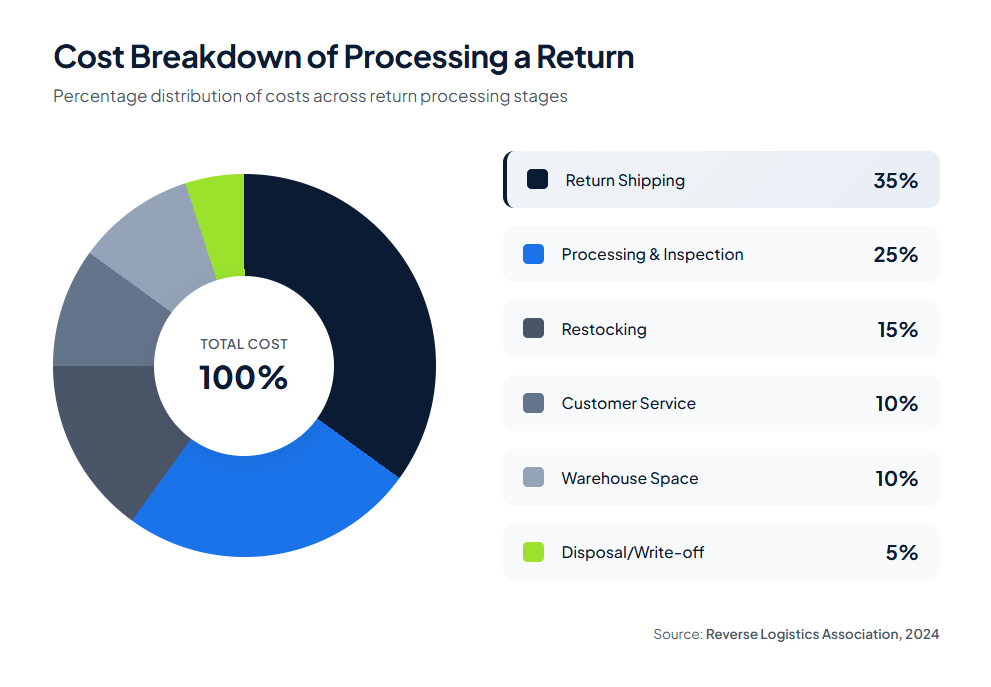
According to CBRE, reverse logistics can require up to 20% more space and labor capacity than outbound operations, so plan your layout accordingly.
#2. Implement Standardized Inspection Protocols
Inconsistent grading leads to resaleable items being written off or damaged goods being restocked. Create a documented inspection checklist for each product category. Train all staff on the same criteria.
Your protocol should address: packaging condition, product completeness (all parts present), cosmetic damage, functional testing requirements, and hygiene considerations (especially for apparel or personal care items). Define clear thresholds: what level of wear constitutes "like new" and "refurbished"?
Document findings with photos. This creates an audit trail for disputes and helps identify patterns, such as recurring damage from specific carriers or defects in particular SKUs.
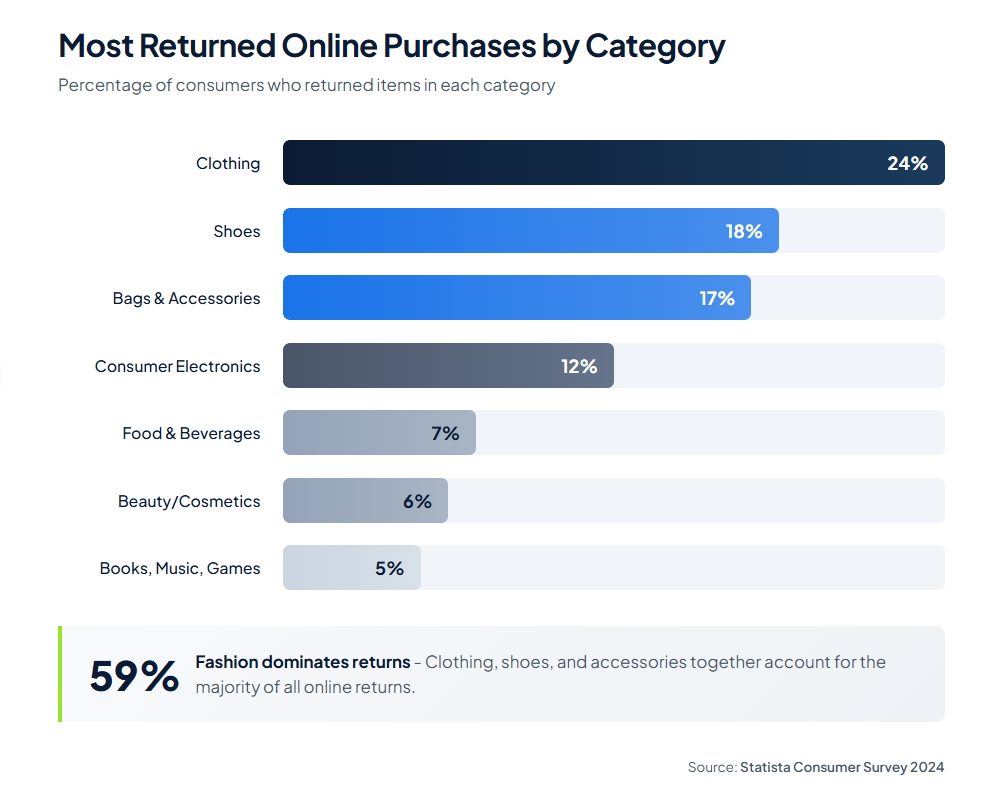 Source: Statista Consumer Insights Survey, 2024.
Note: Percentages represent the share of consumers who returned items in each category in the past 12 months.
#3. Use Technology to Accelerate Processing
Manual data entry slows returns and introduces errors. Integrate barcode scanning with your WMS to instantly identify items, pull order history, and update inventory status. Mobile devices allow staff to process returns anywhere in the warehouse.
Consider returns management software that automates authorization, generates labels, and triggers refunds based on predefined rules. According to the National Retail Federation, 68% of retailers are prioritizing upgrades to their returns capabilities.
Automation can cut processing time in half while reducing labor costs. Real-time inventory updates ensure returned items become available for resale faster, improving recovery rates.
#4. Establish Clear Disposition Rules
Every returned item needs a predetermined path. Build decision trees based on product condition, age, and return reason. For example:
- Items in original condition with tags: Restock immediately and return to sellable inventory.
- Items with minor cosmetic issues: Route to refurbishment, then move to a secondary sales channel.
- Items under warranty: Return to the supplier for credit or replacement.
- Items older than 90 days or heavily used: Send to liquidation or donation channels.
Automate these rules in your system wherever possible. Manual disposition decisions slow processing and create inconsistency.
#5. Separate Refund Processing from Physical Handling
Customers expect fast refunds - according to the National Retail Federation, 84% are more likely to shop with retailers offering no box/no label returns with immediate refunds. Don't wait for the inspection to complete before issuing credit.
Implement tiered refund policies based on customer history and return value. Trusted customers with high lifetime value might receive instant refunds upon carrier scan. New customers or high-value items might require inspection first. This balances customer experience with fraud prevention.
 #6. Track and Analyze Return Reasons
Return data reveals problems you can fix. If 40% of returns for a specific SKU cite "item not as described," your product listing needs better photos or specs. If damage claims spike after switching carriers, investigate packaging or handling.
Capture return reason codes at the authorization stage, then validate during inspection. Compare stated reasons against actual conditions: discrepancies may indicate fraud or customer confusion.
Review return data monthly. Look for patterns by product, category, customer segment, and season. Use findings to improve product descriptions, size guides, packaging, and quality control, reducing operational costs across fulfillment and returns.
#7. Plan for Seasonal Volume Spikes
According to the National Retail Federation, holiday returns surge 17% above annual averages. January becomes the busiest month for returns processing. If you staff and plan only for average volumes, you'll face backlogs that delay refunds and frustrate customers.
Build flexibility into your returns operation as part of seasonal demand management: cross-train fulfillment staff on returns procedures, establish relationships with temp agencies, and pre-negotiate overflow capacity with 3PL partners. Consider hiring seasonal staff specifically for returns; 34% of retailers now do this, says NRF.
6 Most Common Reasons for Returns
Understanding why customers return products helps you prevent returns before they happen. While some returns are unavoidable, many stem from gaps in product information, quality control, or fulfillment accuracy.
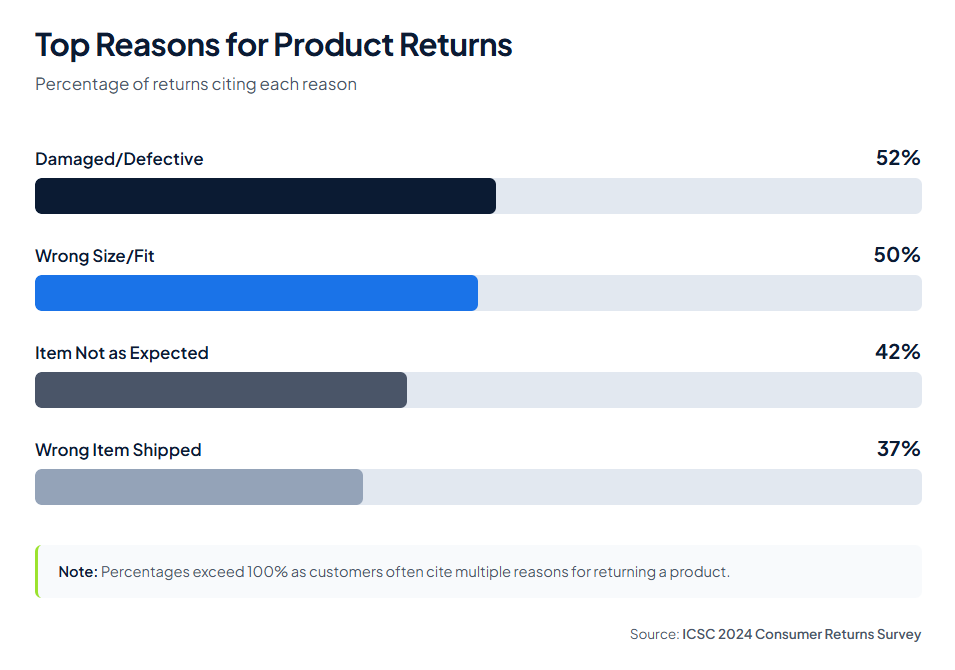
These are the return reasons that show up most frequently in warehouse data:
- Wrong size or fit. The leading cause of returns in apparel and footwear. Customers cannot try items on before purchasing, so they rely on size charts and descriptions. Poor sizing information leads to bracketing – ordering multiple sizes with the intent to return some.
- Product not as described. Photos, descriptions, or specifications that don't match reality. This includes color differences (screens display colors differently), missing features mentioned in listings, or materials that feel different from what was expected.
- Damaged or defective items. Products arrive broken, dented, scratched, or non-functional. Causes include poor packaging, rough carrier handling, or quality control failures before shipment.
- Wrong item shipped. Customer receives a different product, size, or color than ordered. Picking errors in the warehouse are the primary cause.
- Changed mind or no longer needed. The customer decides they don't want the item after receiving it. Gift returns often fall into this category.
- Bracketing behavior. Customers intentionally order multiple variants (sizes, colors), planning to keep one and return the rest. According to the National Retail Federation, about 51% of Gen Z shoppers do this.
How a Good 3PL Partner Can Help You Handle Reverse Logistics
Building an in-house returns operation means competing for warehouse space, hiring specialized staff, and investing in technology that handles backward-flowing inventory. For growing ecommerce brands, this hinders warehouse efficiency and pulls resources away from what actually drives revenue: selling products and acquiring customers.
The math often favors outsourcing. A 3PL with returns expertise already has the inspection stations, grading protocols, and carrier relationships in place. They process returns from multiple clients, which means higher volume, better rates, and staff who handle reverse logistics daily rather than as an afterthought. Your returns get processed faster, your refunds go out sooner, and your recovered inventory gets back into sellable stock before it loses value.
At Productiv, we treat returns as a retention opportunity, not just a cost center. Our facilities are built for reverse logistics: dedicated inspection zones, real-time inventory visibility, and disposition workflows that route items to the right channel within 24-48 hours. We integrate directly with your WMS and ecommerce platform, so you see exactly where every return stands without chasing updates.
Frequently Asked Questions
#1. How long should returns processing take?
Industry-leading warehouses process returns within 24-48 hours of receipt, including inspection and inventory update. Customer refunds should initiate within this window for straightforward returns. Complex cases requiring supplier involvement may take 5-7 business days. Processing speed directly impacts customer satisfaction and inventory recovery rates.
#2. What is a good benchmark for return rate?
Return rates vary by industry. According to the National Retail Federation, overall retail averages 16.9%, while ecommerce-specific rates run closer to 19-20%. Apparel retailers may see 22% or higher. Compare your rate against category benchmarks rather than overall averages. A "good" rate is one that trends downward over time as you address root causes.
#3. How can I reduce the cost of processing returns?
Three approaches yield the largest savings: preventing unnecessary returns through better product information, automating manual steps in the processing workflow, and speeding up time-to-restock so inventory recovers value before becoming obsolete. Consolidating return shipping through drop-off networks rather than individual carrier pickups also reduces transportation costs.
#4. Should I charge customers for returns?
According to the National Retail Federation, about 66% of retailers have introduced fees for at least one return method. Free returns remain a competitive factor: 76% of consumers consider them when choosing where to shop. Consider tiered approaches: free returns for exchanges, free returns above a cart threshold, or free returns for loyalty members. Test different policies and measure impact on conversion and return rates.
#5. How do I handle fraudulent returns?
Common fraud types include wardrobing (using items and returning them), receipt fraud, and returning stolen merchandise. Combat fraud through inspection protocols, customer return history tracking, and requiring receipts or order verification. Flag accounts with abnormal return patterns for review.
#6. What technology do I need for returns management?
At a minimum, you need barcode scanning integrated with your WMS to track items through the returns process. A returns management system (RMS) or returns portal automates customer-facing authorization and label generation. For higher volumes, consider automated sortation and inspection systems. Integration between your RMS, WMS, and order management system ensures data flows without manual re-entry.
Key Takeaways
- According to the National Retail Federation, returns cost retailers $890 billion annually, with processing expenses consuming 20-65% of an item's original value.
- Dedicate separate warehouse space for returns processing to prevent interference with outbound fulfillment operations.
- Standardize inspection protocols and train all staff on consistent grading criteria to maximize inventory recovery.
- Automate where possible: barcode scanning, disposition routing, and refund triggers reduce processing time and errors.
- Track return reasons systematically to identify fixable problems in product listings, packaging, or fulfillment accuracy.
- Consider a 3PL partnership for returns if building in-house capabilities diverts focus from core operations.
- Plan staffing and capacity for seasonal spikes, particularly the post-holiday surge when returns increase 17% above normal levels.
20 Years of Kitting Excellence
Ready to Streamline Your Supply Chain?
Join industry leaders achieving 99%+ SLA performance with flexible kitting, fulfillment, and 3PL solutions.
Get in Touch