8 Best Practices in Warehouse Safety
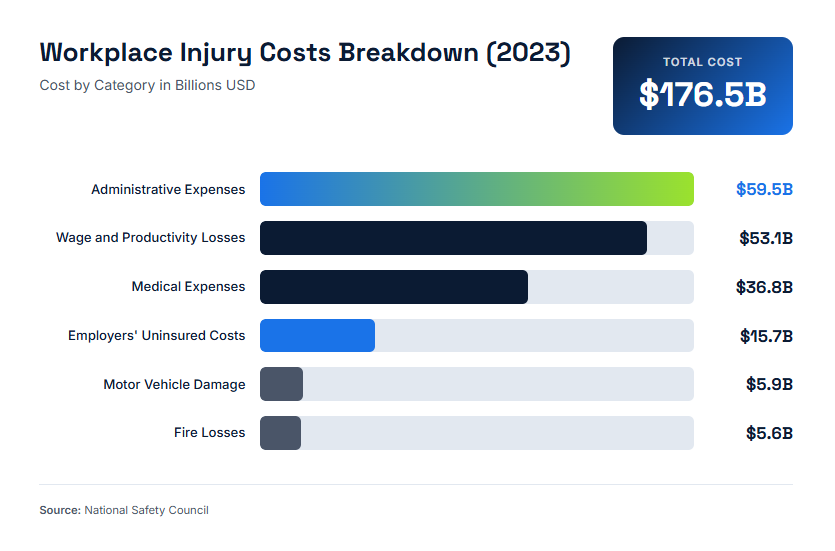
Warehouse injuries cost U.S. businesses billions annually in workers' compensation and related costs.
With transportation and warehousing recording 265,700 workplace injuries and illnesses in 2023, and an injury rate of 4.5 per 100 workers, the problem demands action.
A structured approach to warehouse safety that combines training, technology, and operational controls can reduce these numbers.
This guide covers the practices that actually reduce injuries and keep your operation compliant.
What is Warehouse Safety?
Warehouse safety refers to the policies, procedures, equipment, and training designed to protect workers from occupational hazards in storage and distribution facilities. It encompasses everything from forklift operation protocols to ergonomic lifting techniques and emergency response procedures.
According to OSHA's warehousing guidance, warehouse hazards are addressed through standards found in 29 CFR 1910 (General Industry Standards), with specific requirements covering powered industrial trucks, walking-working surfaces, hazard communication, and materials handling.
5 Key Benefits of Improving Warehouse Safety
Investing in warehouse safety delivers measurable returns beyond regulatory compliance. Here's what facilities gain from structured safety programs:
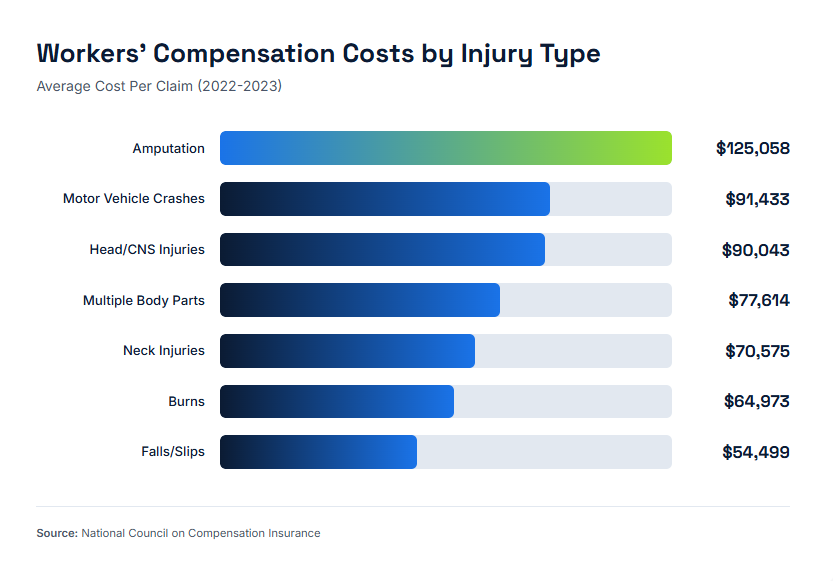
- Reduced workers' compensation costs. Data from the National Council on Compensation Insurance shows the average workers' compensation claim costs $47,316. Falls and slips average $54,499 per claim. Preventing even a few incidents per year produces substantial savings.
- Lower employee turnover. Workers consistently rank safety as a top factor when evaluating employers. Facilities with poor safety records struggle to retain experienced staff - a serious problem given current labor shortages.
- Improved productivity. The National Safety Council reports that work injuries cost 103 million lost workdays annually. Fewer injuries mean fewer disruptions to operations, improved warehouse pick rates, and less overtime for remaining staff.
- Decreased insurance premiums. Higher injury rates directly increase workers' compensation insurance costs. According to OSHA's business case research, facilities participating in OSHA's Voluntary Protection Programs (VPP) report DART rates 52% below industry averages.
- Regulatory compliance. OSHA fines for serious violations now reach $16,550 per violation. Willful or repeated violations can result in penalties of up to $165,514. A proactive safety approach prevents costly citations.
8 Best Warehouse Safety Practices
#1. Establish a Written Safety Program
A documented safety program serves as the foundation for all warehouse safety efforts. OSHA's General Duty Clause requires employers to provide workplaces free from recognized hazards - but meeting this standard requires more than good intentions.
Your written program should include:
- Hazard identification and assessment procedures
- Standard operating procedures for high-risk tasks
- Emergency action plans
- Incident reporting and investigation protocols
- Roles and responsibilities for safety management
Review and update the program annually or whenever operations change - whether expanding capacity, adjusting for fulfillment scalability, or reconfiguring facility layouts. Post the program where workers can access it and ensure supervisors can explain its contents.
#2. Implement Comprehensive Forklift Safety Protocols
Forklifts remain one of the most dangerous pieces of equipment in any warehouse. According to the Bureau of Labor Statistics, 67 workers died in forklift-related incidents in 2023. Between 2021 and 2022, more than 40,000 forklift-related incidents resulted in days away from work, job restrictions, transfers, or fatalities.
OSHA requires forklift operators to complete formal training and evaluation before operating equipment (29 CFR 1910.178). Recertification is required every three years. Your forklift safety program should address:
- Pre-shift equipment inspections
- Load capacity limits and proper load handling
- Speed limits and right-of-way rules
- Pedestrian safety zones and traffic patterns
- Maintenance and repair procedures
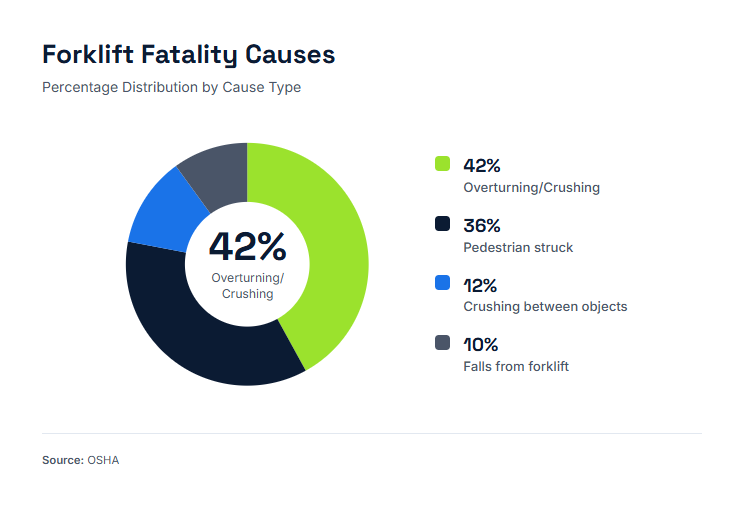
According to OSHA, forklift overturns represent approximately 42% of all fatal forklift accidents involving crushing injuries. Training should emphasize proper cornering speeds, load balancing, and operating on inclines.
#3. Prioritize Ergonomics and Manual Handling
Musculoskeletal disorders (MSDs) from overexertion in lifting and lowering represent the most common warehouse injuries. According to GAO analysis of BLS data, overexertion incidents caused an estimated 49% of serious injuries in general warehousing, with back injuries being the most prevalent.
While OSHA doesn't have specific ergonomics standards for general industry, the General Duty Clause still requires employers to address known MSD hazards. Effective ergonomic controls include:
- Adjustable workstations that reduce bending and reaching
- Mechanical lift assists for loads over 50 pounds
- Conveyor systems that minimize manual carrying distances
- Anti-fatigue mats in standing work areas
- Job rotation to limit repetitive motion exposure
Train workers on proper lifting techniques for tasks like hand assembly and order picking: keep loads close to the body, bend at the knees rather than the waist, and avoid twisting while carrying. Post maximum weight limits for manual lifting tasks.
#4. Maintain Clear Aisles and Walkways
OSHA standard 29 CFR 1910.176(a) requires warehouses to maintain sufficient safe clearances in aisles, at loading docks, through doorways, and wherever turns or passages occur. Cluttered aisles create trip hazards and obstruct emergency exits.
Practical requirements include:
- Marking permanent aisles with painted lines or tape
- Keeping aisles clear of pallets, debris, and equipment when not in use
- Maintaining minimum aisle widths based on forklift turning radius
- Ensuring emergency exits remain unobstructed at all times
- Installing convex mirrors at blind corners
Slips, trips, and falls account for a significant portion of warehouse injuries. Regular housekeeping audits catch problems before they cause injuries.
#5. Install Proper Racking and Storage Systems
Improperly loaded or damaged storage racks create crushing and struck-by hazards. OSHA standard 1910.176(b) requires that materials stored in tiers be stacked, blocked, interlocked, and limited in height to prevent sliding or collapse.
Rack safety requirements include:
- Posting maximum load capacities for all storage systems
- Inspecting racks regularly for damage from forklift impacts
- Using column protectors and end-of-aisle guards
- Ensuring proper anchoring to the floor
- Replacing damaged components immediately
Many facilities bring in professional racking inspectors annually to assess structural integrity. Document all inspections and repairs to demonstrate compliance during OSHA visits.
#6. Address Loading Dock Hazards
Loading docks present concentrated risks. Nearly 25% of warehouse injuries occur in loading dock areas, according to OSHA. Open dock doors, trailer movement, and height differences create fall and struck-by hazards.
Essential loading dock safety measures:
- Install wheel chocks and trailer restraint systems
- Use dock levelers to bridge gaps between the dock and the trailer
- Provide fall protection for dock edges 4 feet or higher (per 29 CFR 1910.28)
- Install dock lights to improve visibility inside trailers
- Establish communication protocols between dock workers and drivers
Never allow workers to enter trailers until the vehicle is properly secured and the driver has surrendered keys or a lock-out device is in place. Trailer creep - where an unsecured trailer separates from the dock during loading - causes serious forklift accidents.
#7. Deliver Effective Safety Training
OSHA requires specific training in forklift operation, hazard communication, emergency procedures, and other related topics. But training quality matters as much as completion.
A study published in the American Journal of Public Health found that engaging training methods - including hands-on practice, behavioral modeling, and simulations - produce greater knowledge acquisition and larger reductions in accidents than passive methods like lectures and videos.
Effective training programs:
- Use hands-on demonstrations rather than only lectures
- Include site-specific hazards rather than generic content
- Provide training in workers' primary languages
- Require competency verification, not just attendance
- Conduct refresher training on a scheduled basis
Document all training, including topics covered, duration, trainer qualifications, and attendee signatures. This documentation proves compliance during inspections and after incidents.
#8. Conduct Regular Safety Inspections and Audits
Inspections identify hazards before they cause injuries. A 2012 study published in Science found that Cal/OSHA inspections led to a 9.4% reduction in injury claims and a 26% average reduction in workers' compensation costs over four years, compared with uninspected workplaces.
Your inspection program should include:
- Daily pre-shift walkthroughs by supervisors
- Weekly documented safety inspections
- Monthly reviews of incident reports and near-misses
- Annual comprehensive audits by safety professionals
- Immediate inspections after any incident or near-miss
Create standardized checklists covering equipment condition, housekeeping, PPE compliance, emergency equipment, and storage practices. Track findings and corrective actions to identify recurring problems.
6 Most Common Warehouse Hazards
Understanding common hazards helps prioritize safety investments. OSHA's warehousing hazards page identifies the following as primary concerns, each requiring specific controls and training.
- Powered industrial truck incidents. Forklifts, order pickers, and pallet jacks cause struck-by injuries, crushing injuries from tip-overs, and pedestrian collisions. Proper training, designated travel lanes, and pedestrian barriers reduce exposure.
- Slips, trips, and falls. Wet floors, uneven surfaces, obstructed walkways, and falls from elevated surfaces account for a significant portion of warehouse injuries. Regular housekeeping and fall protection systems address these hazards.
- Ergonomic hazards. Repetitive lifting, awkward postures, and manual handling of heavy objects can cause musculoskeletal disorders affecting the back, shoulders, and joints. Mechanical assists and proper lifting training provide protection.
- Struck-by and caught-between hazards. Falling objects from racking, moving equipment, and unsecured loads strike or trap workers. Hard hats, rack guards, and proper storage practices reduce these incidents.
- Hazardous chemicals. Cleaning supplies, battery-charging areas, and stored chemicals pose exposure risks. OSHA's Hazard Communication Standard (29 CFR 1910.1200) requires safety data sheets, labels, and worker training.
- Fire hazards. Combustible materials, electrical equipment, and charging stations create fire risks. Maintain fire extinguishers and sprinkler systems, and ensure clear evacuation routes, in accordance with OSHA fire safety standards.
Frequently Asked Questions
#1. What OSHA standards apply specifically to warehouses?
Warehouses are covered by OSHA's General Industry Standards (29 CFR 1910). Key applicable standards include 1910.176 for materials handling, 1910.178 for powered industrial trucks, 1910.1200 for hazard communication, and various walking-working-surface and fall-protection requirements. OSHA's National Emphasis Program on warehousing runs through July 2026 and increases inspection frequency.
#2. How often should forklift operators be recertified?
OSHA requires forklift operators to be recertified every 3 years at a minimum. However, retraining must occur sooner if the operator is involved in an accident or near-miss, is observed operating unsafely, is assigned to a different type of truck, or workplace conditions change in a way that affects safe operation.
#3. What is the average cost of a warehouse workplace injury?
According to the National Safety Council, the average cost of a medically consulted workplace injury is approximately $43,000. Workers' compensation claims average $47,316 according to NCCI data. Falls and slips average $54,499 per claim, while amputations average $125,058 - making prevention far more cost-effective than response.
#4. Does OSHA require a written safety program for warehouses?
OSHA does not mandate a single comprehensive written safety program document for all warehouses. However, various standards require written programs for specific hazards, including hazard communication, lockout/tagout, respiratory protection, and emergency action plans. A consolidated written program helps demonstrate compliance and provides operational consistency.
#5. How can warehouses reduce ergonomic injuries without expensive equipment?
Administrative controls like job rotation, scheduled rest breaks, and proper lifting training cost little but reduce cumulative strain. Reorganizing storage to place frequently accessed items at knee-to-shoulder height eliminates excessive bending and reaching. Encouraging workers to report early symptoms prevents minor strains from becoming serious injuries.
#6. What should a warehouse do after a workplace injury occurs?
After a workplace injury, provide immediate medical attention, then secure the area and preserve evidence. Conduct an incident investigation to identify root causes, not to assign blame but to prevent recurrence: document findings and corrective actions. Report the injury on OSHA Form 300 and notify OSHA within the required timeframes for serious injuries (hospitalization, amputation, eye loss) or fatalities.
#7. Are warehouses subject to more OSHA inspections now?
Yes. OSHA's National Emphasis Program on Warehousing and Distribution Center Operations launched in 2023 and continues through July 2026. This program directs OSHA area offices nationwide to conduct programmed inspections of warehouse facilities. Facilities with high injury rates or prior violations are more likely to be inspected.
Key Takeaways
- Warehouse injury rates remain well above the all-industry average at 4.5 per 100 workers, making safety investment necessary rather than optional.
- Forklifts cause the most severe warehouse incidents, with 42% of fatalities from tip-overs and crushing. Comprehensive operator training and pedestrian separation are essential.
- Ergonomic injuries from manual handling represent the highest-volume hazard; mechanical assists and proper lifting techniques provide the best protection.
- Written safety programs, regular inspections, and documented training demonstrate OSHA compliance during the current National Emphasis Program.
- Workers' compensation claims average $47,316 per incident; prevention delivers clear financial returns beyond regulatory compliance.
- Engaging, hands-on training methods produce measurable improvements in safety outcomes compared to passive lectures or video-based approaches.
20 Years of Kitting Excellence
Ready to Streamline Your Supply Chain?
Join industry leaders achieving 99%+ SLA performance with flexible kitting, fulfillment, and 3PL solutions.
Get in Touch