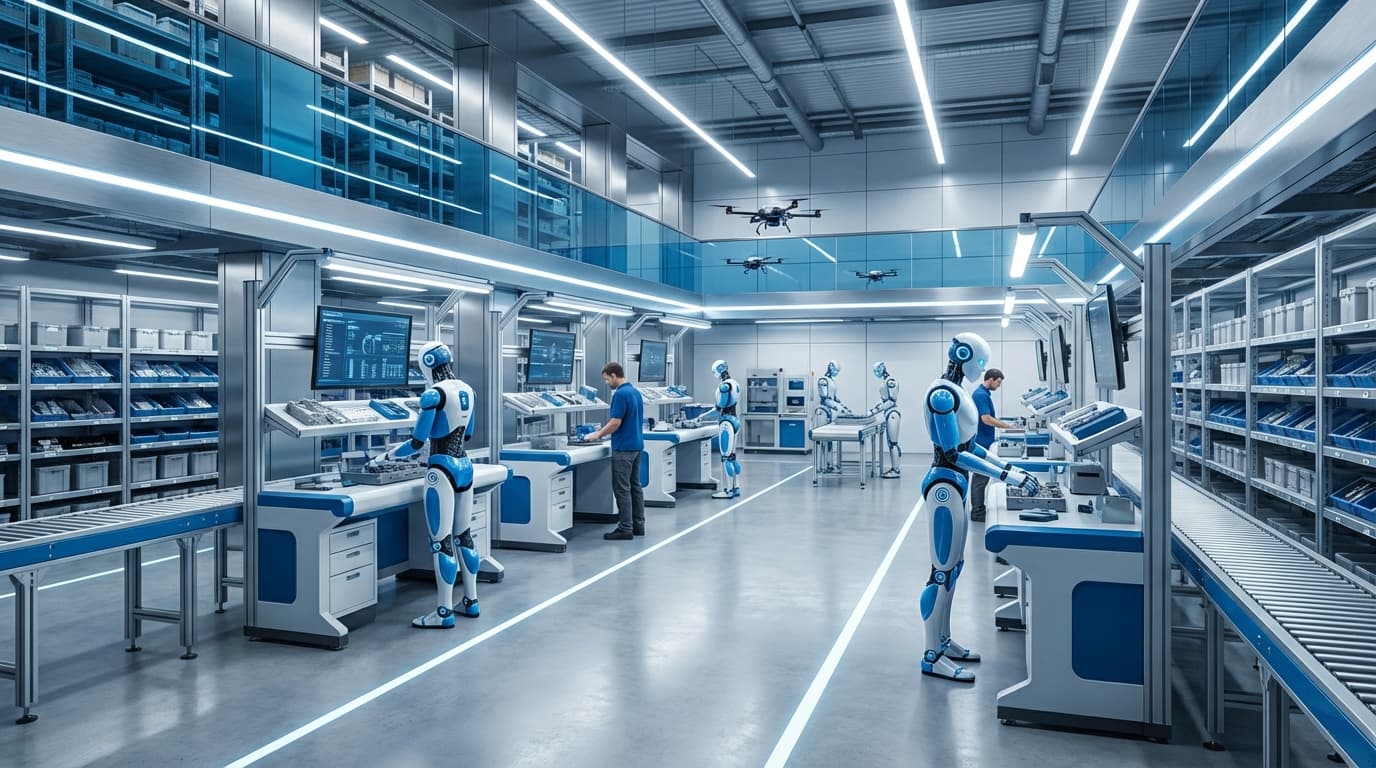
The Optimus Academy already exists. It's 222 miles from the Austin Gigafactory.
“What we're going to need to do is build a lot of robots and put them in kind of like an Optimus Academy so they can do self-play in reality.”
— Elon Musk, Dwarkesh Podcast, Feb 2026
500+ workers. 8+ task categories. 15 million kits per year. Product mixes that change hourly. Productiv's Dallas facility is the real-world training environment that humanoid robots need — and it's open for partnership.
Training Data: Generating
Robotics: Deploy Ready
Self-play in reality needs a real facility
Simulation can't model the weight of a cosmetics kit, the friction of a corrugated display, or a poly bag deforming under pressure. The sim-to-real gap is what separates robots that work in demos from robots that work in production.
An Optimus Academy can't just be a lab. It has to be a live operation — real products, real deadlines, real variety. 222 miles. That's it.
Task variety matters more than task volume
A fulfillment center that ships 100,000 identical boxes per day generates repetitive data. A facility where the product mix changes hourly across 8+ task categories generates the rich, diverse training data that accelerates humanoid learning.
Typical Fulfillment Center
Productiv Dallas
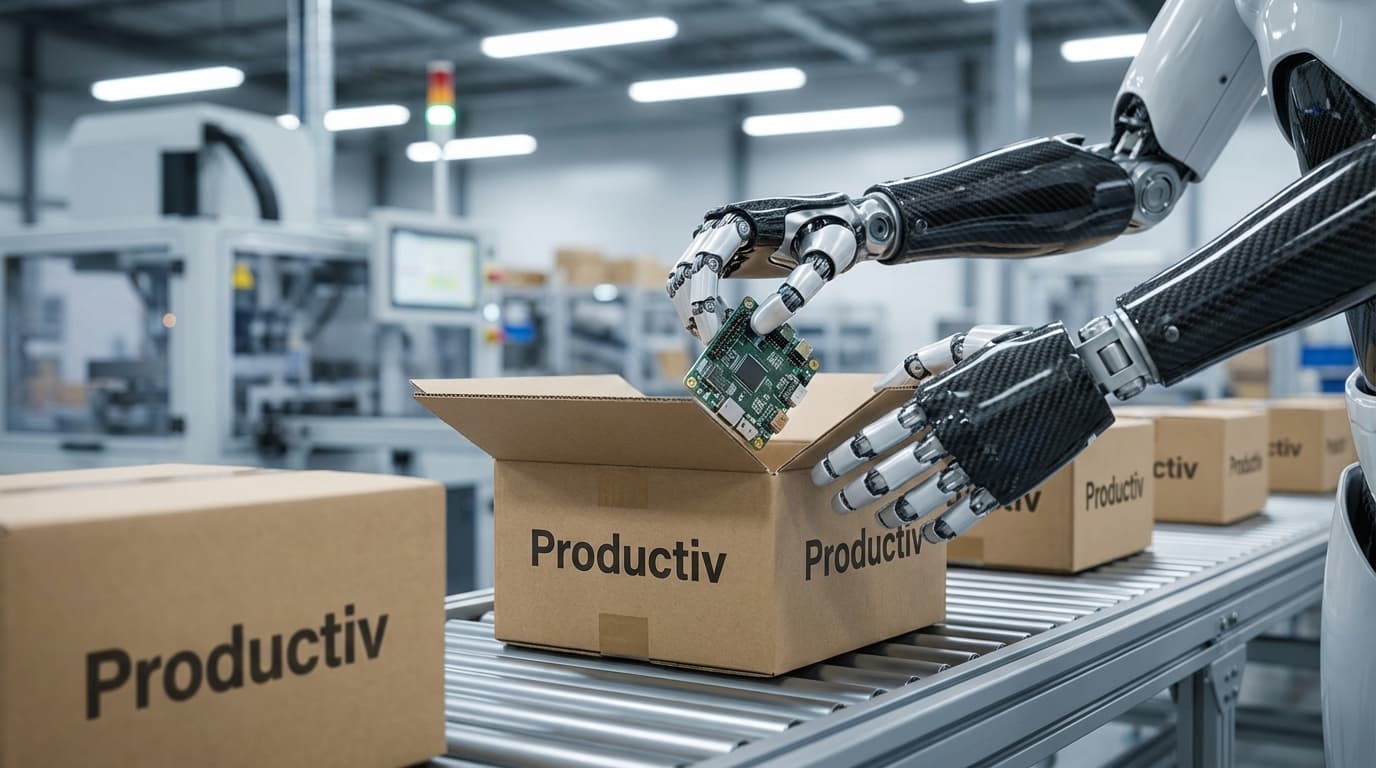
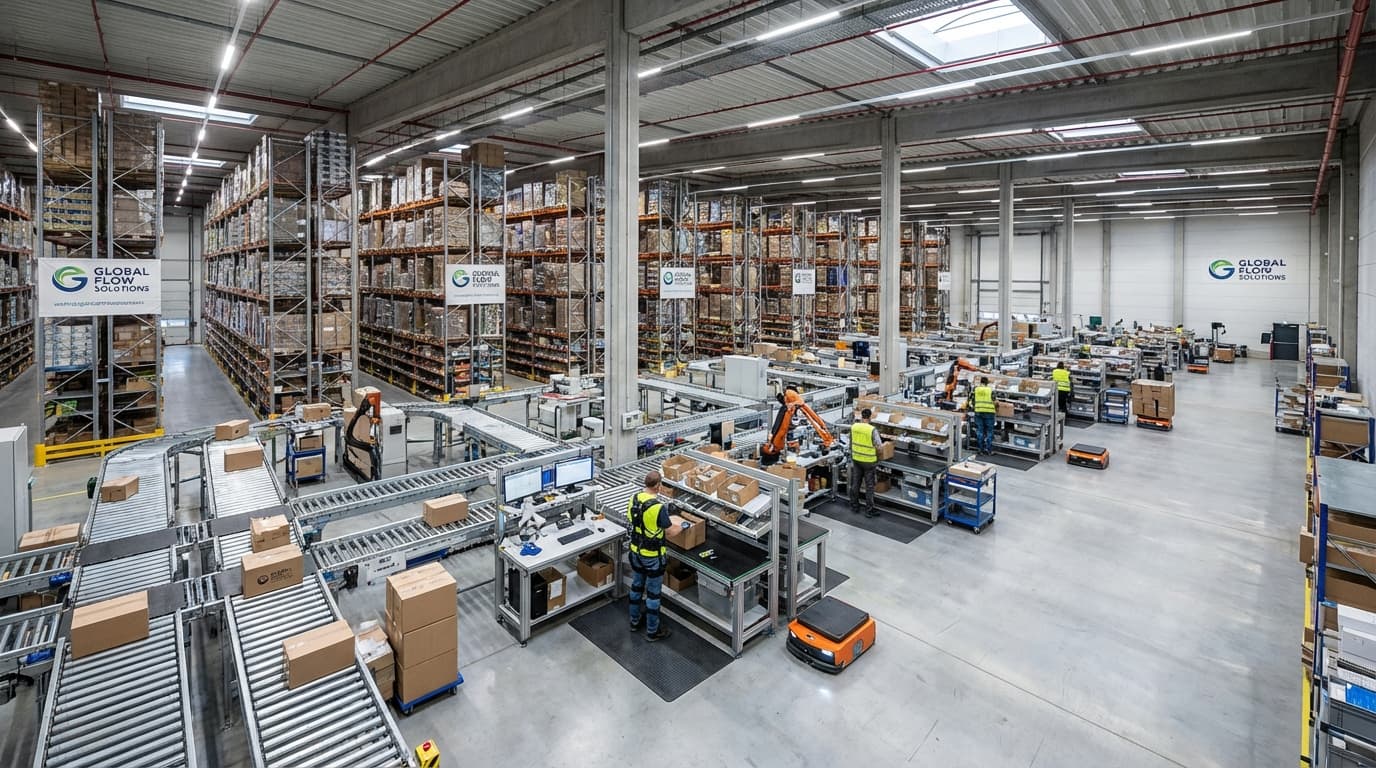
What 500+ workers are doing right now
Every task category below runs simultaneously in a single facility. Each one involves distinct manipulation patterns, object types, force profiles, and decision-making — exactly the diversity humanoid robots need to train on.
Kitting & Assembly
15M+ kits/yrProduct mix changes hourly. Variable BOM, multi-SKU configurations, custom packaging per retailer.
Pick & Pack (DTC)
High volumeSingle-item to multi-item orders. Poly bag, box, branded insert variations. Each-level accuracy required.
Case Picking (B2B)
Pallet-scaleMixed-case pallets, layer picks, retailer-specific stacking patterns. Heavy lifting + precision.
Labeling & Stickering
ContinuousUCC-128, UPC overlays, promotional stickers, lot/date codes. Placement accuracy within millimeters.
Display Building
Seasonal surgesCardboard corrugate assembly, structural integrity testing, planogram compliance. Multi-step manual build.
Display Filling
Retail programsProduct placement per planogram, shrink wrapping, pallet loading. Fragile product handling required.
Warehouse MHE Operations
24/7 capableForklift, reach truck, pallet jack, conveyor. Putaway, replenishment, dock loading/unloading.
Quality Inspection
Every unitVisual inspection, dimensional checks, barcode verification, reject sorting. Defect classification.
Three exponentials multiplied together
The usefulness of a humanoid robot in a warehouse is roughly the product of three exponentially improving capabilities — and when robots begin training other robots, the curve goes recursive.
Digital Intelligence
Foundation models are doubling in capability annually. The planning, perception, and decision-making layer that tells the robot what to do and when.
Chip Capability
AI inference chips are getting faster and more power-efficient. Edge compute means real-time decisions on the robot — no cloud latency.
Electromechanical Dexterity
Actuators, sensors, and motor control are approaching human-level precision. The physical ability to grip, place, rotate, and assemble with accuracy.
Intelligence × Compute × Dexterity = Capability
When robots train robots, the curve goes recursive.
We're not waiting. We're already building.
Productiv has been deploying automation for years. Humanoid robotics is the next layer — and we've built the orchestration software to manage it.
Cobot & Humanoid Deployment
Deployed collaborative robots and humanoid systems for kitting operations at Dallas. Augmenting human workers on repetitive pick-and-place tasks while collecting performance data to optimize task allocation.
ProVantage Orchestration
Launched ProVantage — our agentic software platform that manages scheduling, quality, and staffing. It's the control plane for mixed human-robot teams: assigning tasks, routing work, and optimizing throughput in real time.
Scaled Humanoid Training
Expanding humanoid deployments across task categories. Using human demonstration data from 500+ workers to close the sim-to-real gap. Building toward a facility where humans and humanoid robots work side by side — each making the other more productive.
This isn't R&D. It's the next evolution of our operating model.
Productiv's entire business — from our 3PL network to our embedded operations — is built on a simple principle: operations should improve over time. Fixed unit cost pricing means we earn more by working more efficiently. Every process improvement, every automation deployment, every reduction in cost per unit flows through that model.
Humanoid robots are the most powerful version of that thesis. A robot that learns from our floor, improves with every shift, and can be redeployed across task categories without retraining from scratch — that's not a science project. That's the engine that drives cost per unit down faster than any other investment we can make.
Fixed Unit Cost
Robots that improve over time reduce cost per unit continuously — the same model that drives every Productiv operation.
24/7 Operations
Humanoid robots don't fatigue. First deployments will target continuous operations where uptime compounds value.
Task Flexibility
Unlike fixed automation, humanoid robots retrain across tasks. One deployment covers kitting, labeling, display building — not just one station.
Human + Robot Teams
We're not replacing workers — we're amplifying them. Humans handle novel situations and quality judgment. Robots handle repetitive precision. Output per person increases.
We're looking for partners, not vendors
Robotics OEMs
Deploy and train your humanoid systems in a live production environment with 8+ task categories and 500+ human demonstrators.
AI Research Teams
Access real-world manipulation data across diverse object types, force profiles, and task sequences. Close the sim-to-real gap faster.
Venture & Strategic Investors
Productiv is at the intersection of operational execution and robotics deployment. The infrastructure is built. The data is flowing.
Enterprise Clients
Your operations will be among the first to benefit from humanoid augmentation. Same fixed unit cost model. Continuously improving.
Learn more about our operations and technology
Frequently Asked Questions
What types of tasks can humanoid robots perform in a warehouse?
+
Humanoid robots are best suited for tasks that require human-like dexterity and adaptability — kitting variable product configurations, pick and pack for ecommerce, labeling, display building, quality inspection, and light material handling. Unlike fixed automation that handles one task, humanoid robots can be retrained across task types, making them ideal for high-mix environments where the work changes daily or hourly.
How does Productiv's environment differ from a typical warehouse for robot training?
+
Most warehouses perform 2-3 repetitive tasks at high volume. Productiv's Dallas facility runs 8+ distinct task categories simultaneously — from kitting 15 million units per year with hourly product changes to building retail displays, case picking, labeling, and ecommerce fulfillment. This density of task variety means a humanoid robot deployed here encounters more edge cases and manipulation scenarios in a single shift than it would in weeks at a typical fulfillment center.
What is the sim-to-real gap and why does it matter for humanoid robotics?
+
The sim-to-real gap is the difference between how a robot performs in simulated environments versus the real world. Simulations can generate millions of training scenarios, but they can't perfectly model real-world physics — product weight distribution, surface friction, packaging deformation, lighting conditions. Closing this gap requires thousands of robots performing real tasks in real environments, generating demonstration data that calibrates the simulation. Facilities with high task diversity and continuous operations are the most efficient environments for generating this data.
How does Productiv use cobots and humanoid robots today?
+
In 2025, Productiv deployed collaborative robots (cobots) and humanoid systems for kitting operations at the Dallas facility. These deployments augment human workers on repetitive pick-and-place tasks while our team collects performance data to optimize task allocation between human and robotic workers. ProVantage, our agentic software platform, serves as the orchestration layer — assigning tasks, monitoring throughput, and routing work based on real-time conditions.
What is ProVantage and how does it relate to humanoid robotics?
+
ProVantage is Productiv's agentic software platform launched in 2026. It enhances scheduling, quality management, and staffing to drive operational efficiencies. For humanoid robotics, ProVantage functions as the orchestration layer — analogous to how a large language model might coordinate robot behavior. It assigns tasks based on complexity, routes work between human and robotic workers, monitors quality in real time, and continuously optimizes throughput. As humanoid robots become more capable, ProVantage scales to manage mixed human-robot teams.
How many workers does Productiv have performing manual dexterous tasks?
+
Over 500 workers at the Dallas facility alone perform manual dexterous tasks daily across kitting, pick and pack, labeling, display building, case picking, and quality inspection. Each worker is effectively generating human demonstration data — the movements, decisions, and adaptations that humanoid robots need to learn from. This represents one of the highest concentrations of diverse manual task performance in a single logistics facility in the United States.
What makes a good training environment for humanoid robots?
+
Three factors: task diversity (the range of different manipulations the robot must learn), volume (how many repetitions are available per shift), and variability (how often the task parameters change). A facility that kits the same product all day generates repetitive data. A facility where the product mix changes hourly, tasks rotate between kitting, labeling, display building, and pick-pack, and seasonal surges create new configurations weekly — that generates the rich, varied training data that accelerates robot learning.
Is Productiv looking for robotics partners?
+
Yes. Productiv is actively seeking partnerships with humanoid robotics companies — including Tesla Optimus, Figure AI, Apptronik, and Agility Robotics — to deploy and train humanoid systems in our facilities. Our Dallas site offers the task diversity, volume, continuous operations, and existing automation infrastructure (ProVantage orchestration, WMS integration, real-time quality systems) that make it an ideal real-world training ground. Contact our leadership team directly to discuss deployment opportunities.
Let's build the training ground together
Whether you're building humanoid robots, funding them, or ready to deploy them in your operations — Productiv has the facility, the task diversity, the orchestration layer, and 20 years of operational discipline to make it work.
Talk to Our Leadership TeamDirect access to Paul Baker and Doug Legan. No gatekeepers.