Running a subscription box business means making a promise every single month: the right products, in the right box, personalized to the right subscriber, shipped within a window tight enough to keep churn low and excitement high. That promise gets exponentially harder to keep as your subscriber base grows past the point where your garage, your office, or your overworked in-house team can handle it.
The fulfillment side of subscription commerce is where most brands hit their first real operational wall. Not because the concept is complicated—kit a box, ship a box—but because the variability, the cadence pressure, and the personalization demands create a type of fulfillment complexity that standard 3PLs aren't built to handle well. Your 3PL might process 10,000 identical pick-and-pack orders a day without breaking a sweat, but ask them to assemble 10,000 unique box configurations in a three-day shipping window and the cracks show fast.
We've been running subscription fulfillment programs for brands across fishing, beauty, consumer goods, and specialty retail for years. The patterns of what works and what doesn't are remarkably consistent—and so are the mistakes brands make when choosing a fulfillment partner for their subscription program.
What Makes Subscription Fulfillment Different
Standard ecommerce fulfillment operates on demand: an order comes in, you pick it, pack it, ship it. The volume fluctuates but the process is the same every time. Subscription fulfillment inverts that model in ways that cascade through every part of the operation.
First, the work is batched. Instead of processing orders as they arrive throughout the day, you're building thousands of boxes in a compressed window—often three to five days—to hit a ship date that your subscribers expect. Miss that window and you don't just have a late order; you have a churn event. Subscribers who receive their box late start questioning whether the service is worth the price, and the compounding effect on lifetime value is significant.
Second, the BOM changes every cycle. A standard fulfillment operation might add or remove SKUs occasionally. A subscription box rebuilds its bill of materials monthly. New products, new inserts, new packaging configurations, sometimes new box sizes. Every cycle is essentially a new product launch compressed into a production run, and the fulfillment operation needs to absorb that variability without slowing down.
Third, personalization adds combinatorial complexity. Even a simple tiered subscription—say three tiers with different product selections—multiplies the number of unique kit configurations. When you layer on subscriber preferences, exclusions, add-ons, and regional variations, you can quickly reach hundreds or thousands of unique configurations in a single cycle. A fulfillment partner that treats each configuration as a separate pick-and-pack job will drown in setup time. A partner that engineers the workflow for variability will handle it without breaking stride.
Types of Subscription Box Models
Not every subscription box has the same fulfillment profile. Understanding which model you're running is the first step to identifying where your operation is likely to break.
Curated subscriptions (beauty samples, hobby kits, specialty food) change their contents every cycle. McKinsey's subscription ecommerce research found that curation services account for 55% of all subscription box subscriptions—the most popular model, and the most operationally complex. Every cycle is essentially a new product launch compressed into a production run.
Replenishment subscriptions send the same product on a fixed schedule: supplements, razor refills, pet food. Fulfillment is simpler because the box contents are predictable. The operational challenge shifts to inventory management—matching stock levels to active subscriber counts without running dry or overstocking.
Hybrid and customizable subscriptions let subscribers choose from options or personalize their box each cycle. This is the most demanding model from a systems standpoint. Subscriber preference data has to flow directly from your platform into the warehouse workflow, and the assembly process has to handle dynamic configurations without slowing down. When personalization doesn't reach the warehouse floor, it shows up as fulfillment errors—even when the kitting itself was executed perfectly.
Where Subscription Brands Get Stuck
Most subscription brands start fulfilling in-house. It makes sense at low volume—you control the quality, you know every box is right, and the unboxing experience reflects your brand exactly. The problem is that in-house fulfillment doesn't scale linearly. At 500 subscribers, your team can handle it. At 2,000, you're hiring temps for ship week. At 5,000, ship week has become ship fortnight, and your core team is spending more time managing box assembly than growing the business.
The next move is usually a traditional 3PL. This is where the trouble starts.
Enterprise 3PLs are optimized for speed and standardization. Their conveyor systems, automated pick modules, and WMS configurations assume that today's orders look roughly like yesterday's orders. Subscription fulfillment violates that assumption every month. The result is usually one of three patterns: your subscription work gets deprioritized because it doesn't fit the facility's automation profile, you get charged premium rates for the "special handling" that subscription kitting requires, or quality suffers because the provider's standard QC process doesn't catch the subtleties of a personalized box build.
The brands that navigate this transition successfully share a common trait: they find a partner whose operational model is built for variability rather than standardization. A partner that treats the monthly BOM change as a normal operating condition, not an exception that requires a project manager and a change order.
How We Run Subscription Fulfillment Programs
Every subscription program has its own rhythms, but the operational framework that makes them work consistently is the same.
Cycle Planning and BOM Management
Before a single box gets built, the cycle has to be planned. That means receiving and validating the updated BOM, confirming component inventory against subscriber counts, identifying any shortages or substitution needs, and building the production schedule backward from the ship date. We typically begin this planning two to three weeks before the build window opens, which gives enough lead time to resolve component issues without compressing the production schedule.
The BOM management layer is where most fulfillment partners underinvest. They'll receive your components and build your boxes, but the reconciliation between what you ordered, what arrived, what's allocated to this cycle versus safety stock for replacements, and what's left over from last cycle—that coordination often falls back on the brand's ops team. We treat BOM management as an integrated part of the fulfillment workflow, not a client responsibility.
Engineered Assembly Lines
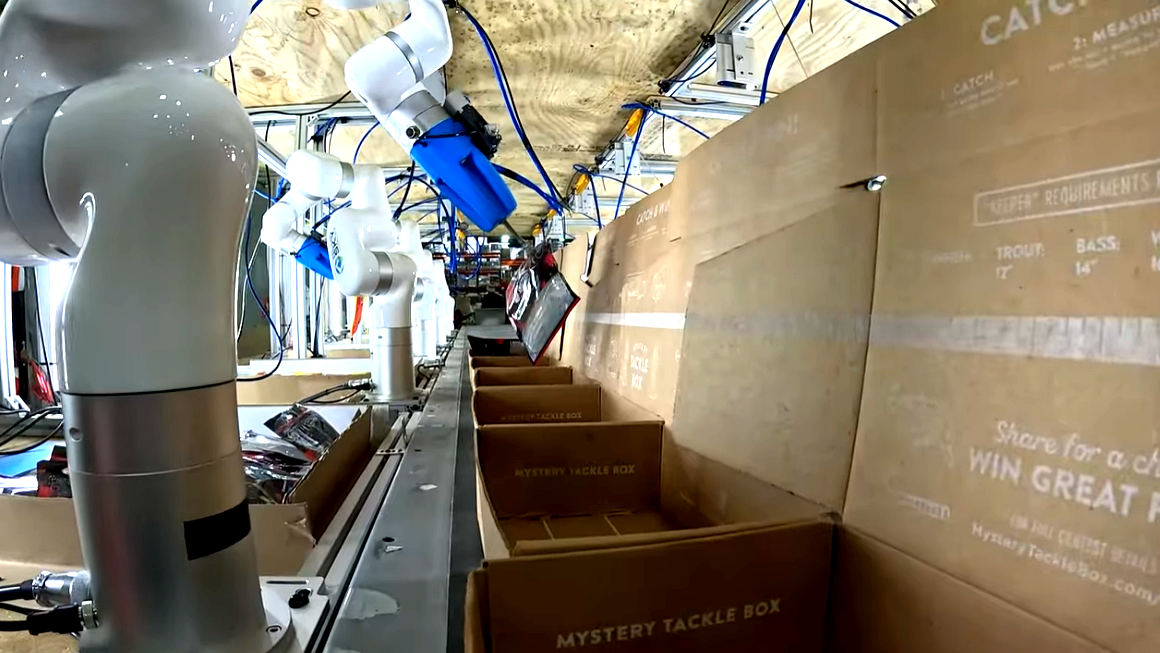
Subscription box assembly is production work, and we treat it that way. Each cycle's box configuration gets a production layout—work cell design, station assignments, component staging, and quality checkpoints mapped before the build starts. This isn't generic warehouse labor picking from shelves; it's an assembly line engineered for the specific box being built that month.
You can see this in action with our work for Mystery Tackle Box, where our team assembles and ships thousands of personalized fishing subscription boxes each cycle. There's video of the operation running that shows what this looks like at production scale—our crew working a dedicated assembly line, building each box to spec, with the kind of cadence and quality control that only comes from treating subscription fulfillment as a manufacturing process rather than a warehouse task.
The engineering matters because it directly impacts cost per box. A well-designed assembly line with trained operators who know the build sequence will produce boxes at a fundamentally different rate than a group of temps picking from a cart. We've seen the difference run two to three times in throughput on comparable box complexity—same product, same facility, different workforce engineering.
Personalization at Scale
The challenge with personalized subscription boxes isn't handling one subscriber's preferences—it's handling 10,000 different preference profiles without turning the assembly floor into chaos. The solution is in the systems layer: how subscriber data flows from your platform into production instructions, how those instructions translate into station-level pick lists, and how verification catches errors before the box ships.
We integrate directly with subscription platforms—Recharge, Cratejoy, Subbly, and custom platforms via API—so subscriber data drives the production workflow automatically. When a subscriber selects a preference or an exclusion, that information flows through to the assembly instruction for their specific box. The operator doesn't need to interpret a spreadsheet; they're following a verified pick list that reflects that subscriber's configuration.
Ship Window Execution
The ship window is where everything gets tested. A three-day window to ship 10,000 boxes means you need the boxes built, QC'd, labeled, and carrier-ready at a pace that doesn't allow for rework bottlenecks or discovery-stage surprises. Carrier coordination is part of this—scheduling pickups, managing label generation across multiple carriers if you're using zone-based routing, and confirming scan data so your subscribers get tracking notifications when they expect them.
Geographic positioning matters here more than most brands realize. Shipping from a single location on the East Coast means West Coast subscribers are paying for—and waiting through—cross-country transit. Our multi-site network (Dallas, Charlotte, Reno) lets us route shipments from the facility closest to each subscriber, reducing both transit time and parcel cost. As John Toler, CEO of Evergreen Enterprises, noted about his own fulfillment program: his company spends $20 million annually on small parcel shipping, and using our geographies reduces parcel zones from 6-8 to 1-3.
The Economics of Subscription Fulfillment
Subscription businesses live and die on unit economics, and fulfillment cost is one of the largest line items after product cost. Understanding how that cost behaves—and how to drive it down over time—is critical.
Why Per-Box Pricing Beats Hourly Billing
Most 3PLs bill subscription work by the hour. This creates a structural misalignment: the provider profits from slow work. When your box complexity increases—new inserts, an extra product, a harder-to-assemble configuration—the hours go up and so does your bill, with no corresponding incentive for the provider to find a more efficient way to build the box.
Our fixed cost-per-box model inverts that dynamic. We quote a price per completed box based on the configuration complexity, and we earn more by building boxes more efficiently. When we redesign a work cell layout that shaves 15 seconds per box, or when our experienced crew hits a throughput rhythm that new temps never reach, we both benefit. The result is a fulfillment cost that trends downward over time as we optimize, rather than creeping upward as complexity grows.
The Hidden Costs of DIY Fulfillment
Brands that fulfill in-house often undercount their true cost per box. The obvious costs—labor, materials, shipping—show up on the spreadsheet. The hidden costs don't: the founder or ops lead spending 40% of their time managing ship week instead of growing the business, the space cost of dedicating warehouse square footage to assembly that sits idle three weeks a month, the quality issues that slip through when your "QC process" is a tired team member eyeballing boxes at 11 PM the night before the ship deadline, and the surge hiring cost when you need to triple your assembly crew for three days and then let them go.
When brands do the honest math—including opportunity cost—outsourcing to a specialized subscription fulfillment partner almost always comes in at or below the true internal cost, while freeing the founding team to focus on subscriber acquisition, product curation, and brand building.
Inventory Carrying Costs and Forecasting
Subscription fulfillment introduces a unique inventory dynamic: you know exactly how many boxes you need to build (your subscriber count), but you don't always know exactly what goes in them until the curation is finalized. That gap between subscriber commitment and component commitment is where inventory carrying costs accumulate—especially if you're holding safety stock for replacements, managing component deliveries from multiple suppliers, and reconciling what's left over from previous cycles.
Good fulfillment partners manage this proactively. We work with your subscriber data and historical patterns to forecast component needs, flag potential shortages before they impact the build schedule, and manage the leftover inventory that inevitably accumulates when component orders don't perfectly match subscriber counts.
Technology That Makes Subscription Fulfillment Scalable
Running a subscription fulfillment operation on spreadsheets works at low volume. It stops working the moment you hit a few hundred subscribers. The tech stack behind your operation determines how well you scale—and how much manual intervention is required each cycle.
Subscription platform integration is non-negotiable. Your subscription management platform—Recharge, Cratejoy, Subbly, or a custom build—needs to sync with your fulfillment system in real time so that skips, cancellations, and preference changes reach the warehouse before boxes are built, not after.
Warehouse management system (WMS) tracks inventory locations, manages pick lists, and coordinates assembly workflows. For subscription operations, prioritize one that supports batch processing, kitting workflows, and cycle-specific inventory allocation. General WMS platforms built for e-commerce often struggle with the batch-and-BOM model that subscription requires.
Inventory forecasting is where most brands underinvest. Predictive tools that model subscriber counts, component lead times, and growth trends let you order the right quantities without running dry or tying up cash in excess stock. Good forecasting is especially valuable for curated boxes where product mix changes monthly and there's no easy substitute if a SKU arrives short.
Real-time reporting on order accuracy, on-time ship rates, and inventory levels gives you visibility into fulfillment performance before small problems compound. If you're working with a 3PL, insist on access to live SLA dashboards—not end-of-month reports.
Choosing a Subscription Fulfillment Partner
The questions that matter when evaluating subscription fulfillment partners are different from the ones you'd ask a standard 3PL. We've covered how to evaluate and choose a subscription box fulfillment partner in detail elsewhere—here's the short version of what to focus on:
How many subscription programs do you currently run? This isn't about volume—it's about pattern recognition. A provider that manages multiple subscription brands has already solved the operational problems you're going to encounter. They've built the systems for BOM transitions, personalization workflows, and ship-window compression. A provider running their first subscription program is learning on your dime.
Walk me through a cycle transition. Ask them to describe, step by step, what happens when you send the new month's BOM. How do they plan the production? How do they handle a component that arrives late? How do they manage the handoff from one cycle's leftover inventory to the next? The specificity of the answer tells you everything about their operational maturity.
What does your assembly floor look like during a build? If the answer is "our team picks from the shelves like any other order," that's a standard 3PL trying to fit subscription work into their existing model. If the answer describes dedicated assembly lines, station assignments, and throughput tracking, that's a provider who has engineered their operation for subscription work.
How do you handle personalization at my scale? At 1,000 subscribers with three tiers, any competent provider can manage. At 10,000 subscribers with preference-based personalization, exclusions, and add-ons, the systems architecture matters enormously. Ask about their integration with your subscription platform, how subscriber data flows into production instructions, and how they verify that each box matches its intended configuration.
What is your pricing model? Per-box pricing aligns incentives. Hourly billing doesn't. This is the same principle as kitting and assembly pricing—the provider should earn more by working more efficiently, not by working more slowly.
When to Outsource Your Subscription Fulfillment
The in-house vs. outsourced decision comes down to volume, complexity, and where your team's time is going. Not every subscription brand needs to outsource on day one. If you're at 200 subscribers and your garage operation is humming, enjoy it—that hands-on connection to the product and the unboxing experience is valuable. But there are clear signals that it's time to bring in a specialized partner:
Your ship week has expanded into a ship fortnight. When the build-and-ship process consumes more than a week, you're either understaffed or under-engineered, and both problems get worse as you grow.
Quality is slipping. Returns, complaints about wrong items, or inconsistent presentation are all symptoms of an assembly process that's being held together by heroics rather than systems.
Your team is fulfillment-first, business-second. If the founder, the ops lead, or the marketing team is spending ship week on the assembly floor instead of acquiring subscribers, the business is paying an opportunity cost that far exceeds the cost of outsourcing.
You're turning down growth because you can't fulfill it. This is the most expensive signal of all—when a retail partnership, a promotional opportunity, or a subscriber surge gets capped because your fulfillment operation can't absorb the volume.
As Kelli Overson, EVP of Operations at Pourri, described her experience after outsourcing fulfillment: "We are hitting all the SLAs over and over again. Productiv has led the charge and brought so many improvements to the table over the last two years. There's nothing glaring that stands out anymore and now we are just fine tuning."
That's what the transition should feel like—not a leap of faith, but a progression from managing a fulfillment problem to fine-tuning a fulfillment operation that improves on its own.
Productiv runs subscription box fulfillment programs for brands across consumer goods, specialty retail, and outdoor recreation from our nationwide network. Whether you need a full-service subscription fulfillment partner or kitting and assembly support for your existing operation, we engineer programs that get better every cycle. Talk to our team about your subscription fulfillment needs.
Key Takeaways
- →Subscription fulfillment is fundamentally different from standard ecommerce—batched production windows, monthly BOM changes, and personalization complexity require a partner built for variability, not standardization.
- →Per-box pricing aligns incentives between you and your fulfillment partner. Hourly billing rewards slow work; fixed unit pricing rewards efficiency and drives costs down over time.
- →Assembly line engineering is what separates subscription-capable fulfillment from standard 3PL work. Dedicated work cells with trained operators can produce at 2-3x the throughput of generic warehouse labor.
- →Geographic positioning directly impacts subscriber satisfaction and shipping cost. Multi-site fulfillment can reduce parcel zones from 6-8 to 1-3, cutting transit time and cost simultaneously.
- →The honest cost of DIY fulfillment includes founder time, idle warehouse space, surge hiring, and quality failures—when you count everything, outsourcing often costs the same or less while freeing your team to grow the business.
Frequently Asked Questions
What is subscription box fulfillment?
Subscription box fulfillment is the end-to-end process of receiving components, assembling personalized subscription boxes according to each cycle’s bill of materials, performing quality checks, and shipping completed boxes to subscribers within a defined ship window. It differs from standard ecommerce fulfillment because work is batched (thousands of boxes built in a compressed 3-5 day window), the BOM changes every cycle, and personalization can create hundreds or thousands of unique box configurations.
How does subscription fulfillment differ from regular 3PL fulfillment?
Standard 3PL fulfillment processes orders as they arrive throughout the day using a consistent pick-and-pack workflow. Subscription fulfillment operates on a cycle basis—building all boxes for a given period in a compressed production window. It requires production-style assembly lines rather than standard warehouse picking, monthly BOM transitions, personalization handling, and ship-window management. Providers optimized for standard fulfillment often struggle with this variability.
When should a subscription brand outsource fulfillment?
Key signals include: your ship week has expanded beyond one week, quality issues are increasing (wrong items, inconsistent presentation), your core team is spending ship week on the assembly floor instead of growing the business, or you’re turning down growth opportunities because fulfillment can’t absorb the volume. Most brands reach this inflection point between 2,000 and 5,000 subscribers, though it depends on box complexity and team capacity.
What subscription platforms do you integrate with?
We integrate with major subscription platforms including Recharge, Cratejoy, Subbly, and custom platforms via API. Subscriber data—including preferences, exclusions, tier selections, and add-ons—flows directly from your platform into our production workflow, generating verified pick lists for each unique box configuration without manual spreadsheet management.
How do you handle subscription box personalization at scale?
Personalization is managed through the systems layer: subscriber preference data integrates from your platform into station-level production instructions automatically. Each operator works from a verified pick list specific to that subscriber’s configuration. Barcode verification confirms the right products are in the right box before sealing. This approach handles thousands of unique configurations per cycle without the chaos of manual interpretation.
What does subscription fulfillment cost?
We use a fixed cost-per-box pricing model based on configuration complexity—number of components, personalization requirements, and packaging specifications. This aligns our incentive with yours: we earn more by building boxes efficiently, which drives your per-box cost down over time as we optimize the assembly process. This contrasts with hourly billing models where your cost increases as box complexity grows, with no corresponding incentive for the provider to find efficiencies.
How do you ensure quality across thousands of personalized boxes?
Quality is engineered into the assembly workflow rather than inspected after the fact. Each cycle gets a production layout with defined stations and checkpoints. Barcode verification confirms product selection at each station, photo documentation captures compliance, and finished box audits verify the complete build before shipping. Defect data feeds back into process improvements, so error rates decline over time rather than staying flat.
20 Years of Kitting Excellence
Ready to Streamline Your Supply Chain?
Join industry leaders achieving 99%+ SLA performance with flexible kitting, fulfillment, and 3PL solutions.
Get in Touch