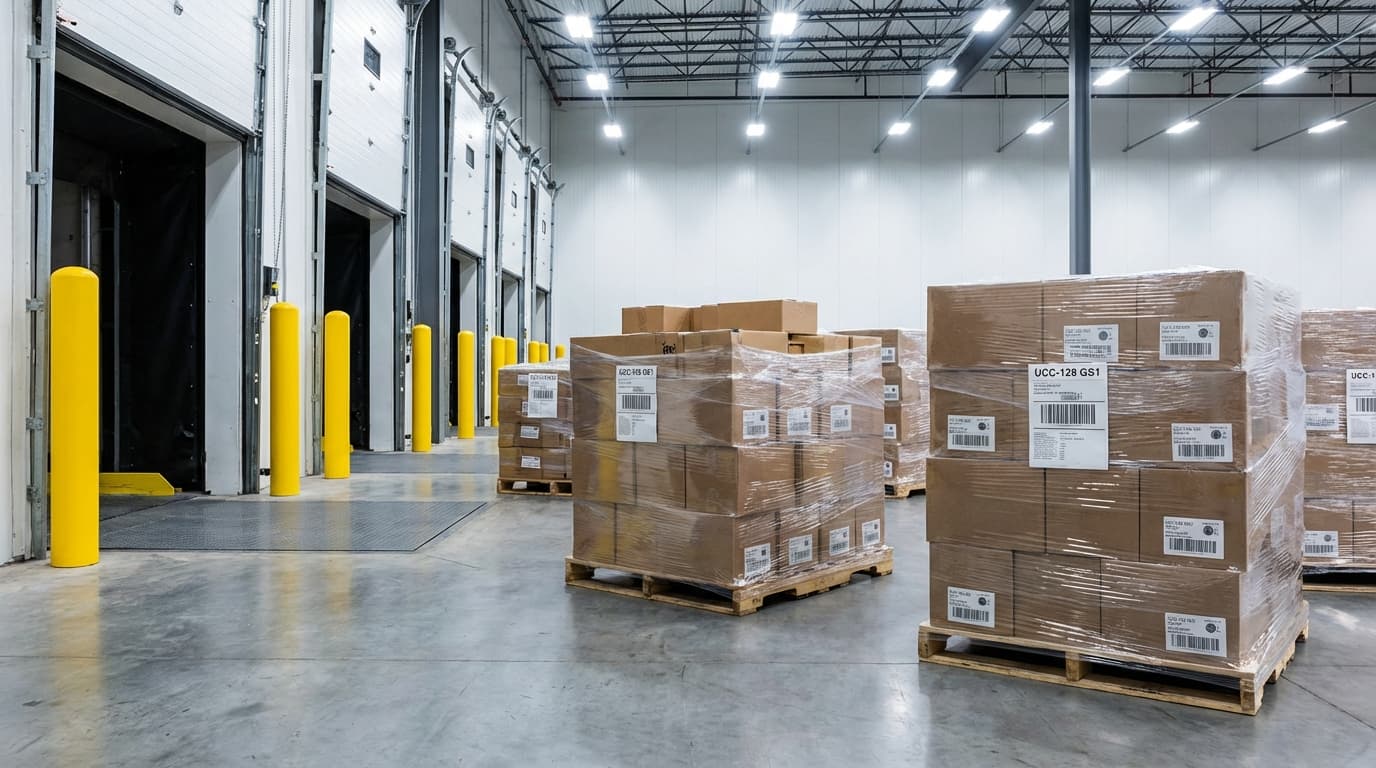
Retail chargebacks are financial penalties that retailers deduct directly from supplier payments when shipments fail to meet compliance requirements. They cover everything from late deliveries and ASN errors to labeling violations, packaging non-compliance, and routing guide deviations. For brands entering retail distribution for the first time, chargebacks are often the first—and most expensive—lesson in how different retail fulfillment is from DTC.
Most brands don't think about retail chargebacks until they start seeing deductions on their invoices. By then, the problem is already compounding—penalties stacking up month over month, retailer scorecards declining, and an operations team scrambling to figure out what went wrong and where.
After two decades of setting up retail distribution for brands shipping into 100+ major retailers, we have learned that chargebacks are almost always a setup problem, not an ongoing operations problem. The brands that get retail compliance right from the start—proper EDI configuration, correct label formats, validated ASN workflows, and routing guide compliance built into the process rather than checked after the fact—rarely deal with chargebacks at all. The brands that skip the setup work, or whose 3PL lacks retail compliance experience, pay for it every month.
We see this pattern clearly when onboarding new clients. One of our clients, Mystery Tackle Box, ships into Dick's Sporting Goods—a retailer with labeling requirements stringent enough that we had to purchase a specialty thermal transfer printer to meet their specifications. Standard thermal labels simply do not pass their compliance checks. Dick's also has a detailed routing guide and multiple methods for issuing purchase orders, each of which requires different ASN configuration. If you do not map every PO format correctly during setup, you get ASN failures—and ASN failures generate chargebacks automatically.
That level of retailer-specific complexity is not unusual. It is the norm. Every major retailer has its own compliance ecosystem, and the differences between them are significant enough that experience with one does not automatically transfer to another. This guide walks through the most common sources of retail chargebacks, the operational setup required to prevent them, and what to look for in a 3PL if retail compliance is critical to your business.
What Retail Chargebacks Actually Cost
The direct financial impact of chargebacks is straightforward to calculate but frequently underestimated. Penalties typically range from 1% to 5% of the gross invoice amount, depending on the retailer and violation type. Walmart's OTIF program alone carries a 3% penalty on the cost of goods for non-compliant shipments. For a brand shipping $10 million annually into retail, even a 2% chargeback rate represents $200,000 in avoidable costs. (Use our chargeback cost calculator to estimate your actual exposure.)
But the direct penalties are only part of the picture. According to industry analysis, a warehouse processing 500,000 orders annually at a 97% accuracy rate generates 15,000 mispicked orders per year, costing between $705,000 and $1.4 million in combined penalties, returns processing, reshipping, and customer service. Improving to 99.5% accuracy would recover over a million dollars annually.
The compounding costs that do not appear on any invoice include retailer scorecard degradation (which affects future order allocations), administrative burden from dispute processing, strained buyer relationships, and in severe cases, vendor suspension or deauthorization. A brand that loses shelf space at a major retailer because of compliance failures is losing far more than the chargeback amount.
The Five Most Common Sources of Retail Chargebacks
Understanding where chargebacks come from is the first step toward preventing them. In our experience, the vast majority of chargebacks trace back to five categories—and all five are preventable with proper operational setup.
1. OTIF (On-Time In-Full) Violations
OTIF is the most expensive compliance metric for most brands shipping into retail. It measures two things: whether the shipment arrived on or before the Must Arrive By Date (MABD), and whether it contained the correct quantity of every item ordered. Walmart formalized its OTIF program with a 98% compliance threshold, and most major retailers now enforce similar requirements.
OTIF is measured at the PO line level, which means a single late or short line item can trigger a penalty even if the rest of the order was perfect. The operational factors that drive OTIF failures include slow pick-and-pack processes (causing shipments to miss carrier cutoff times), inventory inaccuracy (leading to short shipments), and geographic distance from retailer distribution centers (reducing transit time margin).
Prevention is structural: accurate inventory management, efficient warehouse processes that meet carrier pickup windows, and geographic positioning that provides adequate transit buffer. We have helped clients reduce shipping zones from 6–8 down to 1–3 by leveraging strategically positioned facilities, which simultaneously improves OTIF rates and reduces transportation costs.
2. ASN (Advance Shipping Notice) Failures
ASN failures are often called the single biggest compliance problem in retail distribution, and they are also the most preventable. An ASN is the EDI 856 transaction that tells the retailer what is in the shipment before it arrives. When the ASN does not match the physical shipment—wrong quantities, wrong PO reference, wrong timing—the retailer flags it as a compliance failure.
The most common ASN failure we see during client onboarding is a configuration problem: the retailer issues purchase orders through multiple channels or formats, and the system is only configured to generate ASNs correctly for one of them. This is exactly what we encountered setting up fulfillment for Dick's Sporting Goods. They have multiple methods for issuing POs, and each method requires specific ASN handling. If you configure for standard replenishment POs but the retailer sends a promotional PO through a different format, the ASN will fail—and you will not know until the chargeback appears.
Prevention requires mapping every PO type a retailer uses during the initial setup, building validation that cross-references ASN data against actual pick-and-pack data before transmission, and testing each configuration with the retailer before going live. This is setup work that takes careful attention during onboarding but eliminates an entire category of chargebacks permanently.
3. Routing Guide Violations
A routing guide is a retailer's comprehensive set of requirements for how shipments must be prepared, packaged, labeled, and transported. It covers everything from carton dimensions and pallet configurations to carrier selection, delivery appointment scheduling, bill-of-lading formatting, and how shipments must be organized on the truck.
What makes routing guide violations particularly frustrating is that they trigger chargebacks even when the product itself is correct and arrives on time. A shipment that contains exactly the right product, in the right quantity, delivered on the right day, can still generate a chargeback if the pallet was configured incorrectly, the wrong carrier was used, or the shipping labels were in the wrong position.
Routing guides are also retailer-specific and updated regularly. A specification that was compliant six months ago may no longer be. Ongoing compliance requires a system for monitoring routing guide updates and pushing changes through to warehouse operations—not just knowing the current rules, but staying current as they evolve.
4. Labeling and Packaging Errors
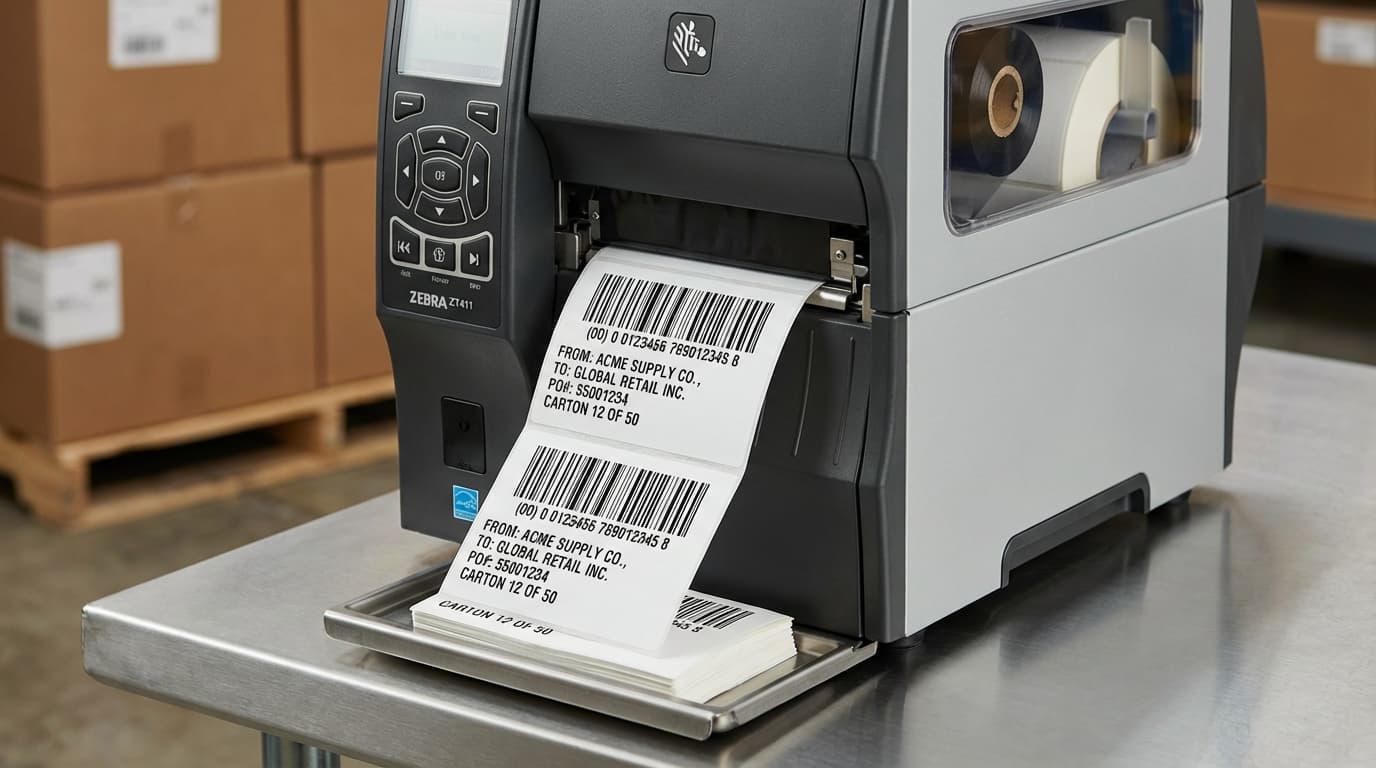
Every major retailer requires UCC-128 (GS1-128) barcode labels on shipping containers, but the specifics vary significantly. Some retailers require additional data fields, proprietary label formats, specific barcode symbologies, or particular label placement on the carton. Getting the barcode right but the label format wrong still generates a chargeback.
Our experience setting up compliance for Dick's Sporting Goods illustrates this well. Their labeling specifications are stringent enough that standard thermal labels do not meet their requirements—we had to invest in a specialty thermal transfer printer specifically for their shipments. That is a detail you discover during setup (or, worse, after your first round of chargebacks), and it is the kind of retailer-specific requirement that a 3PL with pre-built label libraries already knows about.
We maintain UCC-128 label templates for 60+ major retailers. When a new client onboards, we are not designing labels from scratch—we are activating templates that have already been validated against each retailer's specifications. That eliminates the trial-and-error period where labeling chargebacks accumulate.
5. EDI Compliance Failures
EDI (Electronic Data Interchange) is the system through which retailers and suppliers exchange business documents electronically—purchase orders (850), advance shipping notices (856), invoices (810), and others. EDI compliance failures occur when transactions are sent in the wrong format, at the wrong time, with missing fields, or with data that does not match the retailer's expectations.
The challenge is that each retailer has its own EDI specifications. The 856 ASN that works perfectly for Walmart may fail validation at Target because of different field requirements or timing windows. A 3PL that maintains pre-wired EDI connections for multiple retailers has already solved these retailer-specific configuration problems. A 3PL building connections from scratch will encounter them one chargeback at a time.
The speed of EDI setup matters because every week spent configuring and testing connections is a week where shipments are either delayed or going out without proper compliance infrastructure. We maintain pre-established EDI connections through SPS Commerce for 60+ retailers, which means most new client integrations involve activating existing connections rather than building them. Our typical onboarding runs 2–4 weeks per retailer, with up to 3 retailers onboarded in parallel.
What Real Chargebacks Look Like — and What Prevents Them
Generic chargeback advice is easy to find. Specific examples with real dollar amounts are not. Below are actual chargeback categories we have encountered across our retail fulfillment operations, with the penalties assessed and how our systems prevent each one from occurring.
| Chargeback Category | Example | Penalty | How Productiv Prevents This |
|---|---|---|---|
| Invalid ASN (Lifecycle) | ASN transmitted after the retailer's acceptance window closed — entire shipment manually received | $1,000 – $3,145 | Automated ASN transmission triggered within minutes of carrier departure; lifecycle timing rules configured per retailer |
| TMS Ship ID Mismatch | Carrier Pro # used on ASN instead of DSG-assigned TMS Ship ID (CS#) | $500 per occurrence | REF*BB segment populated from TMS routing confirmation; Ship ID validated against BOL before ASN transmission |
| Label Won't Scan (Poor Quality) | UCC-128 barcode graded D/F at DC receiving — print quality below ANSI minimum | $287 – $317 | Thermal transfer printing (not direct thermal); barcode verification scanner validates grade before application; label stock quality controlled |
| Label Missing Required Info | GS1-128 label missing department name, number, and/or sort code fields | $424 – $5,676 | Pre-built retailer-specific label templates with all required fields mapped; templates validated against current routing guide specs |
| SQEP: Late ASN | ASN transmitted outside Walmart's required window after shipment departure | $25 per occurrence | ASN auto-generated from WMS pick confirmation and transmitted on carrier scan-out; no manual delay in the workflow |
| SQEP: Overage | Shipment contained more units than ordered on PO — DC flagged quantity discrepancy | $264 – $910 | WMS pick validation locks to PO line quantities; overage alerts triggered before packing; no more can ship than was ordered |
| GS1-128 Quantity Discrepancy | Label scans as 4 units per case but pallet contained 13 pallets of a different SKU count | $0 (warning) to penalty | Barcode data generated from PO and item master — not manually entered; case pack quantity cross-referenced at label print |
| Missing Store/DC on GS1-128 | Shipment arrived with missing store number or DC number on the GS1-128 label | $200 per shipment | Ship-to location auto-populated from PO data; label template requires store/DC field — system blocks print if blank |
| BOL Missing/Incorrect Info | BOL missing 3rd party billing information or incorrect required fields | $300 per BOL | BOL generated from routing confirmation with carrier, billing, and shipment data pre-populated; reviewed against retailer requirements before release |
| No ASN Transmission | Entire shipment arrived without any ASN — manually received into retailer inventory | $1,000 per PO | EDI transmission is a required step in the shipment workflow — shipment cannot be marked complete without confirmed ASN send |
| Delivery Window Miss | Shipment scheduled for 5/27–5/29 delivery window, arrived 6/2 | $200 per shipment | Ship dates calculated backward from MABD with carrier transit time buffers; geographic positioning reduces transit variability |
| Load Quality / Pallet Failure | 4 pallets fell over during transit — 2 hours DC labor rework for restacking | Labor cost + penalty | Pallet build follows retailer-specific height and weight limits; stretch wrap protocol enforced; floor load patterns follow routing guide specs |
| Freight Return (Mis-Ship) | Wrong product shipped to retailer DC — freight return via RMA process | $411 – $3,150 | WMS scan verification at pick and pack confirms correct SKU; PO-to-item validation prevents wrong product from entering the workflow |
These are not hypothetical scenarios. Every line in this table represents an actual chargeback that was assessed against a vendor shipping to a major retailer. The penalty amounts range from $25 to over $5,000 for a single incident —and they compound across every non-compliant shipment. A vendor shipping 50 POs per month with even a 5% chargeback rate can accumulate thousands in penalties before the pattern is identified.
The prevention column illustrates a critical point: every one of these chargebacks is preventable with the right systems and configuration. The difference between a 3PL that generates these chargebacks and one that prevents them is not effort or attention—it is infrastructure. Pre-built label templates, automated ASN workflows, WMS validation rules, and retailer-specific configurations eliminate these failures at the system level rather than relying on manual checks.
Chargebacks eating into your retail margins?
We maintain pre-wired EDI connections and UCC-128 label libraries for 60+ major retailers. If your chargeback rate is higher than it should be, we can identify the gaps and fix them.
Talk to our teamWhy Your 3PL Determines Your Chargeback Rate
Here is the uncomfortable reality for brands shipping into retail through a third-party logistics provider: your 3PL controls almost every operational variable that determines compliance. They manage the warehouse where inventory is stored and picked. They operate the labeling and packaging systems. They configure and transmit EDI transactions. They schedule carrier pickups. They determine whether your shipment meets the routing guide or does not.
But when a chargeback is issued, it is deducted from the brand's invoice—not the 3PL's. This creates an accountability gap. A 3PL that does not specialize in retail compliance may not even track chargeback data for individual clients. The brand sees the deduction. The 3PL sees a shipment that went out on time.
This gap is why choosing a 3PL with genuine retail compliance expertise is not a nice-to-have—it is the single most important decision for any brand with significant retail distribution. The 2025 Third-Party Logistics Study found that shipper satisfaction with 3PL relationships has dropped to 89%, down from 95% the prior year. Compliance failures are a significant driver of that decline.
The Operational Playbook: Setting Up Retail Distribution to Minimize Chargebacks
Chargeback prevention is not about vigilance or quality checks at the end of the line. It is about engineering compliance into the operation from the start. Here is the setup process we follow when onboarding a new retail client—and it is the same process whether the brand is shipping to 5 retailers or 50.
Step 1: Map Every Retailer's Requirements
Before a single shipment goes out, we document the complete compliance requirements for every retailer the brand ships to. This includes the current routing guide, EDI specifications (which transaction sets, which formats, which timing windows), labeling requirements (label format, data fields, barcode symbology, placement), packaging specifications (carton dimensions, pallet configurations, inner pack requirements), and OTIF metrics (MABD calculation method, measurement window, penalty structure).
This is not a one-time exercise. We maintain current specifications for 60+ retailers, and our operations team monitors for routing guide updates. When Walmart changes an OTIF requirement or Target updates their ASN validation rules, the change is pushed through to operations before it affects a single shipment.
Step 2: Configure EDI Connections and ASN Workflows
EDI setup is where most compliance programs succeed or fail. We establish connections through SPS Commerce for all EDI transaction sets the retailer requires—typically 850 (purchase orders), 856 (ASNs), 810 (invoices), 855 (PO acknowledgments), and 997 (functional acknowledgments). Each connection is configured to the retailer's specific format requirements and tested before going live.
The critical detail is ASN configuration. We map every method the retailer uses to issue purchase orders and build ASN generation logic for each one. When a retailer like Dick's Sporting Goods issues POs through multiple formats—standard replenishment, promotional, and drop-ship—each format requires its own ASN handling. We validate ASN data against pick-and-pack records before transmission so that what the retailer receives electronically matches what arrives physically.
Step 3: Build the Label Library
For each retailer, we configure or activate UCC-128 label templates that meet their exact specifications. This includes the barcode format (GS1-128, SSCC-18), data fields (PO number, ship-to location, item description, quantity), label dimensions, and placement requirements. For retailers with specialty requirements—like Dick's Sporting Goods' thermal transfer label specifications—we ensure the correct equipment is in place before the first shipment.
Because we maintain a pre-built label library for 60+retailers, most new client onboarding involves activating existing templates rather than designing them. This eliminates the weeks of trial-and-error that generate labeling chargebacks when a 3PL is setting up retail compliance for the first time.
Step 4: Integrate with the Client's Systems
Retail compliance does not exist in isolation. It connects to inventory management (accurate inventory prevents short shipments), order management (correct order processing prevents quantity errors), and the client's ERP or ecommerce platform. We integrate through a connected WMS (Extensiv) linked to the client's ERP—NetSuite, SAP, Oracle, Microsoft Dynamics, and others—with API connections for wholesalers and DTC channels.
The integration timeline matters because compliance gaps during setup create chargebacks that could have been avoided. Our typical onboarding includes a 6-week program design phase (analyzing order, inventory, shipping, and SLA data) followed by a 12-week onboarding to first orders, with IT integrations typically completed in 2–4 weeks.
Step 5: Validate Before Going Live
Before the first retail shipment goes out, we run validation on every component: test ASN transmissions against the retailer's system, verify label scannability with sample labels, confirm routing guide compliance on test shipments, and validate PO-to-ASN mapping for every PO format the retailer uses. This pre-launch validation catches configuration issues before they become chargebacks.
Retailer-Specific Compliance Challenges
While the fundamentals of retail compliance are consistent, each retailer has requirements that demand specific attention. Here is what we have learned from setting up compliance across our retailer network.
Walmart
Walmart's OTIF program is the most formalized and consequential in retail. The 98% compliance threshold applies to both on-time delivery and in-full quantity, measured at the PO line level. The 3% penalty on the cost of goods for non-compliant shipments makes OTIF the single largest source of chargebacks for many suppliers. Walmart also enforces strict ASN timing—the ASN must be transmitted within a specific window relative to the shipment—and has detailed labeling and packaging requirements that are updated periodically. Compliance requires tight operational execution and geographic positioning that provides adequate transit buffer to meet MABD requirements. See our complete Walmart OTIF compliance guide for the full operational playbook.
Target
Target's compliance program has become increasingly stringent, with new ASN Accuracy enforcement introduced in 2025. Their system validates that ASN data matches what is physically received at the distribution center, and discrepancies trigger automatic penalties. Target also has specific PO acknowledgment requirements and their own labeling specifications that differ from Walmart's. Brands that are compliant with Walmart cannot assume they are compliant with Target—each requires its own configuration and validation. See our Target compliance and ASN accuracy guide for the details.
Dick's Sporting Goods and Specialty Retailers
Specialty retailers like Dick's Sporting Goods illustrate why retail compliance is not a one-size-fits-all problem. Dick's has labeling requirements that go beyond standard thermal label capabilities, requiring thermal transfer printing with specific label stock. Their routing guide includes detailed packaging and transportation requirements, and their PO system issues orders through multiple formats that each require different ASN handling.
We set up this compliance when onboarding Mystery Tackle Box for Dick's distribution, and the setup process revealed several requirements that would have generated chargebacks if discovered after going live rather than during configuration. The specialty printer investment, the multi-format PO mapping, the specific routing guide requirements—each of these is a chargeback waiting to happen if the 3PL does not catch them during onboarding. Read our full Dick's Sporting Goods compliance guide for the setup details and specialty retailer lessons.
Amazon
Amazon Vendor Central has its own compliance ecosystem with chargebacks ranging from 1% to 6% depending on the violation category. Their requirements span ASN accuracy, packaging (Amazon-specific prep requirements), labeling (FNSKU or manufacturer barcode, depending on the program), and delivery window compliance. Amazon's system is highly automated, which means violations are detected and penalized quickly with limited opportunity for human intervention before the chargeback is applied.
When Your 3PL Is the Compliance Problem
Not every chargeback problem is a 3PL problem. But if you are seeing the same compliance failures month after month with no improvement, the issue is likely structural. Here are the signals that your 3PL's retail compliance capabilities are not sufficient for your business:
- ASN failures repeat for the same retailer. A one-time ASN failure is a configuration issue. Recurring ASN failures for the same retailer mean the root cause was never identified or fixed.
- Your 3PL cannot tell you your chargeback rate by retailer. If your provider does not track compliance data at the retailer level, they are not managing retail compliance—they are just shipping.
- Labeling chargebacks persist beyond the first month. Labeling is a setup problem. If labels are still generating chargebacks after the initial configuration period, the templates were never validated properly.
- OTIF rates decline during peak seasons. If compliance degrades when volume increases, the 3PL's operational model cannot handle your variability. Compliance should be process-driven, not dependent on individual attention during low-volume periods.
- Routing guide updates are not reflected in operations. If you are discovering compliance changes from chargebacks rather than from your 3PL, they are not monitoring retailer updates proactively.
- IT integration took months and still has issues. EDI and WMS integration should be measured in weeks, not months. Extended timelines indicate that the 3PL is building connections from scratch rather than activating pre-established infrastructure.
I have direct access to the key decision-makers, Paul and Doug, and they make decisions quickly. There's not a lot of hierarchy in the organization, so if we need something done, a 10-minute phone call is all it takes.
When compliance issues arise—and they will, because retail is complex—what matters is how quickly they get resolved. That requires direct access to the people running the operation, not a ticket in a queue. A provider where a 10-minute call to leadership can mobilize a fix is structurally different from one where the same request takes multiple escalations and a week of back-and-forth.
Building a Chargeback Prevention System
Prevention is not a one-time setup exercise. It is an ongoing operational discipline. Here is what a functional chargeback prevention system looks like in practice.
Real-Time Compliance Monitoring
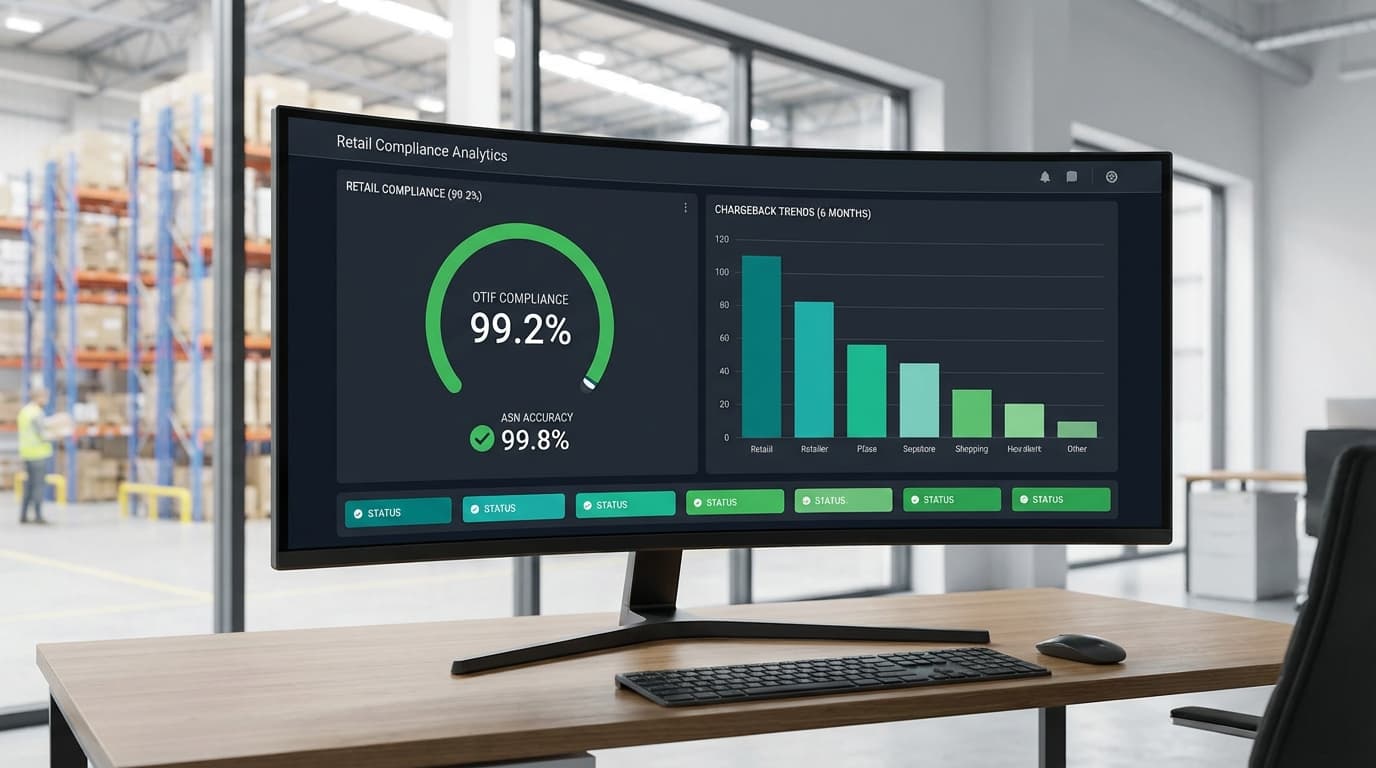
Track compliance metrics continuously, not monthly. OTIF rates, ASN accuracy, chargeback volume by category and retailer, and retailer scorecard trends should all be visible in real-time dashboards. We provide connected SLA dashboards that include compliance metrics alongside operational KPIs so that problems are visible before they become chargebacks.
Root Cause Analysis on Every Chargeback
Every chargeback should trigger a root cause investigation—not just a correction. Was it a one-time error or a systemic issue? Was it a configuration problem, a process failure, or a carrier issue? Is it disputable? The goal is not just to fix the immediate problem but to ensure that the same type of chargeback never recurs.
Dispute Processing for Invalid Chargebacks
Not every chargeback is valid. Carrier delays, retailer receiving errors, and system glitches can all generate chargebacks that are not the supplier's fault. Maintaining documentation—proof of on-time carrier pickup, ASN transmission logs, delivery confirmation—and having a process for filing disputes within each retailer's timeframe recovers money that would otherwise be written off.
Continuous Improvement on Compliance Processes
Compliance requirements evolve. Retailers update routing guides, introduce new metrics, and tighten enforcement. A prevention system that was set up correctly a year ago may have gaps today. Ongoing improvement—regular audits of compliance configurations, proactive monitoring of retailer updates, and systematic elimination of recurring failure modes—is what separates brands that have chargebacks under control from those that are constantly reacting.
We are hitting all the SLAs over and over again. Productiv has led the charge and brought so many improvements to the table over the last two years. There's nothing glaring that stands out anymore and now we are just fine tuning.
That trajectory—from initial setup to consistent SLA performance to fine-tuning—is what a retail compliance operation should look like over time. The chargebacks that occur in the first weeks of a new retailer relationship should decline to near-zero as the compliance system matures, and the operational focus should shift from fixing problems to preventing them.
What to Look for in a 3PL for Retail Compliance
If retail distribution is a significant part of your business, your 3PL's retail compliance capabilities should be a primary evaluation criterion—not an afterthought. (We put together a detailed 3PL compliance checklist covering the specific questions to ask.) Here is what separates a 3PL that manages retail compliance from one that just ships to retailers.
- Pre-established EDI connections. Ask how many retailers they currently have active EDI connections with. A provider with 60+ pre-wired connections is operating from established infrastructure. A provider offering to “set up EDI for your retailers” is building from scratch—and you will pay for the learning curve in chargebacks.
- Pre-built UCC-128 label library. Ask whether they have existing label templates for your specific retailers. If the answer is yes, you skip the validation phase that generates labeling chargebacks. If the answer is “we will build them during onboarding,” budget for a period of potential labeling issues.
- Integration speed. Ask how long EDI setup takes. At Productiv it runs 2–4 weeks per retailer, with up to 3 retailers onboarded in parallel. Providers building from scratch take far longer, and the gap between those timelines represents weeks of potential compliance exposure.
- ASN validation process. Ask how they verify ASN accuracy before transmission. A provider with automated validation that cross-references ASN data against pick-and-pack records catches errors before they reach the retailer. A provider that relies on manual review will miss things.
- Routing guide monitoring. Ask how they stay current on retailer routing guide changes. A provider that actively monitors and pushes updates through to operations is managing compliance proactively. A provider that updates when chargebacks alert them to changes is managing reactively.
- Compliance reporting. Ask what compliance data they provide. At minimum, you should receive OTIF rates by retailer, ASN accuracy rates, chargeback tracking by category, and retailer scorecard trends. If the 3PL does not track or report this data, they are not managing compliance—they are just fulfilling orders.
The brands that avoid retail chargebacks do not do it through vigilance alone. They do it by choosing a 3PL that has the infrastructure, the retailer-specific experience, and the operational discipline to get compliance right from the start—and improve it over time. If you are shipping into retail and your chargeback rate is not where it should be, start a conversation with our team. We will walk through your current retail compliance setup, identify where the gaps are, and show you what a chargeback prevention system looks like in practice.
Paul Baker
CFO, Productiv
Paul co-leads Productiv alongside Doug Legan, bringing two decades of hands-on experience in 3PL operations, kitting, fulfillment, and embedded manufacturing. Clients reference Paul by name when describing the direct leadership access that sets Productiv apart from enterprise providers. Paul is leading Productiv's push into AI and robotics to give Productiv's clients the greatest competitive advantage against their competitors as we enter the age of AI.
Frequently Asked Questions About Retail Chargebacks & Compliance
What are retail chargebacks, and why do they matter for brands using a 3PL?
Retail chargebacks are financial penalties that retailers deduct from supplier invoices when shipments fail to meet compliance requirements. These include on-time in-full (OTIF) violations, advance shipping notice (ASN) errors, labeling mistakes, routing guide violations, and packaging non-compliance. For brands using a 3PL, chargebacks are especially important because the 3PL controls the operations that determine compliance — but the brand absorbs the financial penalty. A 3PL that lacks retail compliance expertise can quietly cost a brand thousands of dollars per month in avoidable deductions.
How much do retail chargebacks typically cost?
Chargeback costs vary by retailer and violation type, but they typically range from 1% to 5% of the gross invoice amount. Walmart's OTIF penalty alone is 3% of the cost of goods for non-compliant shipments. For a brand shipping $10 million annually into retail, even a 2% chargeback rate represents $200,000 in avoidable costs. Beyond the direct penalties, chargebacks create administrative burden (dispute processing), damage retailer scorecards (affecting future order volume), and in severe cases can lead to vendor suspension.
What is OTIF compliance and which retailers enforce it?
OTIF stands for On-Time In-Full — the percentage of shipments that arrive at the retailer's distribution center on or before the Must Arrive By Date (MABD) with the correct quantity. Walmart formalized its OTIF program with a 98% compliance threshold and a 3% penalty on non-compliant shipments. Target, Amazon, and most major retailers enforce similar metrics under different names. OTIF is measured at the PO line level, meaning a single late or short shipment on one line item can trigger a penalty even if the rest of the order is perfect.
What causes ASN failures, and how do you prevent them?
ASN (Advance Shipping Notice) failures occur when the EDI 856 transaction sent to the retailer doesn't match the physical shipment. Common causes include timing errors (ASN sent too early or too late relative to shipment), quantity mismatches between the ASN and what was actually shipped, incorrect PO references, and configuration problems when a retailer issues purchase orders through multiple methods. Prevention requires automated validation that cross-references the ASN against pick-and-pack data before transmission, along with proper configuration for each retailer's specific PO formats and timing windows.
What is a routing guide, and what happens if you violate it?
A routing guide is a retailer's set of requirements for how shipments must be packaged, labeled, transported, and delivered. It specifies everything from carton dimensions and pallet configurations to carrier selection, delivery appointment scheduling, and bill-of-lading formatting. Routing guide violations trigger automatic chargebacks — often regardless of whether the actual product was correct and on time. Because routing guides are retailer-specific and updated frequently, compliance requires ongoing monitoring and a 3PL that maintains current specifications for each retailer you ship to.
How do labeling requirements differ between retailers?
Every major retailer has specific labeling requirements that go beyond the standard UCC-128 barcode. Some require proprietary label formats, specific data fields, or particular barcode symbologies. Dick's Sporting Goods, for example, has labeling requirements stringent enough to require a specialty thermal transfer printer — standard thermal labels don't meet their specifications. Walmart requires specific label placement and SSCC-18 formatting. Target has its own label requirements tied to their ASN validation. A 3PL with pre-built label libraries for each retailer eliminates the trial-and-error that causes labeling chargebacks during initial setup.
How long does it take to set up EDI connections for retail compliance?
Setup time varies dramatically by provider. A provider with pre-established connections and existing retailer relationships activates compliance in 2–4 weeks per retailer, with up to 3 retailers onboarded in parallel; a 3PL building EDI connections from scratch takes far longer per retailer, including testing and validation. The difference comes from having pre-wired connections, existing UCC-128 label templates, and tested ASN configurations already in place. We maintain EDI connections for 60+ retailers through SPS Commerce, which means most new client onboarding involves activating existing infrastructure rather than building it.
Can chargebacks be disputed, and is it worth the effort?
Yes, many chargebacks can be disputed — and it is often worth the effort. Successful disputes typically involve proving that the shipment was compliant (delivery confirmation, ASN transmission logs, proof of on-time carrier pickup) or demonstrating that the retailer's measurement was incorrect. However, the dispute process is time-consuming and retailer-specific, with different portals, documentation requirements, and timeframes. The more effective strategy is prevention through proper setup and ongoing compliance monitoring, which eliminates most chargebacks before they occur rather than fighting them after the fact.
What should I ask a 3PL about their retail compliance capabilities?
Ask specific questions: How many retailers do you currently ship to with active EDI connections? What is your average OTIF rate across retail clients? How long does it take to set up compliance for a new retailer? Do you have existing UCC-128 label templates for my specific retailers? How do you handle ASN validation before transmission? What happens when a retailer updates their routing guide? Can you show me your chargeback rate for existing clients? A 3PL that answers with specifics — names of retailers, actual compliance rates, concrete timelines — has real experience. A 3PL that answers in generalities is likely learning on your account.
How does geographic positioning affect retail compliance?
Geographic positioning directly impacts OTIF compliance because it determines transit times to retailer distribution centers. A shipment from a facility 1,500 miles away has less margin for error than one shipping from 300 miles away. Strategic facility locations also reduce parcel shipping zones — which lowers freight costs — and provide redundancy in case of disruptions. We've helped clients reduce shipping zones from 6-8 down to 1-3 by using facilities positioned closer to their retailer DCs, which simultaneously improved OTIF rates and reduced transportation costs.
What is the difference between EDI compliance and retail compliance?
EDI compliance refers specifically to the electronic data interchange requirements — sending and receiving the correct EDI transaction sets (850 for purchase orders, 856 for ASNs, 810 for invoices, etc.) in the format and timing each retailer requires. Retail compliance is broader and includes everything in the routing guide: physical packaging specifications, labeling requirements, delivery appointment scheduling, OTIF metrics, and documentation. You can be EDI-compliant (sending correct electronic documents) and still fail retail compliance (wrong pallet configuration, missed delivery window, incorrect labeling). Both must be addressed together.
How do multiple PO formats from the same retailer cause compliance failures?
Some retailers issue purchase orders through multiple channels or formats — standard EDI 850, portal-based orders, or different PO types for different programs (replenishment vs. promotional vs. drop-ship). Each format may require different handling for ASN generation, and if the system isn't configured to recognize and process each format correctly, the resulting ASN will fail validation. This is a setup problem that's invisible until it causes a chargeback. Proper configuration during onboarding — mapping every PO type a retailer uses and testing ASN generation against each one — prevents these failures.
What compliance metrics should I be tracking monthly?
At minimum, track OTIF rate by retailer, ASN accuracy rate, chargeback volume and dollar amount by category, retailer scorecard ratings, and routing guide compliance exceptions. The most useful view is trending data — not just this month's numbers, but the trajectory over the last 6 to 12 months. A compliance rate that's declining is a leading indicator of operational problems. We provide real-time SLA dashboards that include compliance metrics alongside operational KPIs so that problems are visible before they become chargebacks.
How do seasonal volume spikes affect retail compliance?
Seasonal spikes create compliance risk in two ways. First, the sheer increase in shipment volume means more opportunities for errors — and at the exact time retailers are enforcing compliance most strictly. Second, surge labor (temporary workers less familiar with retailer-specific requirements) can introduce errors in labeling, packaging, and pick accuracy. The solution is a combination of process engineering (building compliance checks into the workflow so they happen automatically rather than depending on individual knowledge) and pre-built label and ASN configurations that eliminate manual decision-making during high-volume periods.
Is it possible to achieve zero chargebacks?
Zero chargebacks over an extended period is extremely difficult because some variables are outside your control — carrier delays, retailer receiving errors, and system glitches can all trigger chargebacks that aren't your fault. But the controllable chargebacks — ASN failures, labeling errors, routing guide violations, and packaging non-compliance — can be driven to near-zero with proper setup, automated validation, and ongoing monitoring. The goal is to eliminate all preventable chargebacks and have a clear dispute process for the ones that aren't your fault.
Get a Chargeback Exposure Review
Bring your last few months of deductions and your retailer list. We'll walk through where the chargebacks are coming from, which ones are preventable, and what fixing the setup actually involves. We maintain pre-wired EDI connections and UCC-128 label libraries for 60+ major retailers—so we know what compliant looks like for the retailers you ship to.
Request an Exposure Review