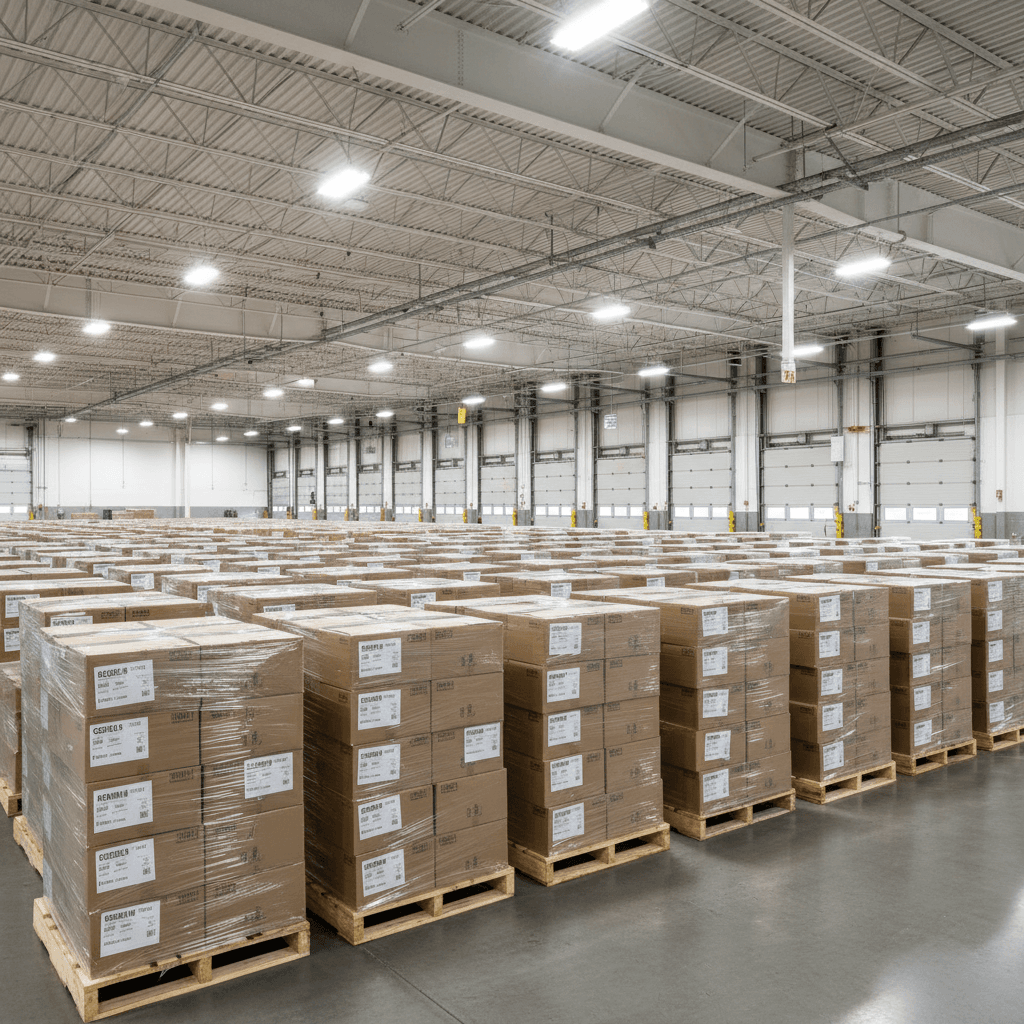
Kroger operates 35+ distribution centers and multiple banner companies — Fred Meyer, Harris Teeter, Roundy's, and others. Each banner has its own PO routing, DC locations, and compliance tracking. That complexity is the first thing most new Kroger vendors underestimate.
Compliance gaps compound fast. A labeling error triggers chargebacks on every carton until corrected. A late freight booking costs $300 per shipment, every time. Getting the configuration right from day one is what separates a profitable Kroger program from a margin-draining one. This guide covers what that looks like in practice.
Kroger's Multi-Banner Structure and Its Impact on Vendor Operations
Kroger is more than just “Kroger.” The company owns multiple banner companies, and each one operates as a distinct entity. Each banner runs its own distribution network and PO systems—and sometimes its own compliance requirements. The major banners include:
- Kroger (primary): The flagship grocery banner operating in most major US markets with approximately 2,700+ stores.
- Fred Meyer: Operates in the Pacific Northwest and Northern California as a combination grocery and general merchandise retailer.
- Harris Teeter: Southeast-focused grocery banner with strong market presence in the Carolinas and Virginia.
- Roundy's: Operates primarily in the Upper Midwest with both grocery and non-food general merchandise categories.
- Smith's: Western regional grocery banner covering Nevada, Arizona, New Mexico, and parts of California.
What This Means for Your Operations
The multi-banner structure has direct operational implications:
- Each PO must be acknowledged and routed to the correct banner DC — not just "a Kroger DC"
- Compliance scorecards are tracked separately per banner — Kroger and Harris Teeter are distinct
- Appointment scheduling, receiving windows, and dock procedures vary by DC location
- A routing error to the wrong DC creates receiving delays and penalty exposure across multiple banners simultaneously
Vendor Onboarding and Kroger Portal Access
New vendors register through Kroger's vendor management portal. The process requires:
- Company information and tax identification
- Banking details for invoice payment
- Compliance certifications or food safety documentation, depending on product category
Onboarding typically takes 2 to 4 weeks. Complete documents and fast responses keep you at the short end of that range. Once approved, vendors gain access to the Kroger vendor portal where they can:
- View purchase orders issued by each Kroger banner
- Track compliance performance metrics including on-time and fill-rate scores
- Access the vendor compliance documentation repository
- Submit invoices and access payment status
- Review chargebacks and dispute portal access
- Download updated compliance guides and routing requirements
Who Owns the Portal Relationship
The portal is how Kroger communicates with you. Compliance updates, new requirements, and operational notices all flow through it—so someone needs to be checking it regularly.
Many vendors delegate portal management to their 3PL. That works, but the brand still owns the relationship: responding to compliance inquiries, updating banking information, and addressing chargebacks.
EDI Requirements and Configuration for Kroger
Kroger requires four primary EDI transaction types for vendor operations:
- 850 (Purchase Order): Issued by Kroger to communicate order details, delivery requirements, and special instructions. Your system must receive and map the 850 correctly, with particular attention to PO numbering formats that may vary by banner.
- 856 (Advance Shipping Notice): Transmitted by the vendor after shipment leaves the facility but before it arrives at the DC. The 856 must match the physical shipment exactly in terms of quantities, SKUs, SSCC numbers, and carton counts.
- 810 (Invoice): Vendor-generated invoice that must reference the correct PO number and match the actual shipment quantities. Invoicing errors can trigger disputes and payment delays.
- 997 (Functional Acknowledgment): Confirmation that Kroger has received and processed the EDI transmission. Monitoring 997s helps identify transmission failures before they become operational problems.
Banner-Level Variations
The transaction types themselves are standard. The hard part is the banner-specific variation in formatting, data field requirements, and submission timing.
An 850 from the Kroger banner may use slightly different reference number formats than a Fred Meyer PO. The 856 submission window is the same across banners—after shipment, before arrival—but in practice, timing shifts with each DC's receiving windows.
Most 3PLs configure Kroger EDI on a standards-based platform like SPS Commerce that supports banner-level mapping variations. You configure once instead of rebuilding EDI from scratch for each banner—but that configuration takes real upfront effort.
Carton Specifications and Packing Requirements
Kroger has detailed specifications for carton materials, dimensions, weight, and packing that are enforced at their distribution centers. Non-compliance triggers chargebacks and receiving delays.
Corrugated Material and Strength Requirements
All cartons shipped to Kroger must be double-wall corrugated board of “B” and “C” quality, with a minimum Mullen rating of #200 standard and 42 ECT (Edge Crush Test). The specs exist for a reason: cartons take a beating in Kroger's distribution network, especially on automation-heavy conveyor systems.
Single-wall material, lower Mullen ratings, or lighter ECT board gets rejected at receiving—and triggers a chargeback.
Weight and Sizing Constraints
Maximum carton weight is 75 pounds per box. Heavier cartons are rejected or require special handling that incurs a chargeback. For cartons 50 pounds or heavier, “Dual Lift” must be clearly marked on two opposing sides to signal that the carton requires two-person handling.
Carton dimensions must accommodate Kroger's automation equipment and pallet configurations. Oversized cartons or irregular shapes trigger manual handling and receiving delays.
SKU Segregation in Cartons
A critical Kroger rule: no different PO-level SKUs may be mixed within a single carton. If a PO specifies 500 units of SKU A and 300 units of SKU B, you cannot pack 250 of A and 150 of B in one box. Each carton must contain only one SKU from a single PO line.
The rule makes DC receiving faster, allows carton-level damage assessment, and keeps inventory counts accurate. Break it and you take a chargeback on every mixed carton until the packing configuration is corrected.
Barcode and Labeling Standards
Barcode and label compliance is one of the most detailed and most frequently violated aspects of Kroger shipping. Errors in barcode format, size, placement, or content trigger chargebacks on every carton until the configuration is corrected.
Barcode Symbology and Format
Kroger accepts four barcode symbologies: UPC-A, Interleaved 2 of 5, Code 128, and UCC/EAN 128. The specific format depends on product type and category.
Every carton must carry a case GTIN (Global Trade Item Number) encoded as a 14-digit number in the selected barcode format. The GTIN must scan cleanly and match the product information in Kroger's system.
Label Placement and Sizing
Barcode labels go on the long side—center or upper left-hand corner—positioned exactly 2 inches from the top and 2 inches from the left edge. Minimum barcode size is 2.5 inches by 2 inches.
The placement is not arbitrary. It puts the barcode inside the scanning window of Kroger's DC automation equipment. Labels placed too high, too low, too far left, or printed too small fail to scan—and that means a receiving delay and a chargeback.
Special Carton Types and Requirements
Direct-to-floor display cartons have different labeling requirements: only one set of shipping marks on the back of the carton, with no label on the front side. This prevents the label from being visible on the sales floor if the carton is used as a display unit.
All cartons must display Season and Mod codes on both long sides in the upper right corner. This allows Kroger receiving to quickly identify the product vintage and ensure proper stock rotation.
Import Logistics and Freight Forwarding for Kroger
Importing product for Kroger comes with its own freight forwarding and documentation rules. Kroger nominates UPS-SCS (UPS Supply Chain Solutions) as the freight forwarder at all import origins. Every booking routes through their system—no exceptions.
Freight Booking Requirements
Shipment bookings must be made at least 10 calendar days before the intended delivery date. Late bookings are rejected or incur surcharges. The booking must include shipment details, gross weight, dimensions, and intended delivery DC.
Once booked, commercial documents must reach UPS within 4 business days prior to the Estimated Time of Departure (ETD). Miss the window and UPS issues a Delayed Document Notice. Go 7 or more business days late and you take a $300 banking penalty.
Those penalties stack on every late shipment—separate from any supply chain delays the late paperwork causes.
Air Shipments and Pre-Approval
All air shipments to Kroger must be approved by Kroger before anything ships. Send the approval request to BookingApprovals@kroger.com with shipment details: origin, destination, weight, and cost. Shipping air freight without approval means rejected shipments or chargebacks.
Approval typically takes 1 to 2 business days—build that into your timeline.
Distribution Center Delivery Requirements
Kroger operates 35+ DCs across the US. Each has its own receiving procedures, appointment system, and dock capacity. What applies at one DC may not apply at another.
- Appointments required. No walk-in deliveries. Trucks without appointments are turned away. Schedule before dispatching the shipment.
- 2–4 hour windows. Appointment slots are typically 2 to 4 hours. During peak seasons, availability tightens to one slot per day.
- Work backward from MABD. Plan carrier pickup by calculating backward from the delivery appointment, accounting for transit time and a buffer for delays.
- Hours vary by DC. Some locations have extended hours (early morning to late evening). Others run standard business hours. Confirm before scheduling.
Documentation and Compliance Audits
Kroger requires full documentation for import shipments. It also conducts periodic compliance audits to verify vendor supply chain security and operational capability.
Import Documentation Requirements
For all import shipments, vendors must provide:
- Commercial Invoice: Itemized invoice showing all products, quantities, unit prices, and total value in USD.
- Packing List: Detailed breakdown of carton contents, weights, and quantities by carton number.
- Certificate of Material: Documentation confirming product materials, compositions, and country of origin.
- General Certificate (GCC): Attestation that products meet safety and regulatory standards.
- ISF (Importer Security Filing): US Customs filing that must be submitted at least 24 hours before cargo arrival.
- SOLAS Weight Verification: Certified gross weight confirmation for all ocean containers to comply with maritime safety regulations.
All documentation must reference FOB (Free On Board) trade terms in compliance with Incoterms 2020. Under FOB, you own the product until it is loaded for shipment. After that, responsibility transfers to the carrier.
CTPAT Audits and Supply Chain Security
If you import regularly for Kroger, you must maintain CTPAT (Customs-Trade Partnership Against Terrorism) compliance. Verification happens through periodic third-party audits. Approved providers: SGS, UL, Elevate, Bureau Veritas, InterTek, and SCAN.
The audits check that your facility, supply chain processes, and documentation practices meet CBP standards for import security and supply chain integrity.
CTPAT status directly affects how fast your shipments clear Customs. Non-compliant vendors face increased scrutiny, extended processing times, and potential order rejections. Audit results are typically valid for a 3-year period before renewal is required.
Kroger Chargebacks and Penalty Structure
Kroger enforces compliance through a chargeback system that deducts penalties from vendor invoices. Common chargeback categories include:
- Labeling errors: Incorrect barcode format, placement, size, or missing labels. These are among the most common chargebacks and persist on every carton until corrected.
- Carton quality: Damaged, weak, or non-compliant corrugated material. Cartons failing the Mullen or ECT requirements.
- Packing errors: Mixed SKUs in a carton, incorrect quantities, or overage shipments.
- Documentation late fees: Late import documents, late ISF filings, or missing compliance paperwork. Late document submissions incur the $300 banking penalty mentioned earlier.
- ASN inaccuracies: EDI 856 quantities or carton counts not matching the physical shipment.
- Appointment violations: Arriving without an appointment or exceeding the appointment time window.
Kroger uses fixed penalties per violation — not a percentage of shipment value. A labeling error on 50 cases may trigger a $500 chargeback regardless of what the product costs. On lower-margin items, that can wipe out the entire shipment's profit. Ranges run $50 to several hundred dollars per incident.
Shipping to Kroger and managing multi-banner compliance?
We maintain Kroger EDI connections, validated carton labeling configurations, and import logistics expertise across all Kroger banners. Let us assess your current compliance setup and identify where the penalty exposure is.
Talk to our teamGrocery-Specific Compliance Considerations
For vendors selling grocery and food products through Kroger, additional compliance requirements apply beyond standard carton and labeling requirements.
Temperature Control and Perishable Handling
- Ship in temperature-controlled environments with specified ranges maintained throughout transit
- Temperature recording required during transport — provide evidence with every shipment
- Temperature violations result in wholesale product rejection, not just chargebacks
Date Coding and Rotation
- Required on both the carton and individual units (manufacturing date, best-by, or sell-by depending on product type)
- Kroger uses strict FIFO rotation — products with insufficient shelf life remaining at receiving are rejected
- Date codes must be legible and positioned for quick reading by receiving staff
Food Safety Certifications
Depending on product type, Kroger may require SQF (Safe Quality Food), HACCP (Hazard Analysis Critical Control Points), or facility audit documentation before approving a product for retail channels. Confirm requirements during onboarding — category managers specify what applies.
DSD (Direct Store Delivery) Compliance
Kroger may authorize Direct Store Delivery (DSD) for high-velocity or specialty items—beverages, bakery, health and beauty. Under DSD, you deliver directly to individual stores rather than through distribution centers. It is a different operational model with its own compliance framework.
DSD vendors must:
- Maintain their own delivery network and logistics
- Comply with store-specific receiving windows and dock schedules
- Manage inventory at the store level, including shelf replenishment
- Comply with Kroger's DSD product compliance standards (labeling, date coding, temperature control)
- Track performance at the store and store-group level for compliance scorecards
DSD makes sense for high-velocity, lower-SKU-count products—enough volume that frequent small shipments justify maintaining your own delivery network. Most general merchandise vendors skip it and ship through Kroger distribution centers instead.
How a 3PL Handles Kroger Compliance
For brands outsourcing fulfillment to a 3PL, the 3PL takes on primary responsibility for operational Kroger compliance: EDI configuration, labeling, carton packing, freight forwarding, and documentation. The brand maintains portal responsibility and ultimately assumes chargeback liability.
3PL Role in Vendor Onboarding
Your 3PL should support you through Kroger onboarding with operational documentation, reference letters, and detailed capability statements. But the vendor—not the 3PL—is the legal entity registering with Kroger, and the vendor assumes legal responsibility for the account.
3PL Role in EDI Configuration
The 3PL builds and maintains the EDI connections for all four transaction types (850, 856, 810, 997) and configures banner-level routing and format variations. A strong 3PL partner maintains this configuration proactively and updates it when Kroger changes their EDI requirements. A learning 3PL generates chargebacks and delays during the configuration period.
3PL Role in Labeling and Compliance
On every shipment, the 3PL:
- Maintains pre-configured Kroger label templates
- Validates carton quality against Kroger specs
- Manages the packing and labeling process
- Monitors compliance performance in the Kroger portal and alerts the vendor to chargebacks and performance issues
3PL Role in Import Logistics
For import shipments, the 3PL coordinates with the UPS-SCS freight forwarder, manages booking timelines, ensures documentation is submitted within required windows, and tracks shipments through customs clearance to Kroger DCs.
Kroger Sustainability and Supplier Diversity Programs
Kroger runs supplier diversity initiatives and sustainability requirements that can affect vendor status and order eligibility. Vendors with demonstrated commitment to either may qualify for preferred vendor status or special promotional allocations.
Sustainability requirements may include:
- Reducing packaging waste
- Meeting carbon footprint targets
- Sourcing from sustainable suppliers
Suppliers in specific categories—organic, local, eco-friendly—may have separate sustainability compliance tracks. Ask about Kroger's sustainability requirements during onboarding so your product qualifications are evaluated correctly.
Auditing your fulfillment setup before your first Kroger PO? Work through the 3PL compliance checklist — EDI, labeling, and SLA accountability in one self-audit.
Paul Baker
CFO, Productiv
Paul co-leads Productiv alongside Doug Legan, bringing two decades of hands-on experience in 3PL operations, kitting, fulfillment, and embedded manufacturing. Clients reference Paul by name when describing the direct leadership access that sets Productiv apart from enterprise providers. Paul is leading Productiv's push into AI and robotics to give Productiv's clients the greatest competitive advantage against their competitors as we enter the age of AI.
Frequently Asked Questions About Kroger Vendor Compliance
What is Kroger's multi-banner structure and how does it affect vendor compliance?
Kroger operates 35+ DCs plus separate logistics networks for its banners — Fred Meyer, Harris Teeter, Roundy's, Smith's, and others. POs from different banners route to different DCs, require separate acknowledgment, and are tracked on independent compliance scorecards. Which banner a PO comes from determines DC location, delivery protocols, and freight requirements.
What are Kroger's EDI transaction requirements?
Kroger requires EDI 850 (Purchase Order), 856 (Advance Shipping Notice), 810 (Invoice), and 997 (Functional Acknowledgment) transactions. Each transaction has Kroger-specific formatting requirements that must be mapped correctly in your WMS or 3PL system. The 856 ASN is particularly critical because it must be transmitted after shipment leaves your facility but before it arrives at the DC, and it must match the physical shipment exactly. ASN errors are one of the most common sources of Kroger chargebacks because the ASN data flows directly into their receiving planning and DC operations.
What are the carton specifications and weight requirements for Kroger?
Kroger requires double-wall corrugated cases of “B” and “C” quality with a minimum Mullen rating of #200 standard and 42 ECT (Edge Crush Test). Maximum carton weight is 75 pounds per box. No different PO-level SKUs may be mixed in a single shipping carton—each carton must contain only one SKU from one PO line. Cartons 50 pounds or heavier must have “Dual Lift” clearly marked on two opposing sides. Kroger uses these specifications to ensure compatibility with their DC automation and handling equipment.
What barcode and labeling standards does Kroger enforce?
Accepted symbologies: UPC-A, Interleaved 2 of 5, Code 128, or UCC/EAN 128. Every carton needs a 14-digit case GTIN. Label placement: long side center or upper left, 2 inches from top and 2 inches from left edge. Minimum barcode size is 2.5 × 2 inches. Season and Mod codes go on both long sides, upper right. Display cartons: one set of shipping marks on the back only, nothing on the front. Wrong placement or size triggers chargebacks on every carton.
What is required for import shipments to Kroger?
Use UPS-SCS as the nominated freight forwarder — no exceptions. Book at least 10 calendar days before delivery. Submit Commercial Invoice, Packing List, Certificate of Material, and GCC to UPS within 4 business days before ETD. Documents submitted 7+ business days late incur a $300 banking penalty. All air shipments require prior approval from Kroger (BookingApprovals@kroger.com) before shipping.
What documentation is required for Kroger import compliance?
Required import documentation includes a Commercial Invoice, Packing List, Certificate of Material, General Certificate (GCC), and ISF (Importer Security Filing) documentation. SOLAS weight verification is required for all ocean containers to confirm gross weight accuracy. All documentation must reference FOB (Free On Board) trade terms in compliance with Incoterms 2020. Documentation must be submitted to UPS within the specified timeframe, and incomplete or inaccurate documentation can trigger delays, holds, and penalties that disrupt delivery schedules.
How does Kroger's vendor onboarding process work?
New vendors must register through Kroger's vendor portal and complete their onboarding process, which includes submitting company information, tax documentation, banking details, and compliance certifications. Once approved, vendors receive access to the portal where they can view their POs, track performance metrics, and manage compliance documentation. The onboarding timeline typically spans 2-4 weeks depending on document completeness. Most vendors work with a 3PL or freight forwarder to handle the operational setup, while the vendor itself manages the portal relationship and compliance responsibility.
What are CTPAT audits and why are they required for Kroger vendors?
CTPAT (Customs-Trade Partnership Against Terrorism) compliance is required for vendors with regular import activity. Approved auditors: SGS, UL, Elevate, Bureau Veritas, InterTek, and SCAN. Audits verify your facility, supply chain, and documentation meet CBP security standards. Non-compliant vendors face extended customs processing times and order rejections. Results are valid for approximately 3 years before renewal.
What DSD (Direct Store Delivery) and warehouse delivery models does Kroger use?
Kroger operates both Direct Store Delivery (DSD) models, where vendors deliver directly to individual Kroger stores, and warehouse delivery models, where vendors ship to Kroger distribution centers for further distribution. DSD is typically used for perishable or high-velocity specialty items like bakery or beverage products, while warehouse delivery is standard for general merchandise. The PO and routing requirements differ between DSD and warehouse delivery—DSD POs include store delivery addresses and scheduling windows, while warehouse POs specify DC locations and appointment requirements. Your vendor profile and product category determine which model applies.
What sustainability and social compliance requirements does Kroger enforce?
Kroger has established supplier diversity and sustainability requirements that affect vendor status and order eligibility. Vendors are expected to maintain environmental and social compliance standards including ethical labor practices, waste reduction programs, and sustainable sourcing where applicable. These requirements are tracked through periodic audits and vendor scorecards. Brands with certifications in supplier diversity programs or demonstrated sustainability initiatives receive preferred vendor status and may qualify for promotional allocations. Non-compliance can result in reduced order priority or vendor suspension in specific categories.
Get Straight Answers on Kroger Compliance—Across Every Banner
Kroger penalties are fixed-fee and they repeat—a labeling error charges back on every carton until the configuration is fixed, and each banner tracks your compliance on its own scorecard. We ship to all Kroger banners and maintain EDI connections, validated labeling configurations, and import logistics expertise. Tell us which banners you ship to and where the deductions are showing up, and we'll tell you what's fixable.
Talk to an Operator