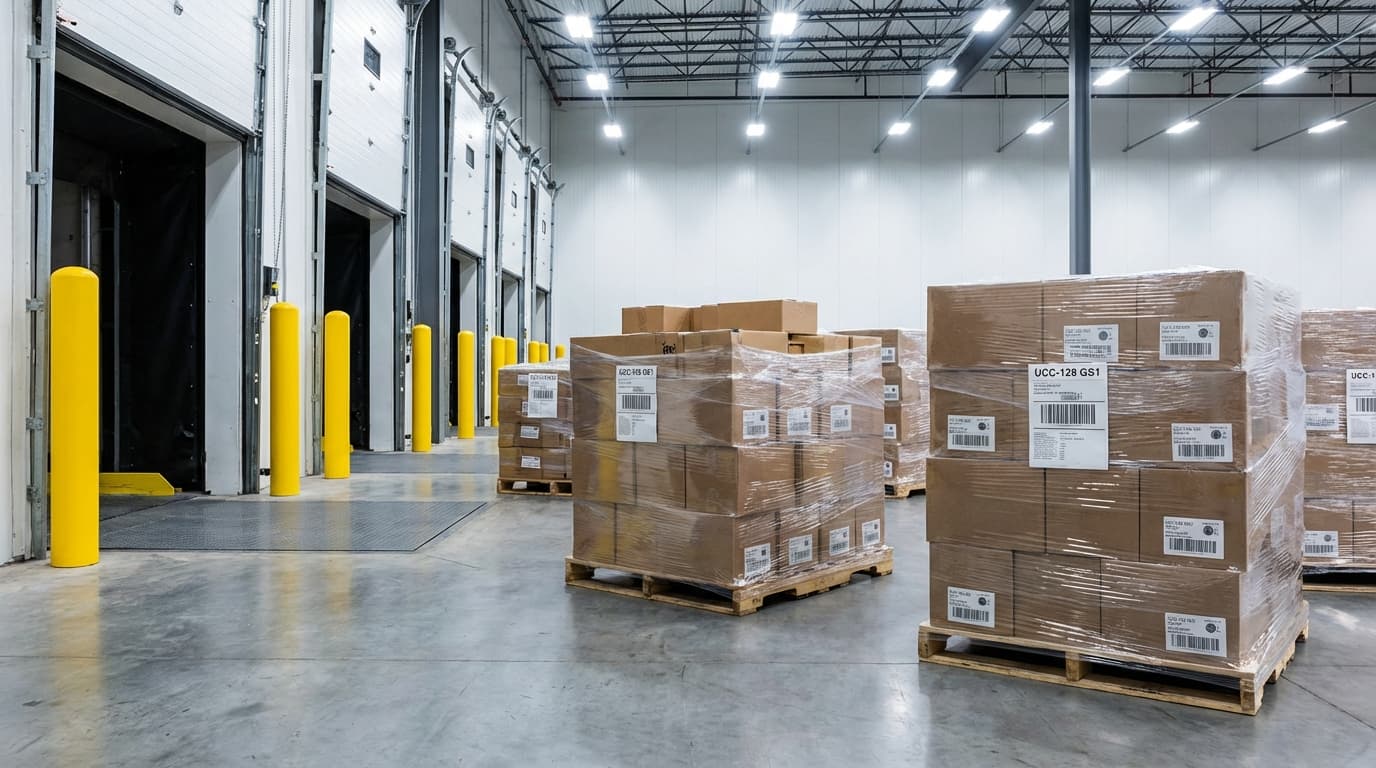
Retail compliance is the operational reality that hits every brand when they start shipping to major retailers. It is not a single requirement—it is a layered system of specifications covering how you process orders, label cartons, build pallets, route shipments, time deliveries, and document everything electronically. Each retailer publishes their own version of these requirements, and the penalties for non-compliance are immediate and financial.
After two decades of setting up retail compliance for brands shipping to 100+ major retailers, we have seen every failure mode. The brands that struggle are consistently the ones who treated compliance as something they would figure out after they started shipping. The brands that succeed are the ones who understood the requirements before their first shipment left the dock.
This guide covers the six core pillars of retail compliance, what each one requires, and how they connect. If you are making the jump from DTC to retail or onboarding with a new retailer, this is the foundation you need.
Pillar 1: Electronic Data Interchange (EDI)
EDI is the electronic communication layer between you and the retailer. Where DTC fulfillment uses APIs and shopping cart integrations, retail distribution uses EDI —a standardized electronic format that has been the backbone of retail supply chains for decades.
Every major retailer requires EDI for core transactions. The purchase order (EDI 850) tells you what to ship and when. The purchase order acknowledgment (EDI 855) confirms you received it. The advance shipping notice (EDI 856) tells the retailer exactly what is coming before it arrives—every carton, every item, every quantity, with SSCC-18 identifiers that match the physical barcodes. The invoice (EDI 810) requests payment. The functional acknowledgment (EDI 997) confirms each transaction was received.
The ASN is where most compliance failures originate. When the retailer's DC scans your cartons at receiving, they cross-reference the barcodes against the ASN data. Any mismatch—wrong quantity, wrong item, missing carton, late transmission—triggers a chargeback. ASN errors are particularly dangerous because they tend to be systemic: if the EDI configuration is wrong for a particular PO type, every shipment of that type generates the same error until the configuration is fixed.
Most brands connect through a Value Added Network (VAN) like SPS Commerce, which maintains pre-built connection maps for major retailers. With existing VAN infrastructure, EDI onboarding runs 2–4 weeks per retailer, with up to 3 retailers onboarded in parallel. Building direct connections from scratch takes far longer. We maintain pre-wired EDI connections for 60+ retailers, which means new client onboarding involves activating and configuring existing maps rather than building them from scratch.
Pillar 2: Labeling and Barcode Compliance
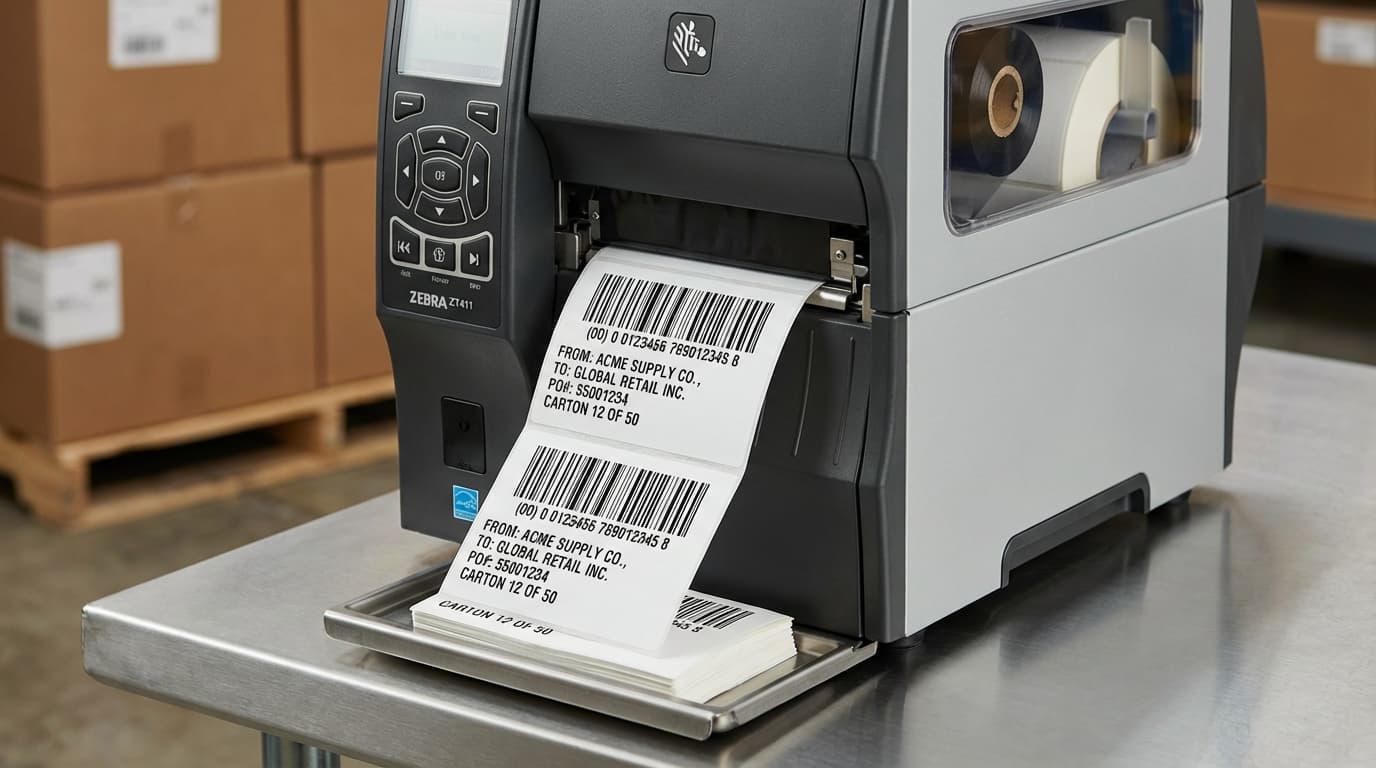
Every carton shipped to a major retailer must carry a GS1-128 (UCC-128) barcode label that uniquely identifies the carton and its contents. This is not a shipping label—it is a structured data label that carries the SSCC-18 (Serial Shipping Container Code), PO number, item identifier, quantity, and destination information in machine-readable format.
Each retailer specifies exactly what the label must contain, how it must be formatted, where it must be placed on the carton, and even how it must be printed. Target offers vendors three barcode options: SSCC-18, GTIN-14, or UPC-A, and requires a formal label approval process before the first shipment. Walmart requires specific WMIT field data and STOP labels on mixed master packs. Dick's Sporting Goods requires thermal transfer printing instead of standard direct thermal—a specification that requires different equipment and produces more durable images that remain scannable throughout the supply chain.
Label placement varies by retailer and carton size. Most require placement on the right side of the carton, 2 inches from the base and edge, with different rules for short cartons (label on top) and oversized items (label on the end). Labels must never fold over a corner or overlap a taped seam. Barcode print quality must meet ANSI A or B grade standards to ensure consistent scannability at the DC.
Getting labeling wrong is one of the most persistent compliance failures because the same error repeats on every carton of every shipment until someone identifies and fixes the template, the printer settings, or the placement procedure. A label template that has the department number in the wrong font size generates a chargeback on every carton until it is corrected.
Pillar 3: Packaging and Pallet Configuration
Routing guides specify exactly how products must be packaged and palletized for each retailer. The specifications cover carton dimensions (minimum and maximum for conveyable and non-conveyable), weight limits, board strength (measured in ECT—Edge Crush Test), sealing methods, and prohibited materials.
A pattern across most major retailers: staples are prohibited for carton sealing. Metal straps and banding are generally not permitted on conveyable cartons. Sealing must use reinforced kraft tape or poly tape at specified minimum thickness (typically 2 mil) and width (typically 2 inches), applied to all outer seams. Prohibited packing materials commonly include Styrofoam peanuts, shredded paper, rubber bands, and loose fill materials that can interfere with DC conveyor systems.
Pallet configuration is equally specific. Standard GMA pallets (40×48 inches) are required by most retailers. Height limits typically range from 48 to 50 inches of product (plus 5 to 6 inches for the pallet itself). Weight limits apply both to the total pallet and per layer. Walmart limits individual layers to 500 pounds. Cartons must not overhang the pallet edge —Target and Walmart both enforce this. Shrink wrapping from the top of the load to the base of the pallet is standard, with clear stretch wrap so labels remain scannable.
Pillar 4: On-Time In-Full (OTIF) Delivery
OTIF is the performance metric that retailers use to measure whether suppliers deliver the right quantity by the right date. “On-Time” means arriving at the retailer's distribution center on or before the Must Arrive By Date (MABD)—not when the shipment left your warehouse. “In-Full” means delivering 100% of the ordered quantity with no shortages, overages, or substitutions.
Walmart enforces a 98% OTIF threshold with an automatic 3% penalty on the cost of goods shipped for non-compliant shipments. That penalty structure means OTIF failures are the single most expensive compliance metric for most brands. A brand shipping $10 million annually to Walmart with 95% OTIF compliance faces $300,000 in penalties on the non-compliant 5%.
Meeting OTIF requirements is partly operational (accurate picking and packing), partly logistical (reliable carriers and transit planning), and partly geographic (being close enough to the DC to reduce transit variability). One of our clients, Evergreen Enterprises, reduced parcel zones from 6–8 to 1–3 by shipping from our Reno and Dallas facilities—cutting both cost and transit time variability, which directly improves OTIF performance.
Free Tool: EDI Onboarding Checklist
Setting up EDI for a new retailer? Our interactive checklist walks you through every step from SPS connection setup through testing and go-live validation. Download the Excel template to track multiple retailers at once.
Pillar 5: Transportation and Routing
Retail shipments must follow the retailer's transportation requirements, which typically include carrier routing through the retailer's Transportation Management System (TMS), delivery appointment scheduling, and specific documentation requirements.
Some retailers require all shipments—regardless of freight terms—to be routed through their TMS. Dick's Sporting Goods requires routing through logistics.dcsg.com with shipments entered at least 2 business days before the Cancel If Not Shipped By (CINSB) date. The routing request must include accurate pallet counts, weights, and cube calculations. Once a Shipment ID is assigned, it cannot be reused and must appear on both the bill of lading and the ASN.
Shipment loading has its own specifications. LTL shipments typically must be palletized and shrink-wrapped. Truckload shipments may need to be floor-loaded using a brick layer pattern (not column-loaded), with barriers and load restraints to prevent shifting. Bills of lading must list specific information: carrier name (not abbreviated), vendor number, carton count, pallet count, weight, and the retailer's shipment identifier.
Pillar 6: Chargebacks and Dispute Management
Chargebacks are the financial penalties retailers deduct from supplier payments when shipments fail compliance requirements. They are the enforcement mechanism for everything covered in this guide. Understanding how chargebacks work is essential because they are automatic, cumulative, and often retroactive.
Chargeback categories include: OTIF failures (late delivery, quantity discrepancies), ASN errors (late, missing, or inaccurate advance shipping notices), labeling violations (unscannable barcodes, incorrect format, wrong placement), packaging non-compliance (wrong dimensions, prohibited materials, incorrect pallet configuration), routing deviations (failure to route through TMS, incorrect documentation), and invoicing errors (late, missing, or incorrect EDI 810 invoices).
Most retailers provide a formal chargeback dispute process through their vendor portal. Disputes require specific documentation: ASN transmission logs, carrier proof of delivery, photographs of label placement, packing records. Time windows for disputes are strict— Dick's Sporting Goods charges a $25 research fee for disputes on charges older than 3 months and will not research any charge over 6 months old. Walmart disputes go through APDP with specific evidence requirements per chargeback category.
The most effective chargeback strategy is prevention through proper setup. Every chargeback category maps back to an operational process that can be configured correctly before the first shipment. ASN errors come from EDI misconfiguration. Labeling failures come from incorrect templates or printer settings. OTIF misses come from inadequate transit planning. Fix the process, and the chargebacks stop.
We are hitting all the SLAs over and over again. Productiv has led the charge and brought so many improvements to the table over the last two years. There's nothing glaring that stands out anymore and now we are just fine tuning.
How the Six Pillars Connect
These six pillars are not independent—they form an interconnected system. The EDI configuration determines whether ASN data is accurate. Accurate ASN data must match the physical labels on the cartons. The labels must be on cartons that meet the routing guide's packaging specifications. Those cartons must be on pallets that meet configuration requirements. The pallets must be loaded according to transportation specifications. And everything must arrive on time and in full.
A failure in any one pillar can cascade. If the EDI system generates an ASN with the wrong quantity, but the physical shipment is correct, the DC scan will flag a discrepancy—even though the right product was delivered. If the label template is correct but the printer settings produce faded barcodes, the DC cannot scan them regardless of data accuracy. If everything is correct but the shipment misses the delivery window, OTIF penalties apply anyway.
This interconnection is why retail compliance must be set up as a system, not as a collection of individual requirements. A 3PL that has validated the complete chain—from EDI to labeling to packaging to delivery—for a specific retailer can replicate that setup for new clients in weeks. A 3PL that is building each component independently will discover the integration issues through chargebacks.
Getting Started With Retail Compliance
If you are a brand entering retail distribution for the first time, the most important decision is who will handle the operational compliance. You can build the infrastructure yourself (EDI connectivity, label printing, WMS configuration), but the learning curve is steep and the cost of mistakes is immediate. Or you can work with a 3PL that has the infrastructure already built and validated for your specific retailers.
When evaluating a 3PL for retail compliance, ask for specifics: which retailers do you currently ship to, what is your chargeback rate, how long does onboarding take, do you have the label templates and EDI connections for my retailers? Use our 3PL selection checklist for a complete evaluation framework.
If you want to understand what the full DTC-to-retail transition involves, read our comprehensive guide to going from DTC to retail distribution. For retailer-specific requirements, see our detailed guides for Walmart, Target, and Dick's Sporting Goods. And if compliance failures are already costing you money, use our chargeback cost calculator to quantify the impact and our dispute and recovery guide to start recovering what you can.
Ready to get started? Talk to our team. We can walk through what your specific retailers require and how quickly we can have your compliance infrastructure operational.
Paul Baker
CFO, Productiv
Paul co-leads Productiv alongside Doug Legan, bringing two decades of hands-on experience in 3PL operations, kitting, fulfillment, and embedded manufacturing. Clients reference Paul by name when describing the direct leadership access that sets Productiv apart from enterprise providers. Paul is leading Productiv's push into AI and robotics to give Productiv's clients the greatest competitive advantage against their competitors as we enter the age of AI.
Frequently Asked Questions About Retail Compliance
What is retail compliance?
Retail compliance is the set of requirements that retailers impose on suppliers for how products must be packaged, labeled, documented, and delivered. These requirements are published in each retailer's routing guide and enforced through financial penalties called chargebacks. Compliance covers EDI (electronic data interchange) for order processing and shipping documentation, labeling (GS1-128 barcodes with specific formats and placement), packaging (carton dimensions, board strength, sealing methods, pallet configuration), transportation (carrier routing, delivery appointments, on-time arrival), and documentation (advance shipping notices, invoices, bills of lading). Every major retailer has its own compliance program with retailer-specific requirements.
What are the most common retail compliance violations?
The most common violations fall into five categories: ASN errors (advance shipping notices that are late, missing, or contain data that does not match the physical shipment), labeling failures (unscannable barcodes, incorrect label format, wrong placement on the carton), OTIF failures (shipments that arrive late or with incorrect quantities), packaging violations (wrong carton dimensions, prohibited sealing materials, incorrect pallet configuration), and routing guide deviations (failure to route through the retailer's transportation system, incorrect documentation). ASN errors are often the single largest source of chargebacks for new vendors because EDI configuration issues can affect every shipment until the root cause is identified.
How much do retail compliance failures cost?
Costs vary by retailer and violation type. Walmart charges 3% of the cost of goods shipped for OTIF failures — for a brand shipping $5 million annually, that is $150,000 in potential penalties from delivery timing alone. Dick's Sporting Goods charges $25 per invoice for EDI invoicing non-compliance. Target deducts penalties based on ASN accuracy and delivery performance. Beyond direct chargeback costs, compliance failures damage your vendor scorecard, which can affect future order volume, shelf space allocation, and ultimately whether the retailer continues the relationship. The total cost of compliance failures typically ranges from 2-5% of annual retail revenue for brands without proper infrastructure.
What is EDI and why is it required for retail?
EDI (Electronic Data Interchange) is the standardized electronic format for exchanging business documents between trading partners. Retailers require EDI because it enables automated receiving: when your ASN (EDI 856) arrives before your shipment, the distribution center can plan labor, dock assignments, and storage before the truck arrives. Core EDI transactions include the 850 (Purchase Order), 856 (Advance Shipping Notice), 810 (Invoice), and 997 (Functional Acknowledgment). Most brands connect through a VAN (Value Added Network) like SPS Commerce, which provides pre-built connection maps for major retailers. EDI onboarding at Productiv runs 2–4 weeks per retailer, with up to 3 retailers onboarded in parallel.
What is a routing guide?
A routing guide is the retailer's master specification document for how shipments must be prepared, labeled, packaged, and delivered. Each major retailer publishes its own guide, and they differ significantly. A routing guide typically covers carton specifications (dimensions, weight, board strength, sealing), pallet configuration (height, weight per layer, stacking, shrink-wrap), labeling (barcode format, label size, content zones, placement, print method), shipping (carrier routing, TMS requirements, delivery scheduling), and documentation (bill of lading, ASN timing, invoice requirements). Guides range from around 30 pages for smaller retailers to Walmart's 408-page Supply Chain Packaging Guide. They are updated periodically — Walmart updates twice annually, Dick's Sporting Goods at least every six months.
What is OTIF compliance?
OTIF (On-Time In-Full) measures whether suppliers deliver the right quantity on or before the retailer's specified delivery date. 'On-Time' means arriving at the distribution center by the Must Arrive By Date (MABD). 'In-Full' means delivering 100% of the quantity ordered — no shortages, no overages, no substitutions. Walmart pioneered strict OTIF enforcement with a 98% compliance threshold and 3% penalty on cost of goods. Target, Amazon, and other retailers have implemented similar programs. OTIF is the most expensive compliance metric because it applies to every shipment and penalties are calculated on the full order value, not just the non-compliant portion.
What are GS1-128 labels and why do retailers require them?
GS1-128 (also called UCC-128) labels are standardized barcode labels that carry structured supply chain data in a machine-readable format. Every carton shipped to a major retailer must carry a GS1-128 label with an SSCC-18 (Serial Shipping Container Code) that uniquely identifies that carton. The label also carries PO numbers, item identifiers, quantities, and destination information in specific zones. Retailers use these barcodes for automated receiving — scanning the label cross-references the physical carton against the ASN data. Each retailer specifies different label content, format, placement, and print method. Some require thermal transfer printing (like Dick's Sporting Goods), while others accept direct thermal. Label quality must meet ANSI grade A or B standards to ensure consistent scannability.
Do I need a different 3PL for retail versus DTC fulfillment?
Not necessarily, but your 3PL must have genuine retail compliance infrastructure — not just DTC fulfillment with 'retail capability' as a marketing claim. The infrastructure differences are significant: retail requires EDI connectivity (DTC uses APIs), commercial GS1-128 labeling (DTC uses carrier shipping labels), routing guide compliance for packaging and palletization (DTC ships individual parcels), and ASN transmission timed to retailer specifications. A 3PL that handles both DTC and retail from a single facility with shared inventory can save carrying costs and eliminate allocation headaches. We handle both for multiple clients, including one processing 20,000 monthly ecommerce orders alongside 1,000 monthly B2B orders to 50 retailers.
How long does it take to become retail-compliant?
With a 3PL that has pre-existing retailer EDI connections and validated label templates, setup runs 2–4 weeks per retailer, with up to 3 retailers onboarded in parallel, from engagement to first compliant shipment. That includes EDI activation and testing, label template configuration, routing guide implementation in the WMS, and sample shipment validation. Without existing infrastructure — if EDI connections need to be built from scratch, specialty printing equipment needs to be procured, or label templates need to be developed — setup takes far longer. We onboarded a consumer goods company to ship to 50 retailers in 12 weeks total, including a 6-week program design phase and full EDI, WMS, and ERP integration.
How do I prevent chargebacks on my first retail shipments?
Prevention requires completing four workstreams before the first shipment leaves the dock: (1) EDI setup and testing — verify ASN generation for every PO type the retailer may issue, not just the first one you receive. (2) Label validation — print sample labels and verify barcode scannability, data accuracy, and correct placement per the routing guide. (3) Packaging configuration — build the retailer's carton, pallet, and sealing specifications into warehouse standard work instructions. (4) Delivery planning — calculate transit buffers for every lane, establish appointment scheduling, and verify carrier routing. The brands that ship chargeback-free from the first shipment are the ones that test everything before going live.
Need Retail Compliance Done Right From Day One?
We have EDI connections, label templates, and routing guide configurations for 100+ major retailers. Whether you are shipping to your first retailer or your fiftieth, we can get your compliance infrastructure operational in weeks.
Start a Conversation