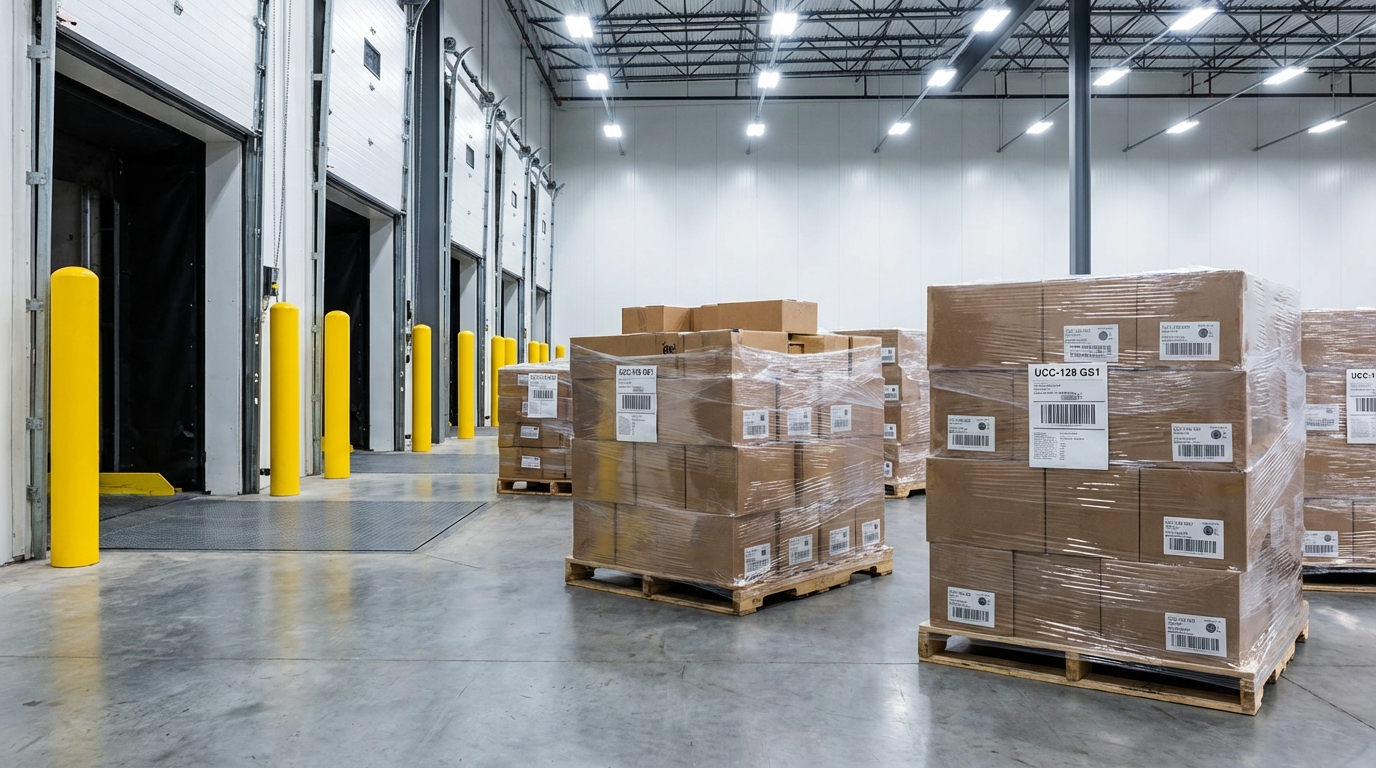
Getting picked up by a major retailer is the milestone every consumer brand works toward. Then the purchase order arrives and the logistics reality sets in. Shipping to Walmart, Target, Costco, or Dick's Sporting Goods is nothing like shipping DTC orders. The systems are different. The documentation is different. The penalties for mistakes are immediate and financially significant. And the timeline between receiving your first PO and needing to ship compliant product is typically weeks, not months.
We have onboarded dozens of brands through this exact transition. We have watched the pattern repeat: a brand that has been running a successful DTC operation receives their first big-box PO, realizes their current fulfillment setup cannot handle retail requirements, and needs to get compliant fast. The brands that navigate this well do so because they understand what is actually required before their first shipment leaves the dock. The brands that struggle are the ones who ship first and learn through chargebacks.
This guide covers everything that changes when you move from DTC to retail distribution—the infrastructure you need, the compliance requirements you will face, the costs of getting it wrong, and what to look for in a 3PL partner who can get you there without the learning curve.
Why Retail Fulfillment Is Fundamentally Different From DTC
If you have been shipping DTC, your fulfillment workflow is built around individual customer orders: pick items from inventory, pack them in a shipping box, generate a carrier label, and hand the package to UPS or FedEx. The systems supporting this workflow—Shopify, a WMS, carrier APIs—are designed for parcel-level operations. There is no EDI. There are no routing guides. There are no chargebacks for labeling violations.
Retail fulfillment operates on an entirely different infrastructure. When Walmart sends you a purchase order, it arrives as an EDI 850—an electronic document in a standardized format that your system must be able to receive, interpret, and acknowledge. When you ship that order, you must transmit an EDI 856 (Advance Shipping Notice) that tells Walmart exactly what is on every pallet, in every carton, with SSCC-18 barcodes that match the physical shipment. When the shipment arrives at the DC, Walmart scans those barcodes and cross-references them against the ASN data. Any mismatch—wrong quantity, wrong item, unscannable barcode, late ASN—triggers an automatic chargeback.
This is not a tighter version of DTC fulfillment. It is a completely different operational model that requires different technology (EDI), different equipment (thermal transfer printers, commercial label stock), different processes (routing guide compliance, pallet configuration), and different expertise (retailer-specific compliance knowledge).
The Five Things You Need Before Your First Retail Shipment
When a brand comes to us with their first retail PO, there are five workstreams we set up in parallel. All five must be complete and tested before the first shipment leaves the dock.
1. EDI Connectivity
Every major retailer requires electronic data interchange (EDI) for core business transactions. At minimum, you need to receive EDI 850 purchase orders, transmit EDI 856 advance shipping notices, send EDI 810 invoices, and return EDI 997 functional acknowledgments. Most brands connect through a Value Added Network (VAN) like SPS Commerce, which provides pre-built maps for major retailers.
We onboarded a consumer goods company that was shipping to 50 retailer customers. The EDI setup—connecting through SPS Commerce with UCC-128 labeling, integrating the WMS (Extensiv) with the client's ERP (NetSuite)—was part of a 12-week onboarding program that took 6 weeks to design and 12 weeks to execute to first orders. That timeline is typical when existing EDI infrastructure is in place. Without it, add 4 to 8 weeks for connection setup and testing.
The critical detail most brands miss: EDI is not just "connected or not connected." Each retailer has specific formatting requirements for every transaction. A Walmart ASN is structured differently than a Target ASN, which is different from a Dick's Sporting Goods ASN. Your EDI system must be configured for each retailer's specific format, or the transactions will be rejected or generate chargebacks.
2. Compliant Labeling
Retail shipments require GS1-128 (UCC-128) barcode labels on every carton—not the standard carrier labels your DTC operation uses. These labels carry structured data: the SSCC-18 (Serial Shipping Container Code) that uniquely identifies each carton, along with PO numbers, item identifiers, quantities, and destination information in specific zones on the label.
Each retailer specifies different label content, format, placement, and even print method. Walmart requires specific WMIT field data. Target offers three barcode options (SSCC-18, GTIN-14, or UPC-A). Dick's Sporting Goods requires thermal transfer printing rather than standard direct thermal—a specification that requires different printing equipment and ribbon inventory.
We maintain pre-built label templates for 60+ retailers. When a new client onboards for a specific retailer, we activate and configure the existing template rather than building from scratch. That is the difference between a 2-week label setup and a 2-month label development project.
3. Routing Guide Compliance
Every retailer publishes a routing guide that specifies exactly how shipments must be prepared. These documents cover carton dimensions and weight limits, board strength requirements, sealing methods, pallet configuration, shrink-wrap standards, prohibited packing materials, carrier requirements, delivery scheduling, and documentation. Routing guides range from 30 pages for simpler retailers to over 400 pages for Walmart.
The consequences of routing guide violations are direct financial penalties. But the more insidious cost is that violations repeat on every shipment until the root cause is fixed. If your cartons are sealed with staples (prohibited by most retailers), every shipment generates the same chargeback until someone changes the sealing method.
This is why routing guide compliance must be configured before the first shipment, not corrected after. The specifications need to be translated into warehouse standard work instructions that staff follow automatically for every retail order.
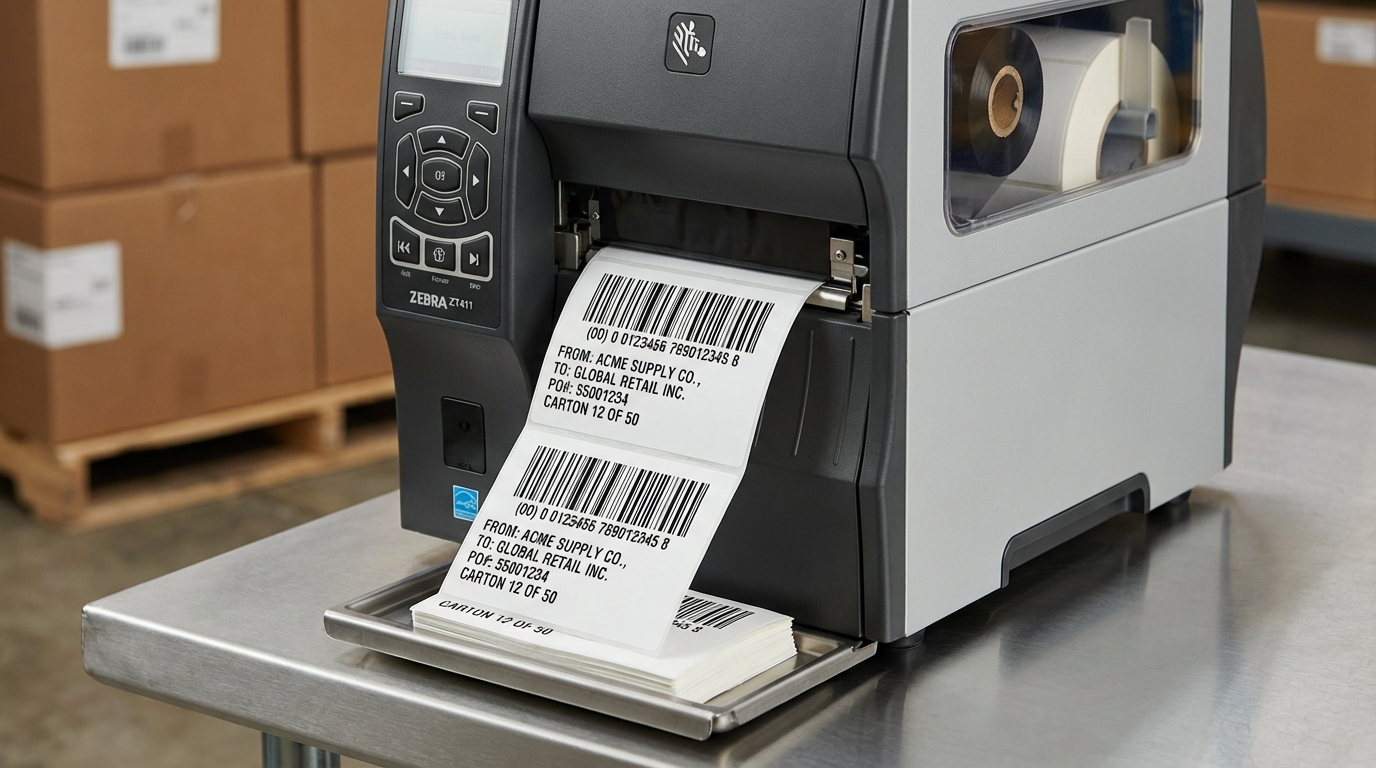
Retail-compliant labeling requires commercial-grade printers, retailer-specific templates, and validated barcode output—fundamentally different from DTC shipping labels.
4. Chargeback Prevention Infrastructure
Retail chargebacks are the enforcement mechanism for compliance. They are automatic, they are financial, and they accumulate fast. Walmart's 3% OTIF penalty means a brand shipping $5 million annually could face $150,000 in chargebacks from delivery timing alone. Add ASN errors, labeling violations, and packaging non-compliance, and the exposure grows.
Prevention requires three layers: pre-shipment validation (checking ASN data, label accuracy, and pallet configuration before the truck leaves), real-time monitoring (tracking delivery timing against Must Arrive By Dates), and post-shipment analysis (categorizing any chargebacks that occur to identify and fix root causes). The brands that reach consistent 98%+ compliance build all three layers into their operation from the start.
Common chargeback triggers and typical amounts:
| Violation | Typical Chargeback |
|---|---|
| OTIF failure (Walmart) | 3% of invoice cost per PO |
| Missing or inaccurate ASN | $50–$200 per PO |
| Routing guide violation | $100–$500 per incident |
| Labeling error | $50–$250 per case |
| Quantity / packaging discrepancy | Cost-of-goods difference |
A brand shipping a $200,000 retail PO with multiple compliance gaps in their first shipment can see $10,000–$20,000 in chargebacks before accounting for the staff time spent disputing them.
We are hitting all the SLAs over and over again. Productiv has led the charge and brought so many improvements to the table over the last two years. There's nothing glaring that stands out anymore and now we are just fine tuning.
5. Transportation and Delivery Management
DTC fulfillment hands a package to UPS or FedEx and tracking handles the rest. Retail distribution requires managing LTL (less-than-truckload) and full truckload shipments with delivery appointments, dock scheduling, and bill of lading documentation. Some retailers require all shipments to be routed through their Transportation Management System (TMS).
On-time delivery is measured by arrival at the retailer DC, not by when the shipment left your warehouse. This means transit time variability, carrier reliability, and geographic distance all factor into compliance. A 3PL with facilities in multiple geographies can reduce transit distance and improve delivery reliability. One of our clients, Evergreen Enterprises, spends $20 million annually on small parcel shipping—by using our facilities in Reno and Dallas, they reduced parcel zones from 6–8 down to 1–3, cutting both cost and transit variability.
The Retailer Compliance Landscape: What Each Major Retailer Requires
Every retailer has its own compliance program, but certain patterns repeat. Understanding these patterns helps you prepare for your specific retailers and recognize the scope of what retail fulfillment requires.
Walmart
Walmart's compliance program is the most comprehensive in retail. Their Supply Chain Packaging Guide runs 408 pages and is updated twice annually. The OTIF program enforces a 98% threshold with automatic 3% penalties on the cost of goods. Their SQEP (Supplier Quality Excellence Program) phases in defect categories progressively—starting with PO accuracy, moving to barcode and labeling, then to packaging, pallet, and load quality. New items require ISTA transit testing at a certified lab before the first shipment.
Target
Target's compliance program introduced an ASN Accuracy metric in May 2025 that has significantly tightened enforcement. Target offers vendors three barcode options (SSCC-18, GTIN-14, or UPC-A) and requires a formal label approval process before your first shipment. Pallet specifications call for 40×48 GMA Class 1 pallets sorted by DC, PO, and item, sealed with tape or glue only.
Dick's Sporting Goods
Dick's compliance is a case study in specialty retailer requirements. They require thermal transfer label printing—standard direct thermal labels will not pass their compliance checks. Their label content uses a zone-based system with mandatory fields in specific zones. They issue purchase orders through multiple formats (Bulk, Replenishment, Prepack, Parent-Child, and others), each requiring different ASN handling.
Other Retailers
Costco has specific club-pack and pallet display requirements. Kroger has grocery-specific compliance including temperature monitoring and lot tracking. Amazon Vendor Central has its own chargeback categories distinct from Seller Central. Nordstrom has fashion-specific labeling and ticketing requirements. Each retailer adds its own layer of complexity, which is why a 3PL's library of retailer-specific configurations matters more than general "retail compliance capability."
What Changes Operationally When You Go From DTC to Retail
Inventory Management
DTC inventory management is relatively forgiving—if you oversell, you backorder or cancel individual customer orders. Retail inventory management is unforgiving. If a Walmart PO calls for 500 units and you ship 480, that is a quantity discrepancy chargeback. If you ship 520, that is an overage that may be refused at the DC. Retail inventory accuracy must be precise at the SKU and lot level.
Running DTC and retail from the same inventory pool requires careful allocation. Many brands discover that their inventory accuracy, which was "good enough" for DTC, is not accurate enough for retail. We have seen brands with 95% inventory accuracy in DTC operations need to reach 99.5%+ for retail compliance.
Order Processing
DTC orders arrive through Shopify, Amazon, or your own website. Retail orders arrive as EDI 850 purchase orders with specific fulfillment requirements embedded in the order data—ship dates, delivery windows, routing instructions, and sometimes item-level packaging specifications. Processing a retail PO means reading those requirements, configuring the shipment accordingly, and generating the correct documentation before the order ships.
Packaging and Preparation
DTC packaging is about protecting the product during parcel shipping and delivering a good unboxing experience. Retail packaging is about meeting the retailer's DC receiving requirements. That means specific carton dimensions, prohibited materials (no staples, no Styrofoam peanuts, no rubber bands in many retailer guides), specific board strength (typically 32 ECT minimum), and pallet configurations that meet height, weight, and stacking requirements.
Cost Structure
DTC fulfillment costs are per-order: pick, pack, and ship each individual package. Retail fulfillment costs include compliance overhead: EDI connectivity fees, commercial label stock and printing, case-pack preparation, palletization labor, and LTL/FTL transportation. The per-unit fulfillment cost for retail is often lower than DTC (you are shipping in bulk rather than individual parcels), but the compliance infrastructure adds fixed costs that DTC operations do not have.
Timeline: What to Expect From First PO to First Shipment
Based on onboarding dozens of brands into retail distribution, here is the realistic timeline from receiving a retail PO to shipping compliant product.
We get a lot of requests from large retailers. Productiv's willingness to accommodate work from us and have awesome communication is really what makes them a head above other people we've talked to.
Common Mistakes Brands Make During the DTC-to-Retail Transition
Assuming Their DTC 3PL Can Handle Retail
The most expensive mistake is assuming your current DTC 3PL can "figure out" retail compliance. DTC-focused providers typically lack EDI infrastructure, commercial label printing capability, and routing guide expertise. The result is chargebacks on early shipments while the provider learns on your account.
Configuring for One PO Type and Assuming the Rest Are the Same
Retailers often issue purchase orders through multiple formats—standard replenishment, promotional, seasonal, prepack, consolidated, and others. Each format may structure data differently in ways that affect ASN generation.
Treating Routing Guide Compliance as Optional
Some brands view routing guide requirements as guidelines rather than specifications. They are specifications. Using staples instead of tape, exceeding pallet height limits, using the wrong carton strength—each generates a chargeback on every affected shipment.
Underestimating the Ongoing Compliance Burden
Compliance is not a one-time setup. Retailers update routing guides periodically—Walmart updates twice annually, Dick's updates at least every six months. New requirements phase in, penalty structures change, and measurement methodologies evolve.
How to Choose a 3PL for Your First Retail Launch
Selecting the right 3PL for retail fulfillment is the single highest-leverage decision in this transition. Here is what to evaluate:
- Active EDI connections to your specific retailers. Not "we can set up EDI"—rather, "we currently ship to Walmart for X clients and have tested, validated EDI maps."
- Pre-built label templates for your retailers. Ask to see them. A 3PL with retailer experience has templates they have already validated against the retailer's scan systems.
- Documented chargeback rates. Ask what their chargeback rate is for the retailers you are shipping to.
- Onboarding timeline with specifics. "2 to 4 weeks" with a detailed breakdown is credible.
- Omnichannel capability. If you are continuing to run DTC alongside retail, you want a single provider that can handle both from one inventory pool.
I have direct access to the key decision-makers, Paul and Doug, and they make decisions quickly. There's not a lot of hierarchy in the organization, so if we need something done, a 10-minute phone call is all it takes.
What Ongoing Retail Compliance Looks Like
Once the initial setup is complete and the first shipments are flowing, retail compliance becomes an ongoing operational discipline rather than a project. This means monitoring OTIF performance against retailer thresholds, tracking ASN accuracy rates, reviewing routing guide updates as retailers publish them, managing chargeback disputes for penalties that were not your fault, and continuously improving processes to close compliance gaps.
The goal is to reach a steady state where compliance is built into the operation rather than managed as a separate effort. When the routing guide specifications are embedded in warehouse standard work instructions, when label templates are validated and activated automatically based on the destination retailer, when ASN generation is tied directly to the WMS pick-and-pack process, compliance becomes a byproduct of doing the work correctly rather than an additional overhead.
That steady state is achievable within weeks of a properly executed setup. If chargebacks are still accumulating months into the retail relationship, the setup was not thorough enough, and the root causes need to be identified and fixed.
If you are navigating your first retail PO or planning to expand from DTC into major retailers, start a conversation with our team. We can walk through what your specific retailers require, what the setup involves, and how quickly we can get your compliance infrastructure operational. We have done this for dozens of brands, and we can tell you exactly what to expect.
Frequently Asked Questions
How long does it take to set up retail fulfillment from scratch?
With a 3PL that has pre-existing retailer connections and EDI infrastructure, setup typically takes 2 to 4 weeks from contract to first compliant shipment. That includes EDI testing, label template activation, routing guide configuration, and sample shipment validation. Without existing infrastructure, setup can take 2 to 4 months.
What is EDI and why do retailers require it?
EDI (Electronic Data Interchange) is the standardized electronic format retailers use to exchange business documents—purchase orders, advance shipping notices, invoices, and acknowledgments. Retailers require EDI because it enables automated receiving at their distribution centers. Most retailers require at minimum: EDI 850 (Purchase Order), EDI 856 (ASN), EDI 810 (Invoice), and EDI 997 (Functional Acknowledgment).
What are retail chargebacks and how much do they cost?
Retail chargebacks are financial penalties retailers deduct from supplier payments when shipments fail to meet compliance requirements. Categories include late delivery, quantity discrepancies, ASN errors, labeling violations, packaging non-compliance, and routing guide deviations. For a brand shipping $5 million annually to major retailers, chargeback exposure can easily reach $150,000 to $250,000 per year without proper compliance infrastructure.
Can my current DTC 3PL handle retail orders?
Most DTC-focused 3PLs lack the infrastructure for retail compliance. Retail requires EDI connectivity, retailer-specific label formats on commercial thermal transfer printers, routing guide compliance for packaging and palletization, and ASN transmission timed to retailer specifications. Ask your current provider specific questions about their EDI connections, label templates, and chargeback rates.
What is OTIF and why does it matter?
OTIF (On-Time In-Full) is the metric retailers use to measure supplier delivery performance. On-Time means the shipment arrives at the retailer's DC on or before the Must Arrive By Date. In-Full means the complete quantity ordered was delivered. Walmart enforces a 98% OTIF threshold with a 3% penalty on the cost of goods for non-compliant shipments.
What is a routing guide and what does it cover?
A routing guide is the retailer's master document specifying exactly how shipments must be prepared, labeled, packaged, and delivered. It covers carton specifications, pallet configuration, labeling requirements, shipping documentation, delivery scheduling, and special requirements. Routing guides can range from 30 to over 400 pages.
Do I need different 3PLs for DTC and retail, or can one handle both?
You can run both through a single 3PL if that provider has genuine retail compliance infrastructure alongside DTC fulfillment capability. The advantage is inventory consolidation—you do not need to split stock between two warehouses. The key is that the 3PL must have separate, validated workflows for each channel.
What retailers are hardest to comply with?
Walmart has the most comprehensive and strictly enforced compliance program, with a 408-page routing guide, 98% OTIF threshold, and automatic 3% penalties. Target has become increasingly strict since introducing their ASN Accuracy metric in May 2025. Dick's Sporting Goods has niche requirements including thermal transfer printing and zone-based label systems.
What should I look for in a 3PL when I start shipping to retail?
Ask specific questions: How many retailers do you currently ship to? Do you have pre-built EDI connections and label templates for my specific retailers? What is your average chargeback rate? Do you have thermal transfer printing capability? What is your onboarding timeline? A 3PL that answers with specifics has real retail experience.
How do I get my product retail-ready for the first shipment?
Retail readiness requires four parallel workstreams: (1) EDI setup through a VAN like SPS Commerce, (2) retailer-specific label template configuration, (3) packaging compliance per each retailer's routing guide, and (4) operational testing including test ASNs, sample labels, and sample pallets. Complete all four before going live.
20 Years of Kitting Excellence
Ready to Streamline Your Supply Chain?
Join industry leaders achieving 99%+ SLA performance with flexible kitting, fulfillment, and 3PL solutions.
Get in Touch