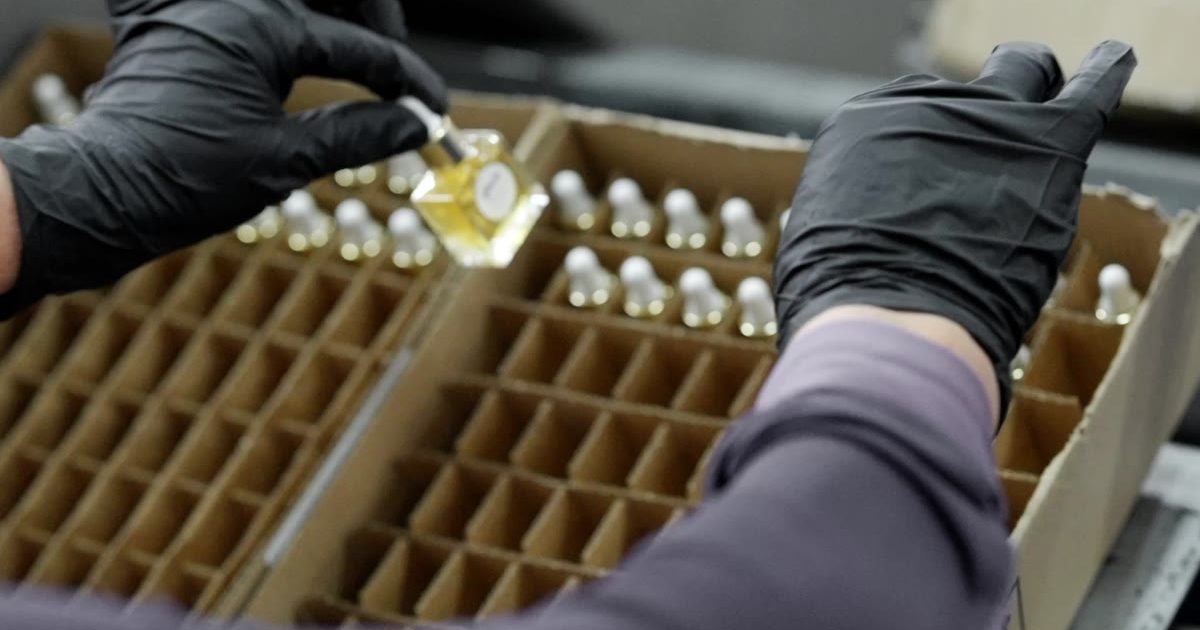
A holiday beauty gift set is built on a production line, not picked from a shelf. Components arrive from several suppliers, get checked against a bill of materials, and are assembled into a finished set that ships as one SKU. Programs are bought in spring and built August through October, so the build has to hit each retailer's ship window the first time.
If you run operations for a beauty brand, you already know the stakes. The set is the biggest single SKU of your year, it ships into retail on a fixed date, and there is no second run if the first one is wrong. This guide walks through how gift sets actually get built at scale, where programs go wrong, and what to ask a partner before you commit your 2027 holiday program.
What is beauty kitting?
Beauty kitting is the assembly of several finished products and their packaging into one new, sellable unit: a holiday gift set, a gift-with-purchase, a discovery set or a loyalty kit. Every item in the box already exists as a finished, labeled product. Kitting turns those items into a set with its own UPC, its own case pack and its own place on a retail floor.
Scale changes the job. One major beauty brand's seasonal gifting program runs 3 to 4 million kits a year with 15 to 18 items per kit, configurations that change monthly, and peak days above 100,000 kits. At that volume the line works on a takt time of about three seconds per item. That is a manufacturing discipline, and it is why kitting and assembly services are a different business from pick-and-pack fulfillment.
When are holiday gift sets built?
Holiday beauty programs are typically bought February through May and built August through October. Retailers commit to sets and quantities in spring, components are ordered and produced over the summer, and finished sets ship into retail distribution centers ahead of the holiday floor sets.
That calendar is why summer matters more than December. A component that lands two weeks late in August does not slip the program by two weeks; it compresses the build into a shorter window and puts the retail ship date at risk. For the reverse timeline of what has to be locked and when, see holiday kitting lead times.
How is a holiday gift set built, step by step?
A gift set line runs the same six stages on every program. The discipline at each stage is what catches errors before a retailer does.
- Inbound receiving and inspection. Components arrive and are verified against the bill of materials. At least one carton is opened per pallet per SKU to catch vendor concealed shortages, the most common source of inventory error in kitting, before production begins.
- Slotting and line setup. Components are staged in the work cell so the fastest-moving items sit at waist height within arm's reach. Scan configurations are built for the program before the line starts.
- First Article and assembly. The first finished set is photographed and approved by the brand before the full run. Operators then assemble each set to the bill of materials, with scan verification at every pick.
- Quality inspection. Barcode checks, weight checks and photo documentation confirm each unit. Sets that fail are pulled and reworked before labeling.
- Pack-out and retail labeling. Finished sets are packed to each retailer's case-pack and carton specs, with GS1-128 case labels and set-level UPCs applied per retailer.
- Ship to retailer DCs, then reconcile. Pallets ship to each distribution center within its window, the EDI 856 advance ship notice goes out on time, and extras, shorts and damages are reconciled against components before the job closes.
Run that sequence across 30 million kits a year and the pattern holds: most quality problems start at receiving or at the first unit, not at the end of the line.
What goes wrong when kitting is treated as storage plus picks?
Many fulfillment warehouses quote holiday kitting as if it were storage with extra picks. The work looks similar on a spreadsheet and behaves completely differently on the floor. These are the failures that show up when a gift set program is run that way:
- Missed retail windows. Without a dedicated line and a production schedule, the build competes with daily orders for labor in the busiest weeks of the year. Gift sets that miss their ship window miss the floor set.
- Quality escapes. No First Article and no scan verification means a wrong shade or a missing insert is discovered by the retailer, or by the shopper.
- Compliance penalties. Wrong case labels, wrong case counts and late ASNs trigger retailer chargebacks that can erase the margin on the set.
- Pricing as an afterthought. Hourly billing on a line nobody designed turns into an open-ended invoice. Kitting should be priced per unit, before the run starts.
How do you choose a kitting partner for holiday programs?
Choose the partner whose holiday program you can see running, not the one with the longest service list. Before you commit next year's sets, ask for these five things:
- Dedicated kitting lines. Who builds your sets in September, and are they also picking daily orders that week?
- A written QC process. Receiving inspection, First Article approval, scan-verified assembly and post-job reconciliation, with an accuracy target in the contract. Standard targets run 99.5–99.95%.
- Retail compliance already wired. Pre-built EDI and label templates for your retailers. Productiv ships to 100+ retailers and sets up new retailer compliance in 2 to 4 weeks.
- Capacity committed in writing. Line time and labor reserved for your build window, agreed before summer.
- Proof you can see. A holiday program of similar scale. Productiv builds 3M+ holiday cosmetic kits a year for one major cosmetic retailer program.
Ask for per-unit pricing too. Kitting at Productiv runs $0.04–$0.08 per item placed plus a $0.25–$0.75 base kit fee, so a 10-item mid-complexity set lands around $0.65–$1.05 per kit before the run starts.
What this looks like in practice
The brands that have the easiest holiday season are the ones that treated it as a production program in the spring. Their components are booked against a line date, their first set is approved before August, and the same inventory pool serves the retailer POs and the online orders the sets generate. For how that works across a full beauty program, see beauty and personal care fulfillment.
If you are planning 2027 gift sets now, talk to the team that builds them about your sets, your component timeline and your retail ship windows.
Key Takeaways
- →Beauty kitting assembles several finished products and their packaging into one new, sellable gift set that ships as a single SKU to retail or direct to consumers.
- →Holiday beauty programs are typically bought February through May and built August through October, so component delays in summer land directly on retail ship windows.
- →A gift set line runs six stages: receiving and inspection, slotting and line setup, scan-verified assembly, quality inspection, compliance labeling, and pack-out with ASN and reconciliation.
- →Productiv assembles more than 30 million kits a year, including 3M+ holiday cosmetic kits a year for one major cosmetic retailer program, with standard accuracy targets of 99.5–99.95%.
- →Kitting is priced per unit, not per hour: $0.04–$0.08 per item placed plus a $0.25–$0.75 base kit fee.
Frequently Asked Questions
How long does holiday beauty kit production take?
Production itself usually runs across a window of several weeks between August and October, but the program starts months earlier. Sets are typically bought February through May, components need to land in time for a First Article approval, and the full run is scheduled backward from each retailer's ship window.
How do you prevent quality errors in beauty gift set kitting?
Errors are prevented at four points: components are checked against the bill of materials at receiving, the first built set is approved before the full run, every component pick is scan-verified, and finished counts are reconciled against components after the job. Standard kitting accuracy targets are 99.5–99.95%.
Can one partner handle holiday gift sets and DTC orders?
Yes, if the gift sets and the DTC orders draw from the same inventory pool. The same finished set can ship as retail cases to a retailer's distribution center and as single units to online shoppers, which avoids splitting stock between a kitting vendor and a separate fulfillment warehouse.
What's the difference between kitting and co-packing?
Kitting combines finished products that already exist into a new set, such as a cleanser, serum and moisturizer packed into a holiday box. Co-packing usually means filling or packaging the product itself. Most beauty gift sets are kitting work because every item in the set is already a finished, labeled product.
What does beauty gift set kitting cost?
Kitting is priced per unit: about $0.04–$0.08 per item placed plus a base kit fee of $0.25–$0.75. The base fee moves with lot control, special labeling, packaging type and required accuracy, so a 10-item mid-complexity set lands around $0.65–$1.05 per kit.
2027 holiday programs
Planning next year's gift sets? Book the line before it books up.
Holiday programs are bought in spring and built August through October. Talk through your 2027 sets, component timeline, and retail ship windows with the team that builds them.
Talk to the kitting team